

Last updated: 7 August 2026
A lingerie set looks like one purchase and behaves like two. The bra answers to one measurement system, the briefs answer to another, and a suspender belt answers to a third. When you buy a set as a single unit, you are trusting that one label got all of them right at the same time.
Sometimes it does. Often it gets one piece right and the other close enough that you keep it, then quietly stop wearing the half that does not work. This is a guide to the practical side: what a set actually contains, when to buy one whole, when to assemble it yourself, and how to make separate pieces look deliberate together.
Key takeaways
- Most sets are a bra and briefs. A three-piece adds a belt, a suspender belt, or a second brief cut in the same fabric.
- Bra size and brief size come from different body measurements, so one number on a label rarely serves both halves equally.
- Ready-to-wear size charts are graded around a body proportion most women do not have, which is why set sizing splits so often.
- Three sets that do different jobs are more useful than six that all do the same one.
- Separates read as a set when the lace family, the hardware finish and the depth of colour agree. The trim does not have to be identical.
What actually counts as a lingerie set
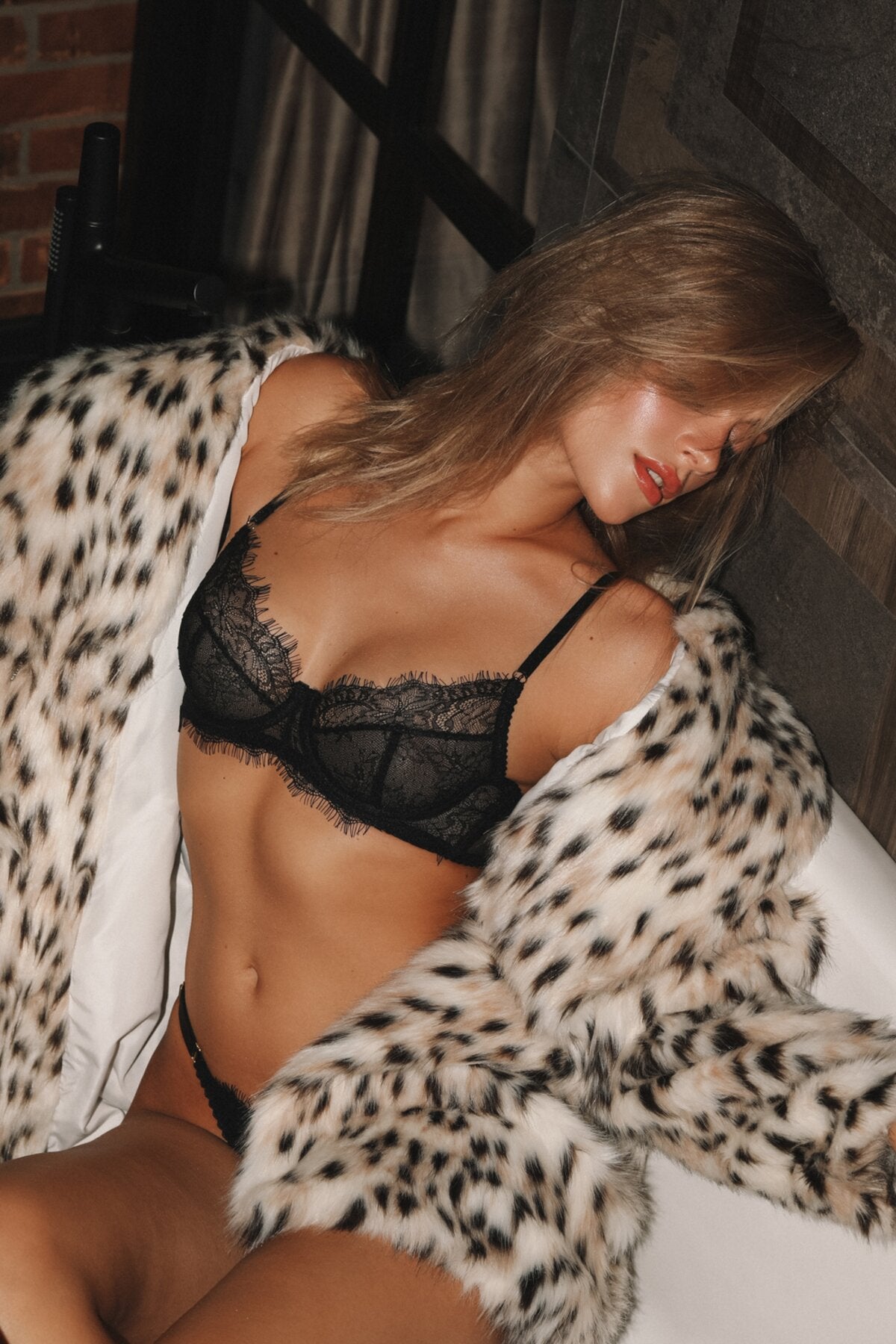
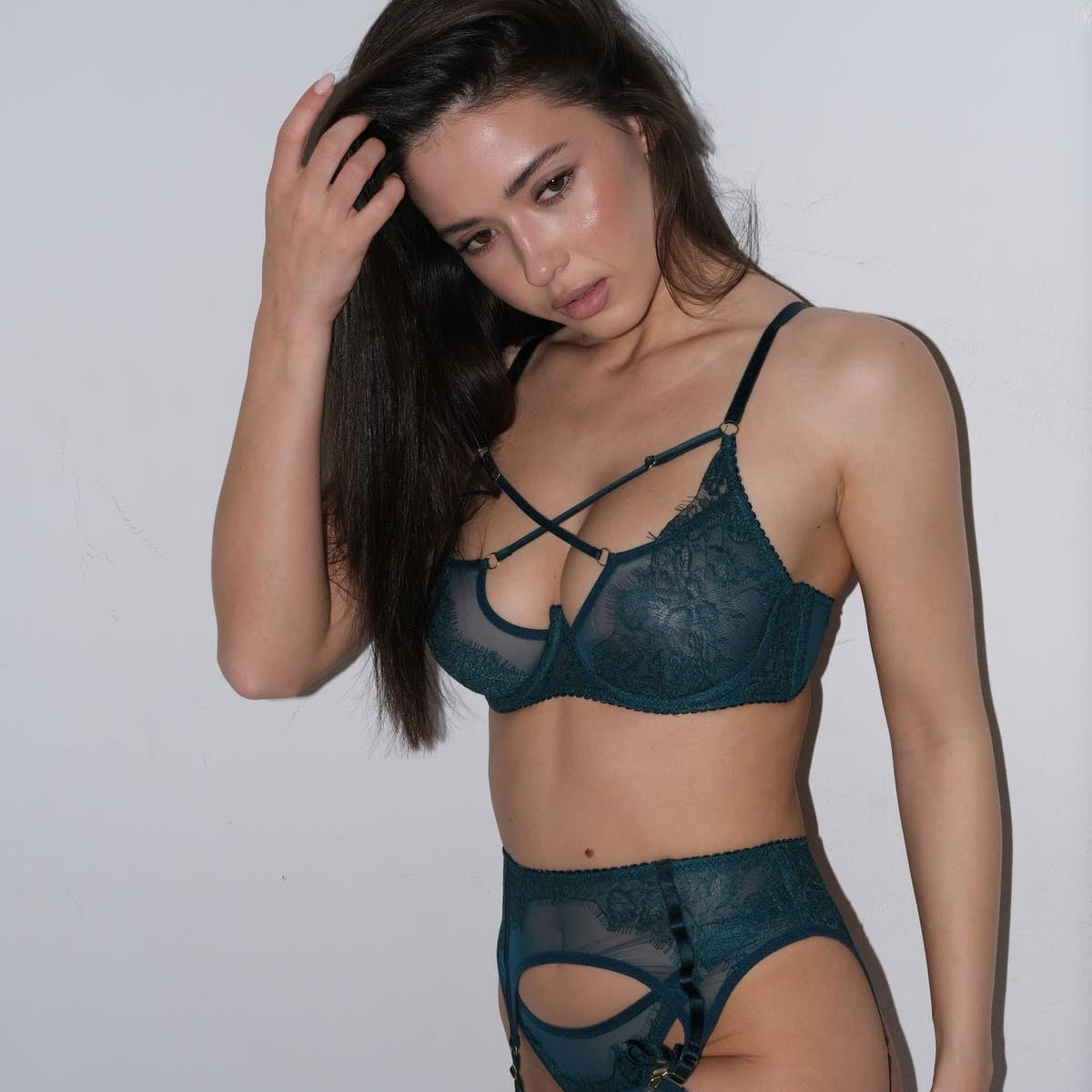
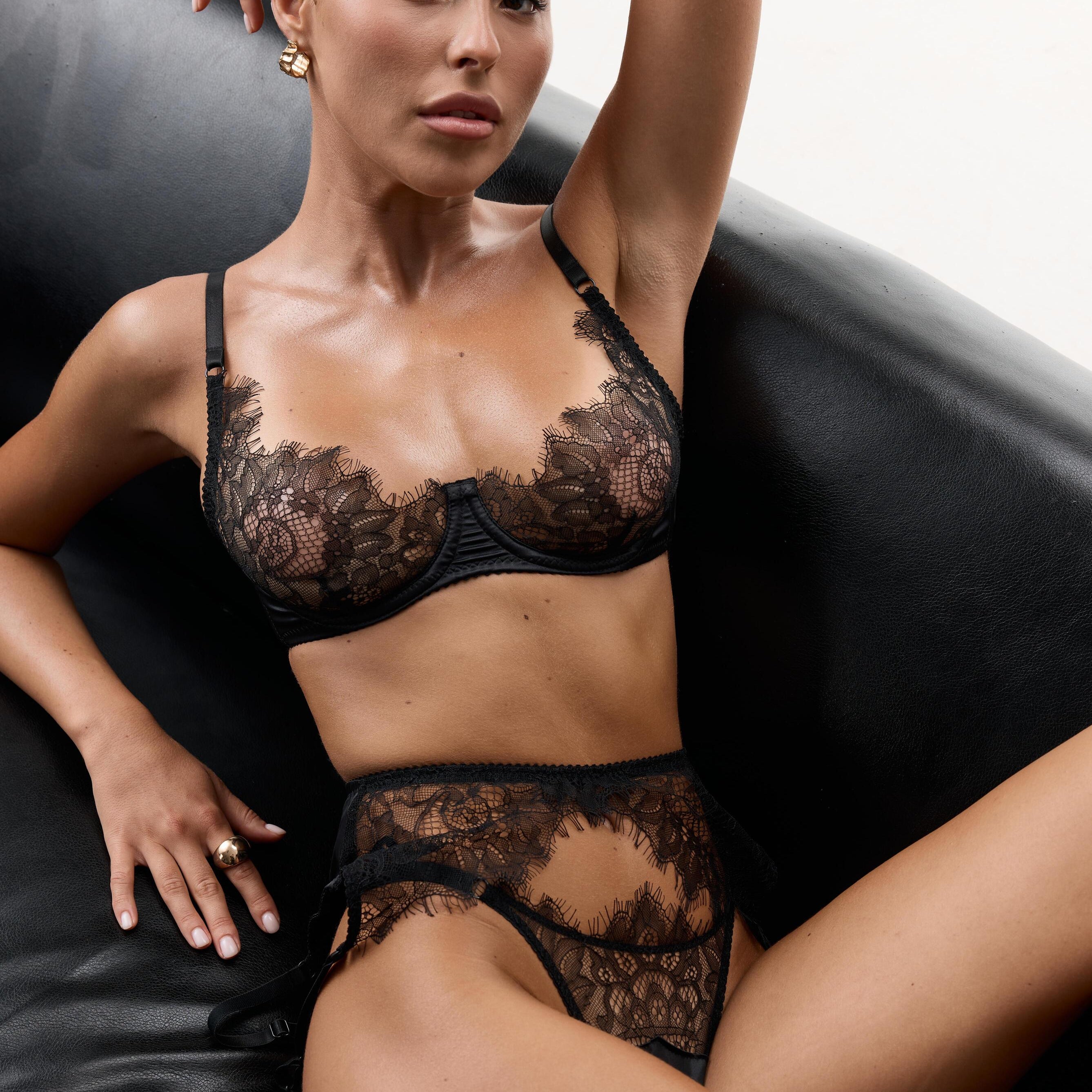
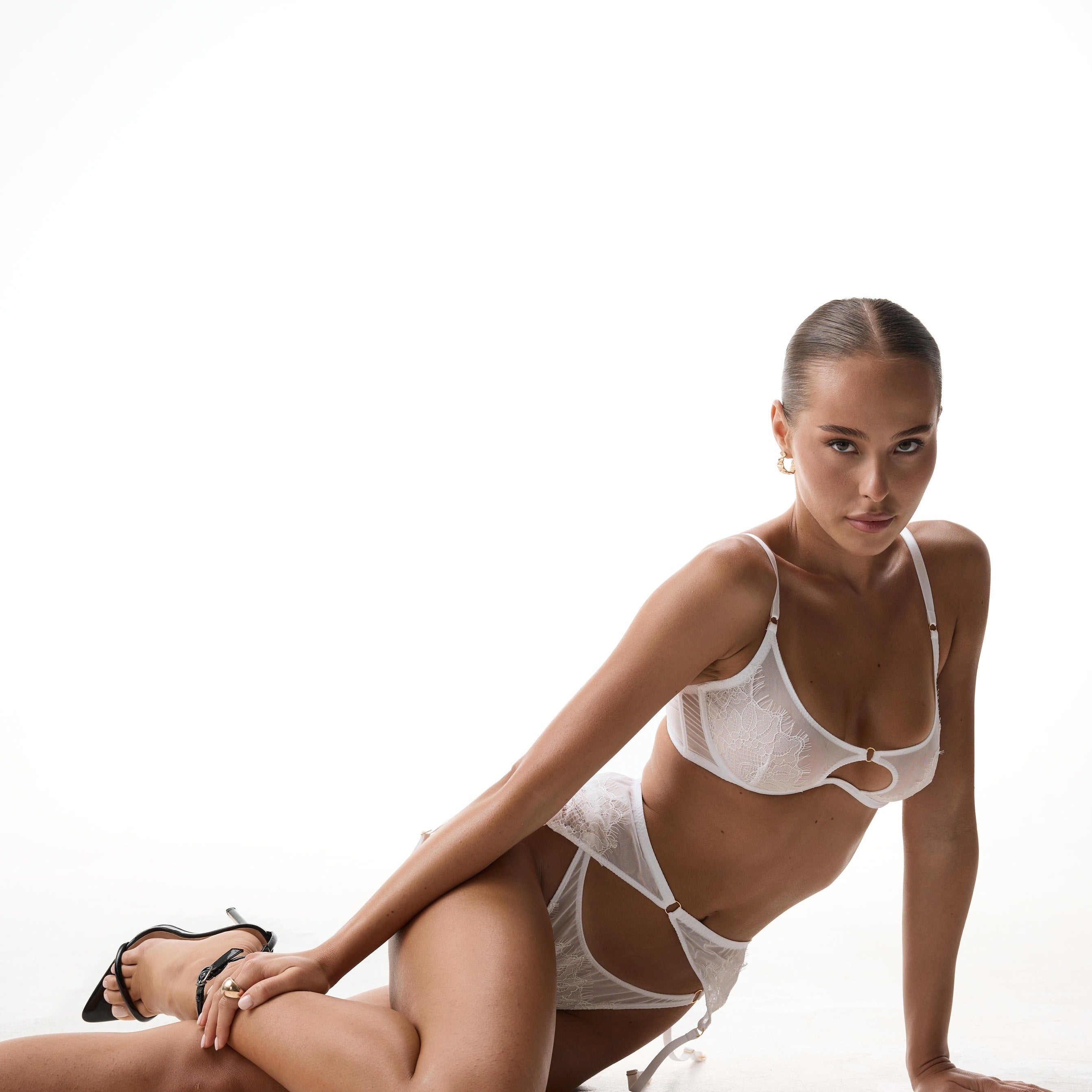
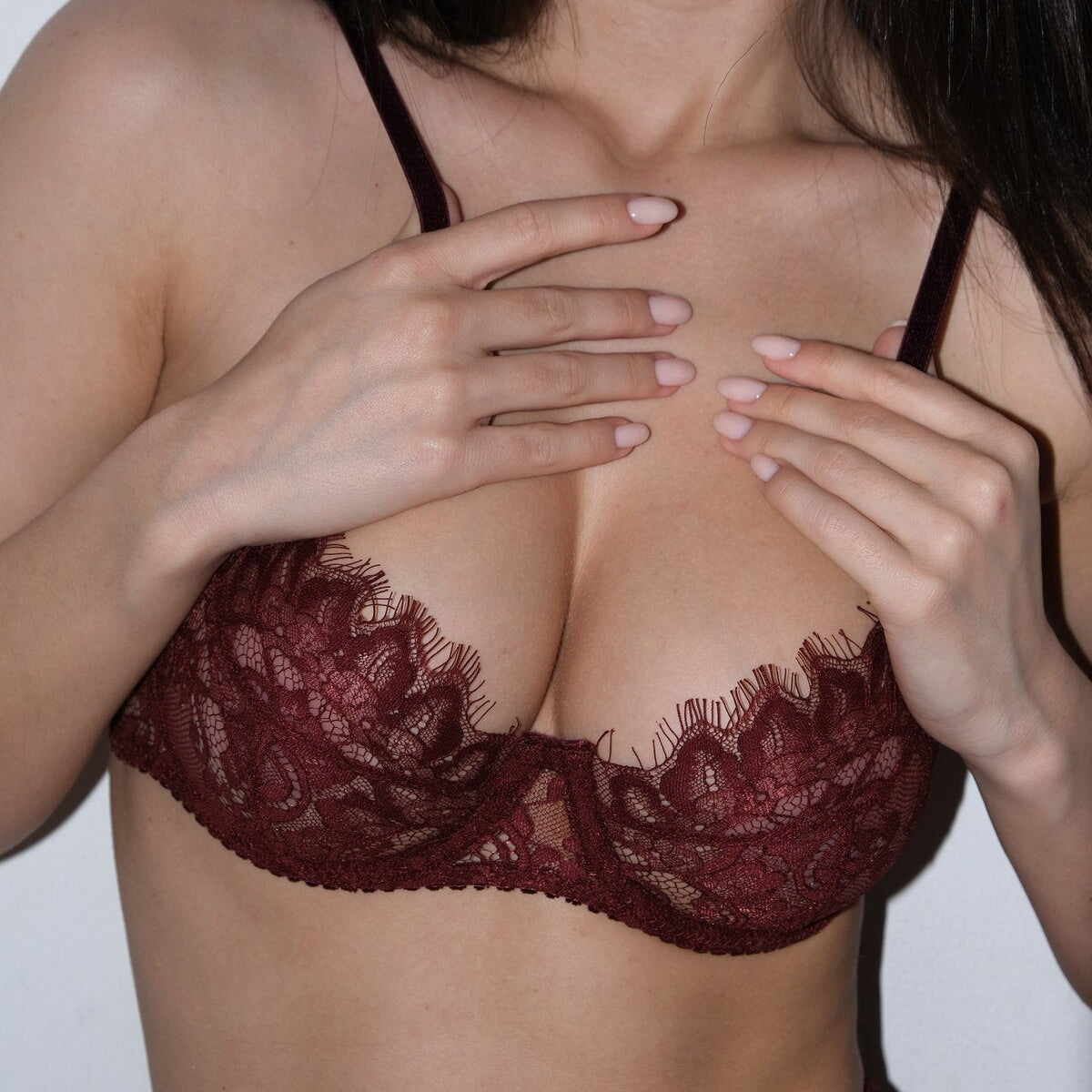
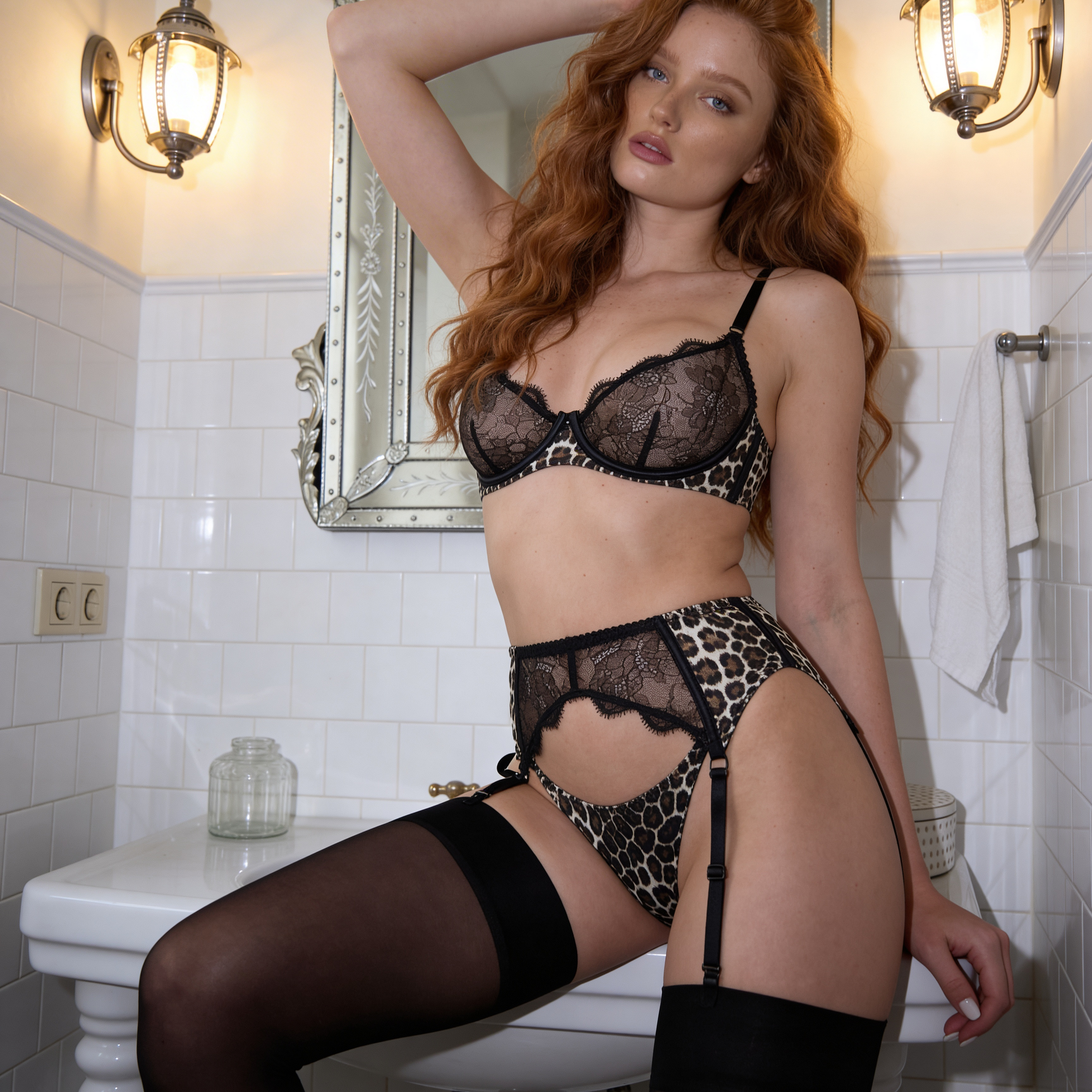
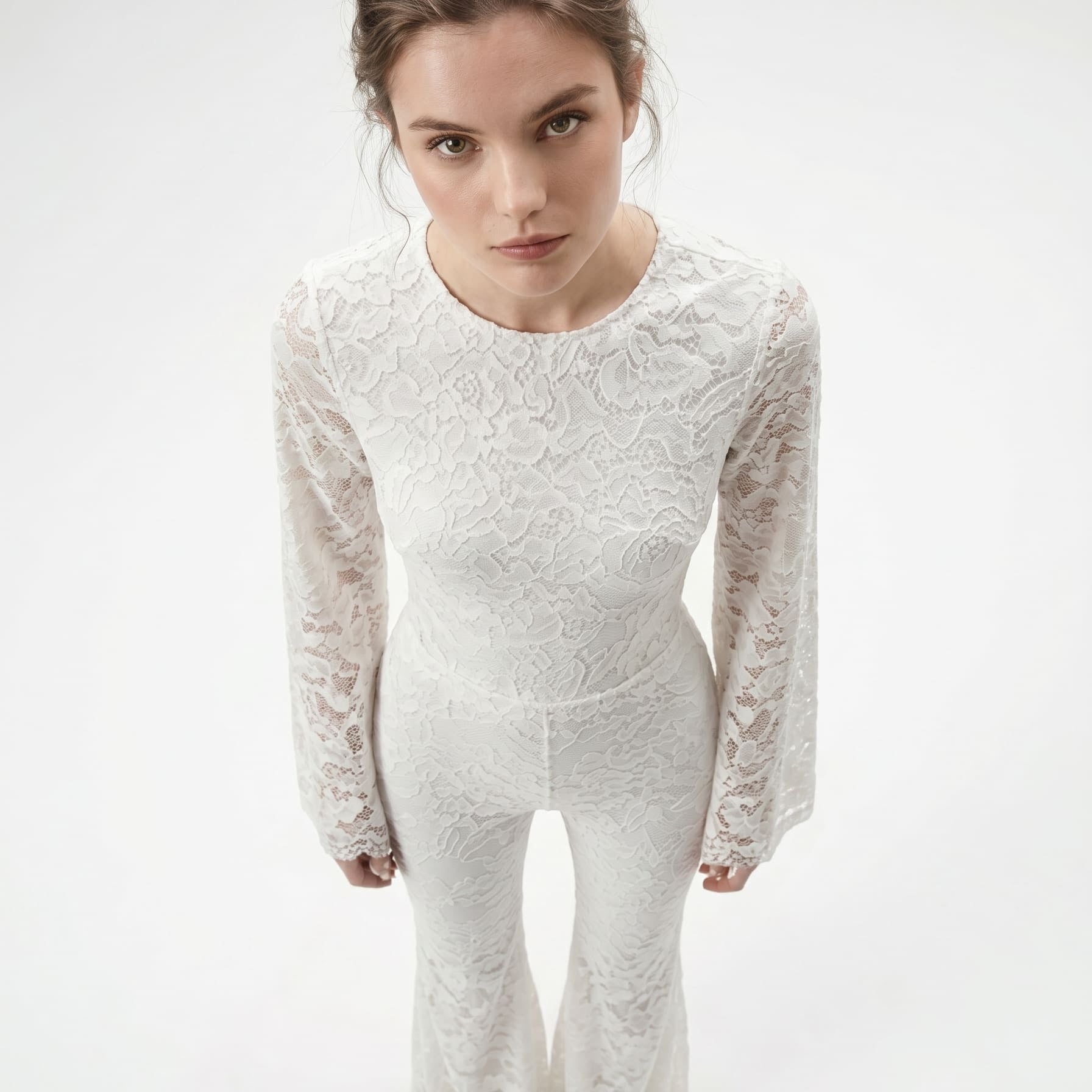
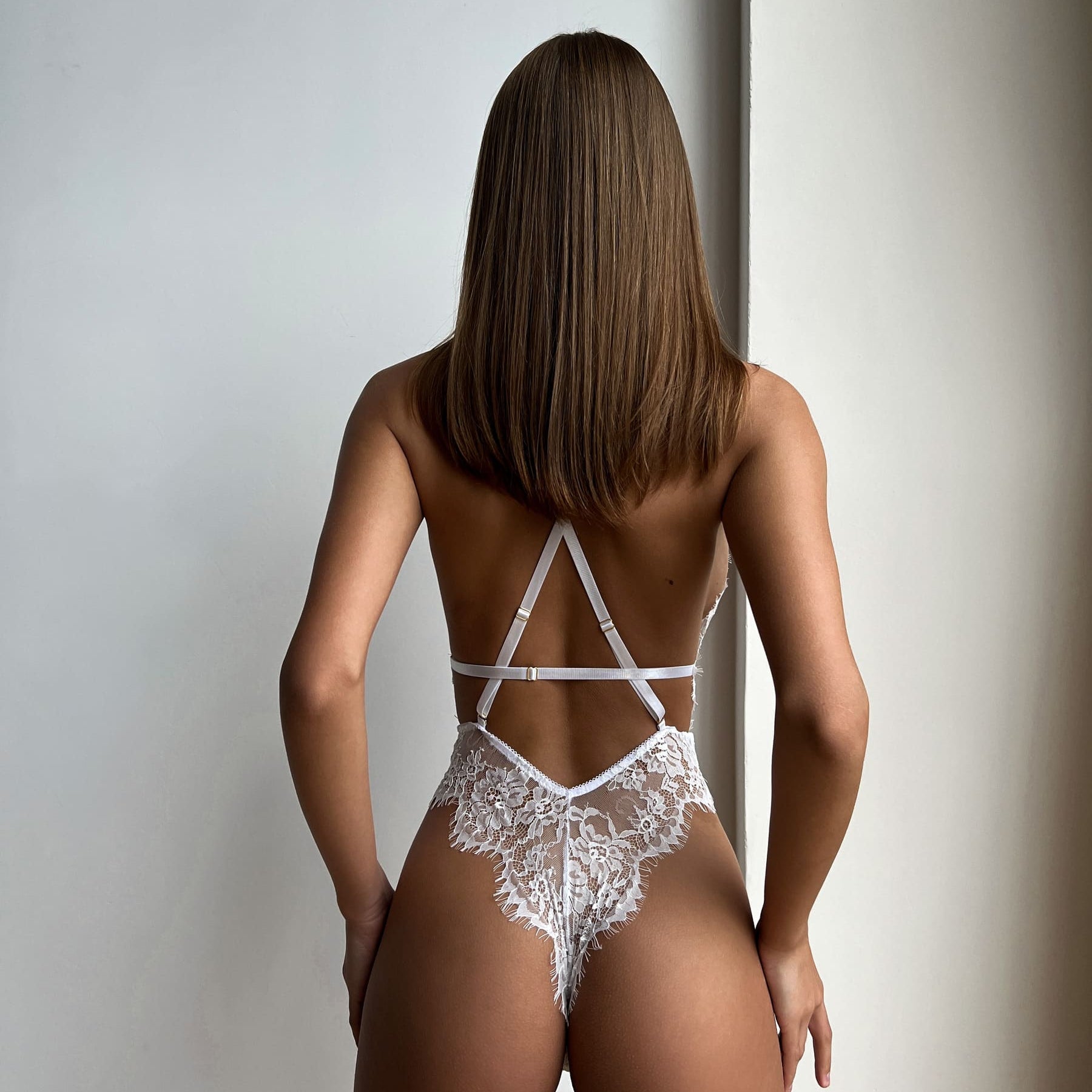
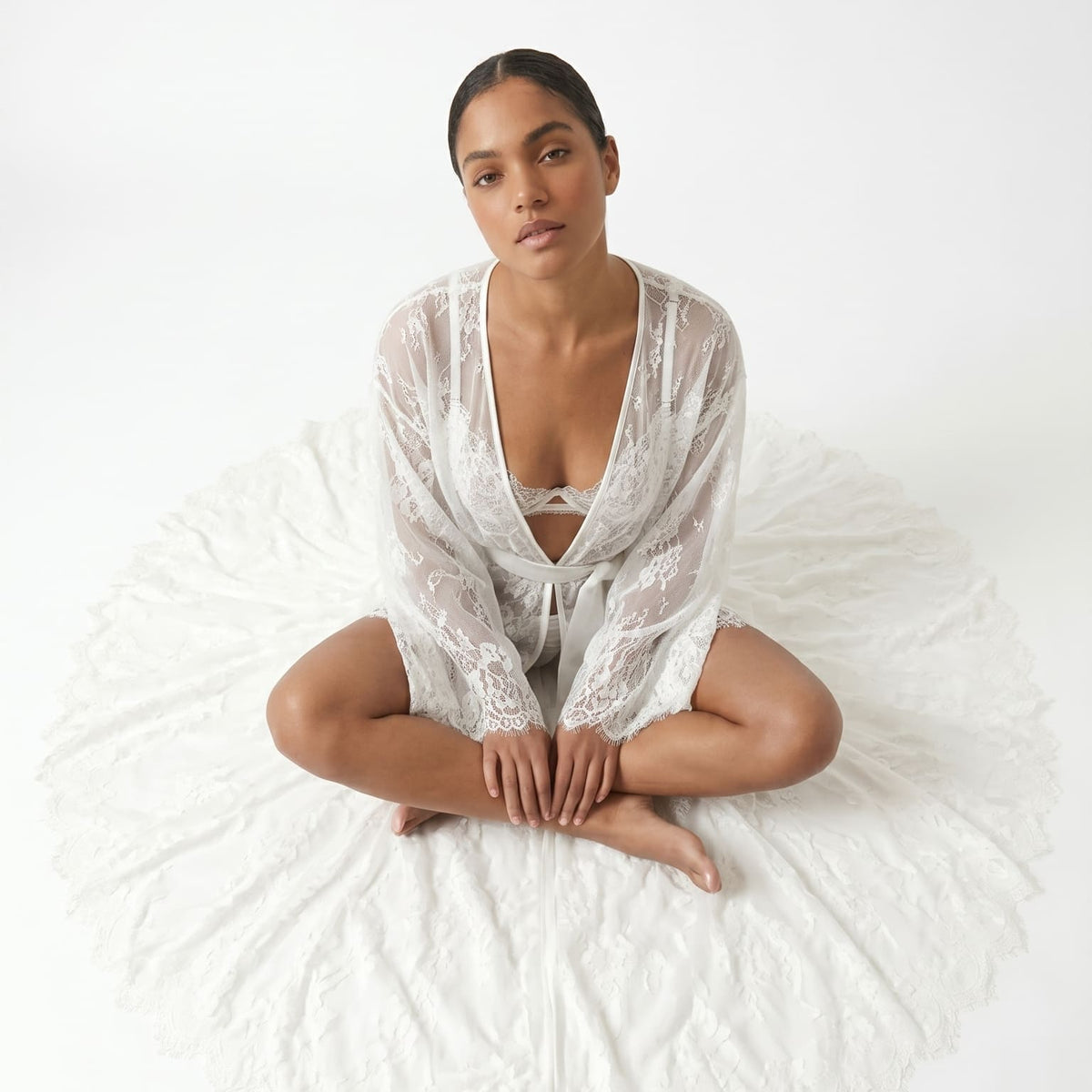
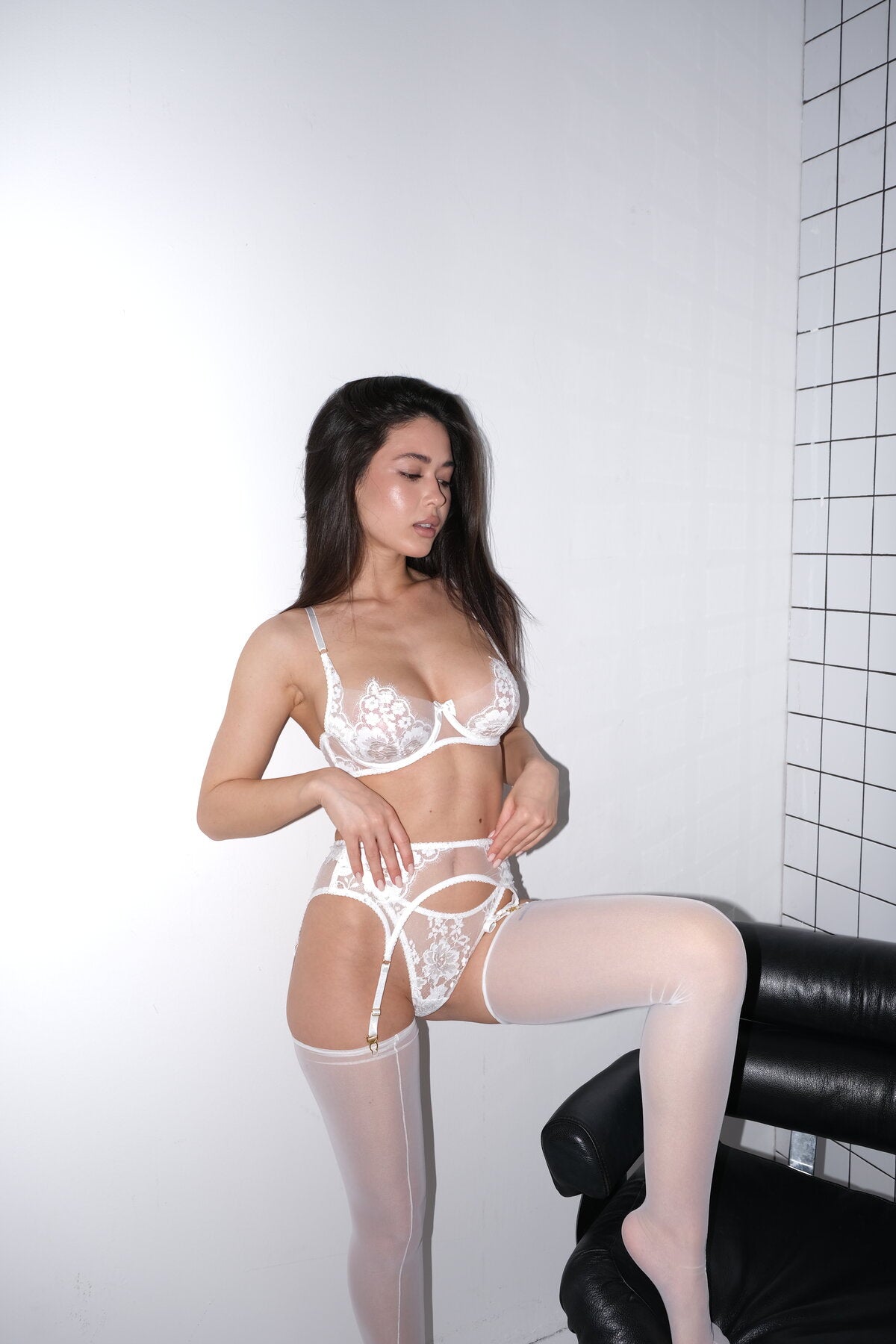
In most of the market, a set means two pieces: a bra and briefs cut from the same fabric, with the same lace and the same hardware. A three-piece set adds one more, and which one depends on the house. It may be a suspender belt, a waist or hip belt, or a second brief cut so you have a thong and a fuller pair in the same fabric.
Lioness lines are built as complete sets and then split into their parts. Ariana and Amella each exist as a whole set and as a separate bra, belt and briefs, so every piece carries its own listing and its own measurements. That structure exists because of the next section.
Why the bra and the briefs are never really one size
They are sized from different parts of the body, so there is no single number that describes both. A bra size is a band measurement taken under the bust plus a cup derived from the difference between bust and underbust. A brief size comes from hip circumference, sometimes with waist as a second input. Nothing about a 34D predicts a hip measurement, and nothing about a hip measurement predicts a cup.
Ready-to-wear resolves this by grading both halves off one assumed proportion. That assumption is where sets go wrong.
When Beth Newcomb and Cynthia Istook of North Carolina State University sorted SizeUSA body-scan data through the FFIT shape-classification software, only 8 percent of women aged 26 to 55 came out as Hourglass. The ASTM Missy standard that much of the industry grades from targets that Hourglass proportion across 100 percent of its size range. Their paper is published in full by IFFTI.
So when a set arrives and the bra is right but the briefs are not, the set is not defective. It was graded for a proportion that is not yours. Measure the two halves against two different numbers and buy accordingly. Our measuring guide covers the bra half, and the fitting guide covers what to check once it is on.

Buy the set whole, or build it from separates?
Buy it whole when the pieces are visually inseparable and you want exactly the look the house designed. Build it yourself when one half of your body is harder to fit than the other, or when the bra and the briefs will be worn at completely different rates.
The second case is more common than people expect. A structured bra from the bra range might be worn once a week; the briefs that came with it get worn far more often, wash more often, and give out first. Buying a second or third pair from the panties range at the same time keeps the set alive long after a single pair would have gone soft.
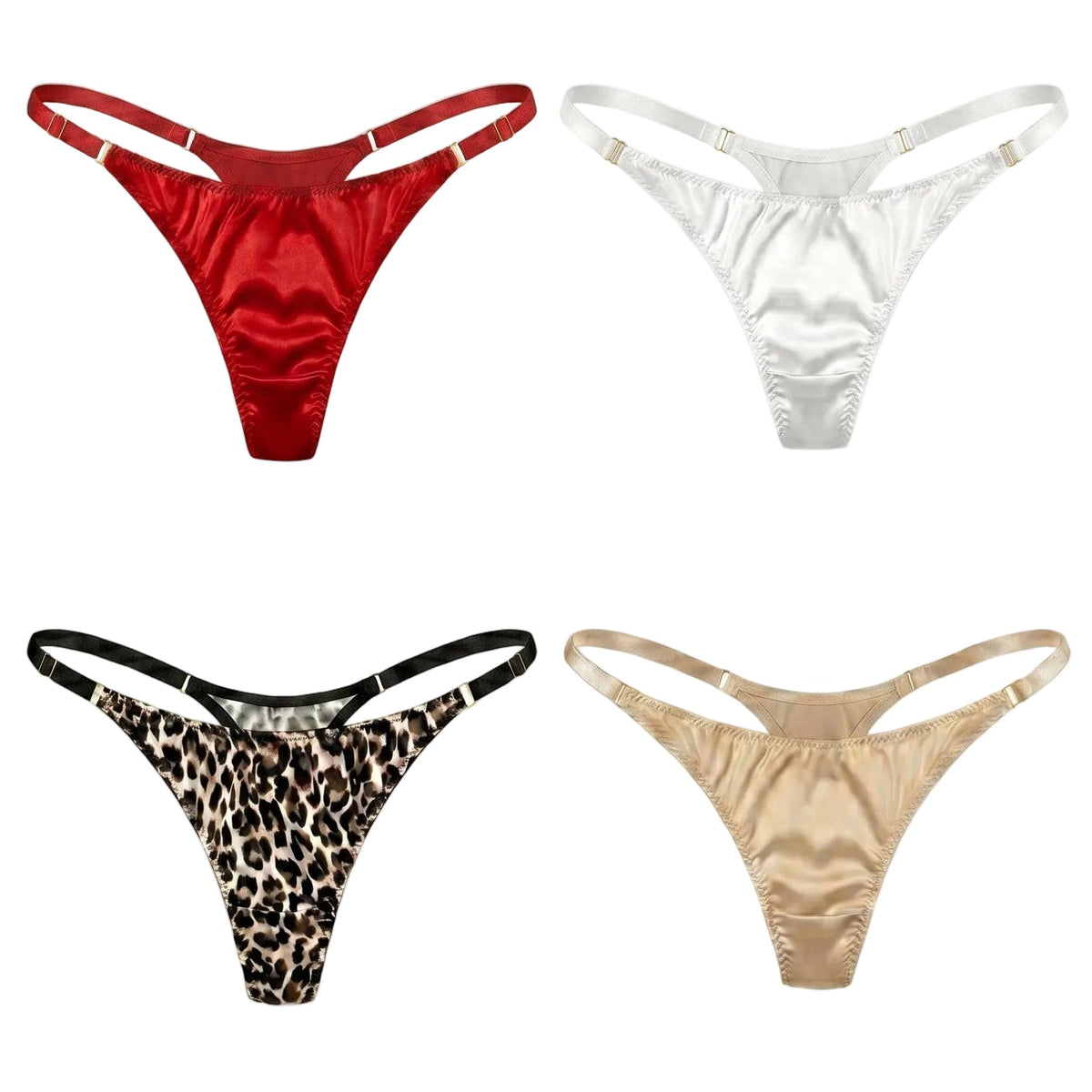
This is what the boxed sets are for. A Mono Box holds three briefs in one colour, cut to the same measurements, so the pairing with your bra stays consistent as you rotate. The Panties Box range does the same across mixed colours and fabrics if you would rather not commit to one shade.
How many sets you actually need
Three, if they do three different jobs. More than that and you tend to own several versions of the same set rather than a working wardrobe.
The first is everyday: a neutral tone, a cut you forget you are wearing, something that goes under most of what you own. The second is problem-solving, bought for a specific difficulty rather than a mood. A low back, a thin knit that shows every seam, a neckline that sits somewhere awkward. The third is the occasion set, and it is the one people buy first and wear least, which is why it belongs third.
Colour is worth being deliberate about here. A single deep tone across the whole lingerie range is more useful than three pale shades that each work under one shirt.

Making separates look like a set
Three things have to agree, and none of them is the pattern. The lace family: two florals of different scale sit together badly, two geometrics do not. The hardware: gold rings against silver sliders is the detail people notice first. And the depth of the colour, which matters most in black, where two dye lots can read as black and near-black side by side.
Get those three right and the cuts can differ freely. A balcony bra with a high-waisted brief looks composed. What looks accidental is a matched lace with mismatched hardware.
Adding a third piece
A third piece changes what a set is for rather than how it fits, which is why it is the easiest addition to get right. A suspender belt is the traditional one: the Double line uses paired straps for a more structural line, while Simple keeps to a single strap per leg. Both sit in the wider garters collection, and both need stockings to do anything.
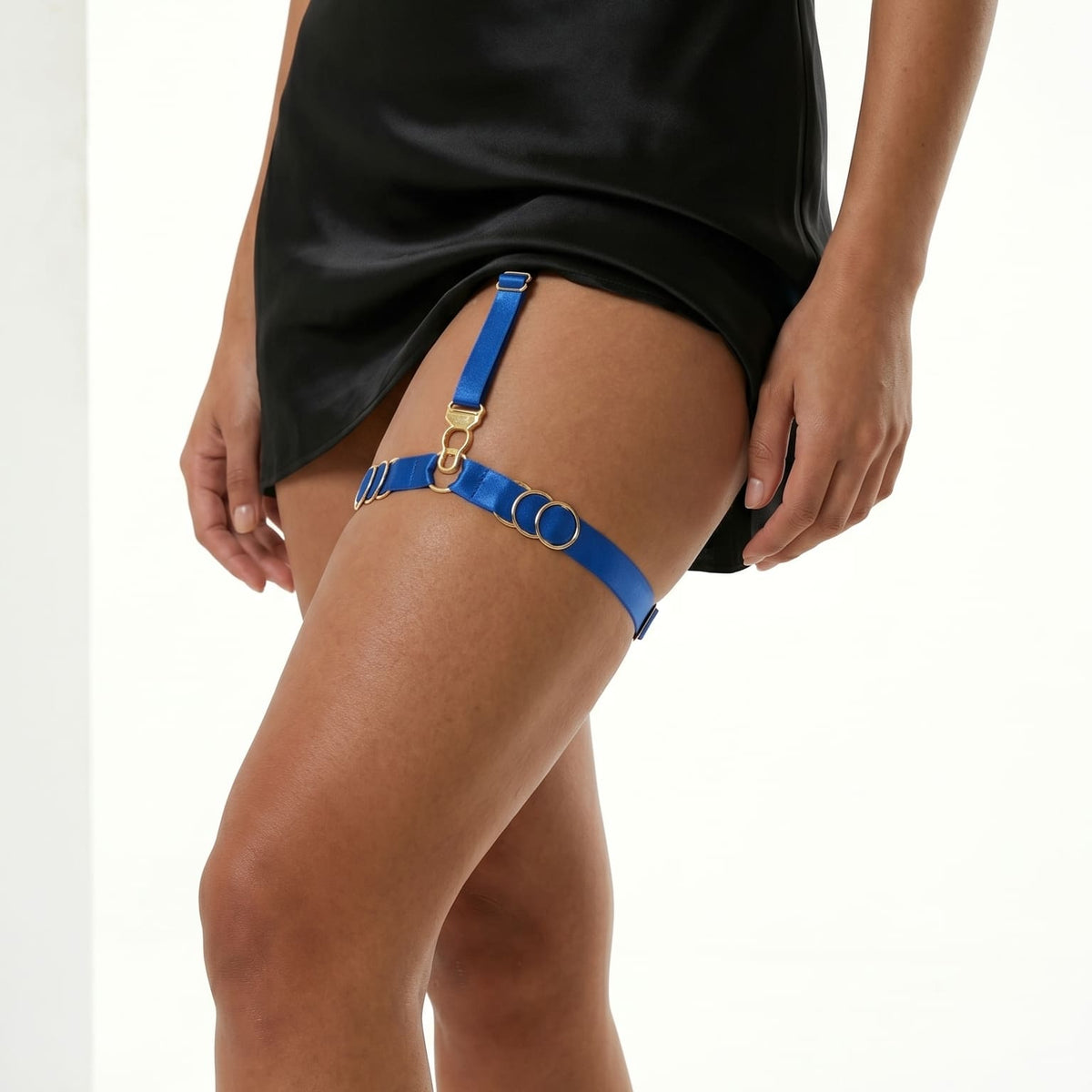
A waist or hip belt from the belts range does a different job. It adds a horizontal line where a two-piece set has none, and it works under a sheer shirt in a way a suspender belt does not.
Buying a set as a gift
Buy the half you can get right. A bra bought blind has to land on band and cup together, and the odds are poor. Briefs, a belt, or a boxed set of briefs are far more forgiving of a guess, and they still arrive as something that clearly belongs to a set.
The gift boxes are built for this. Love Box and Crystal Box both present as a finished gift without asking you to know a cup size. If the occasion is a wedding, our bridal and honeymoon packing guide covers what is worth buying ahead and what should wait until after the final dress alteration.
Keeping a set aging evenly
Wash the pieces together and the colours stay together. Sets rarely fail because a piece breaks. They fail because the briefs go through twice as many wash cycles as the bra and drift a shade lighter, so the set stops reading as a set while both halves are still perfectly wearable.
Hand wash both halves in the same water, dry them flat, and store the bras with the cups nested rather than folded inside out. The full method is in our lingerie washing guide.
Frequently asked questions
Does a lingerie set have to match exactly?
No. A set reads as a set when three things agree: the lace or fabric family, the hardware finish, and the depth of the colour. Trim, cut and even the exact shade can differ slightly and the pair still looks deliberate. Two blacks from different dye lots sitting next to each other is far more noticeable than two different lace patterns in the same black.
Why is my bra size right but the briefs from the same set too tight?
Because they are sized from different measurements. A bra size comes from your underbust and bust; a brief size comes from your hip, sometimes with waist. Those two numbers move independently of each other, and ready-to-wear size charts pair them using an assumed body proportion. If your proportion differs from that assumption, one half of the set will land and the other will not.
How many lingerie sets do I actually need?
Three sets that do different jobs cover most wardrobes: one everyday set in a neutral tone you can wear under most things, one set chosen to disappear under a specific difficult neckline or fabric, and one occasion set. Add extra briefs rather than extra full sets. Briefs wear out faster and are the cheaper half to replace.
Can I buy a lingerie set as a gift without knowing her size?
Buying a bra blind is the part that usually goes wrong, since band and cup have to be right together. Briefs, a suspender belt or a boxed set of briefs are far more forgiving, and a gift card removes the guess entirely. If you want to give something that looks like a set, pair a belt or briefs with the promise of a fitting rather than gambling on the bra.
How do I stop one half of a set wearing out before the other?
Wash them together, by hand, and rotate. The bra and the briefs from one set almost never get worn the same number of times, so the briefs age faster and the colours drift apart. Buying a second pair of briefs in the same fabric at the outset keeps the set usable for roughly twice as long.
Lioness Studio is the team behind Lioness Lingerie, a small atelier making bespoke lingerie to order. Everything we write here comes out of measuring, cutting and fitting real pieces for real clients, so the advice is what we would tell someone standing in the studio.