

Last updated: 31 July 2026
Most bridal lingerie advice stops at the dress. But the pieces you buy for a wedding have three separate jobs, and they rarely overlap: what disappears under the gown, what you change into that night, and what goes in the suitcase for the week after. Buying one set and hoping it covers all three is how people end up with an expensive corset they wore for four hours and never touched again. Here is what we tell clients who write in asking what they actually need, timing included, since timing is the part most people get wrong.
- Buy your under-the-dress pieces before your final alteration, and bring them to the fitting. The gown gets fitted around the underwear, not the other way round.
- One set rarely covers all three jobs. Plan separately for under the dress, for the wedding night, and for the honeymoon.
- Most honeymoons run five to seven days, so three or four sets plus a robe covers a normal trip without overpacking.
- Made-to-order pieces need lead time. For anything custom, order at least six to eight weeks before the wedding.
- White is a default, not a rule. Under most gowns, a shade close to your skin tone disappears better than white does.
The three jobs bridal lingerie has to do
Bridal lingerie splits into three categories, and each one has a different brief. Under-the-dress pieces are invisible by design: their whole purpose is to give the gown a clean line and hold it there through a long day. The wedding night piece is the opposite, meant to be seen and photographed if you want it to be. Honeymoon pieces have to survive a suitcase, a different climate, and being worn several days in a row.
Treating them as one purchase is where the budget goes sideways. A structured strapless bodysuit that works under a fitted gown is usually the last thing you want to pack for a week in the heat.

When to buy bridal lingerie
Buy your under-the-dress pieces before your final dress fitting, and take them with you to that appointment. Alterations are cut around whatever you are wearing underneath, so a seamstress fitting you in one bra and a wedding day spent in another is the most common reason a gown sits wrong at the last minute.
Work backwards from there. If you are ordering anything made to order, including most of what we make, allow six to eight weeks so the piece is finished and in your hands before that final fitting, not after it. Off-the-rack pieces need less runway, but still order early enough to exchange a size if the first one is wrong.
One more timing note that gets skipped: if your body has changed in the months of planning, measure again rather than ordering from a number you wrote down in January. Our guide to measuring at home covers how to take the measurements, and the fitting guide covers how to tell whether what arrived actually fits.
What to wear under the dress
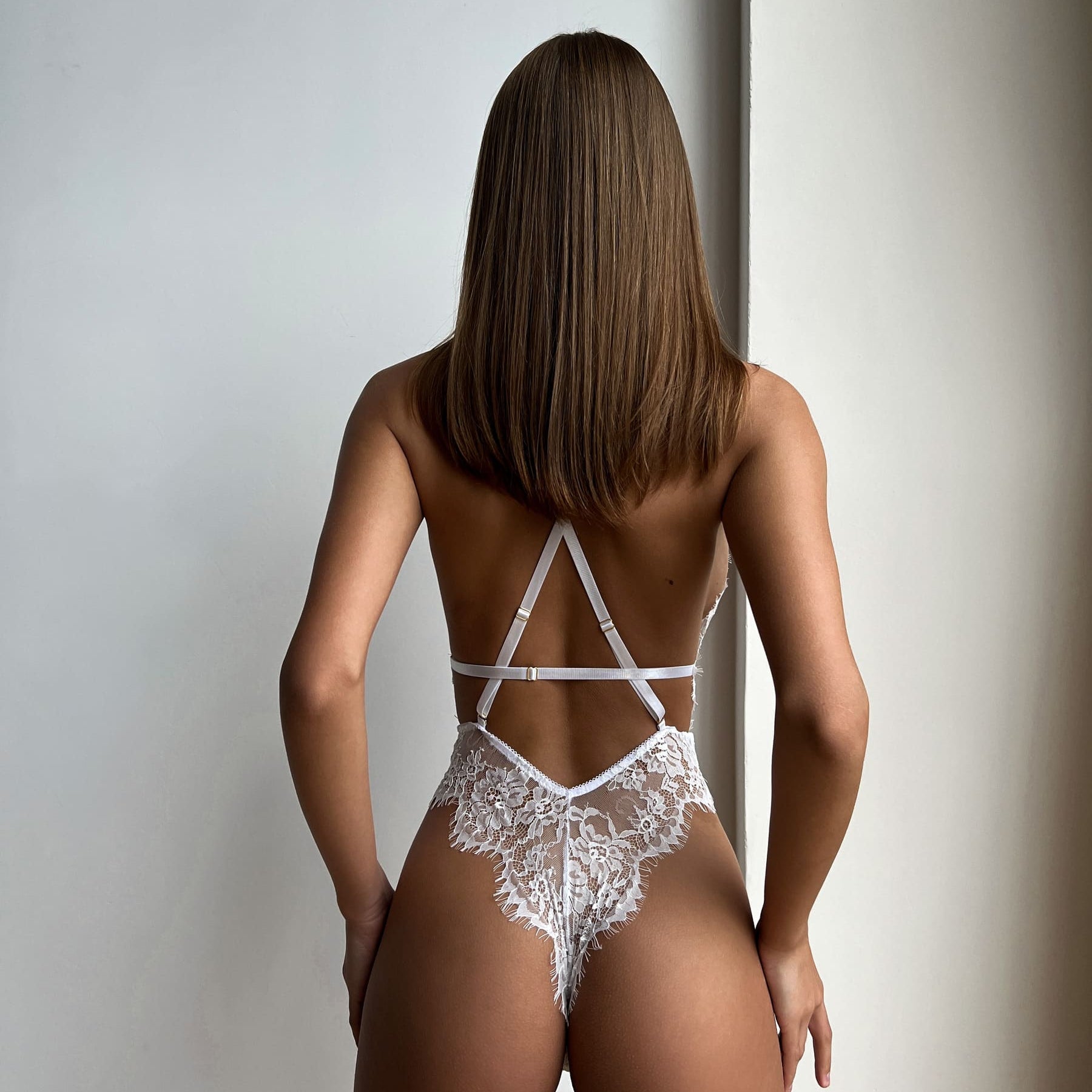
The neckline and the back of your gown decide this, not the style of lingerie you like best. A deep V or a plunging front needs a plunge cut so nothing shows at the centre. A backless or very low-back gown rules out a standard band entirely, which usually means a longline piece with a low back, a bodysuit, or the dress carrying its own internal support and you wearing briefs only.
Strapless gowns need a band that holds without straps, which is a fit question rather than a style question: the band has to sit firm enough to stay put through dancing. Fitted skirts show every edge, so choose briefs cut wide enough that the elastic lies flat instead of digging in. A wider pair reads cleaner under silk than a narrow one that leaves a line.
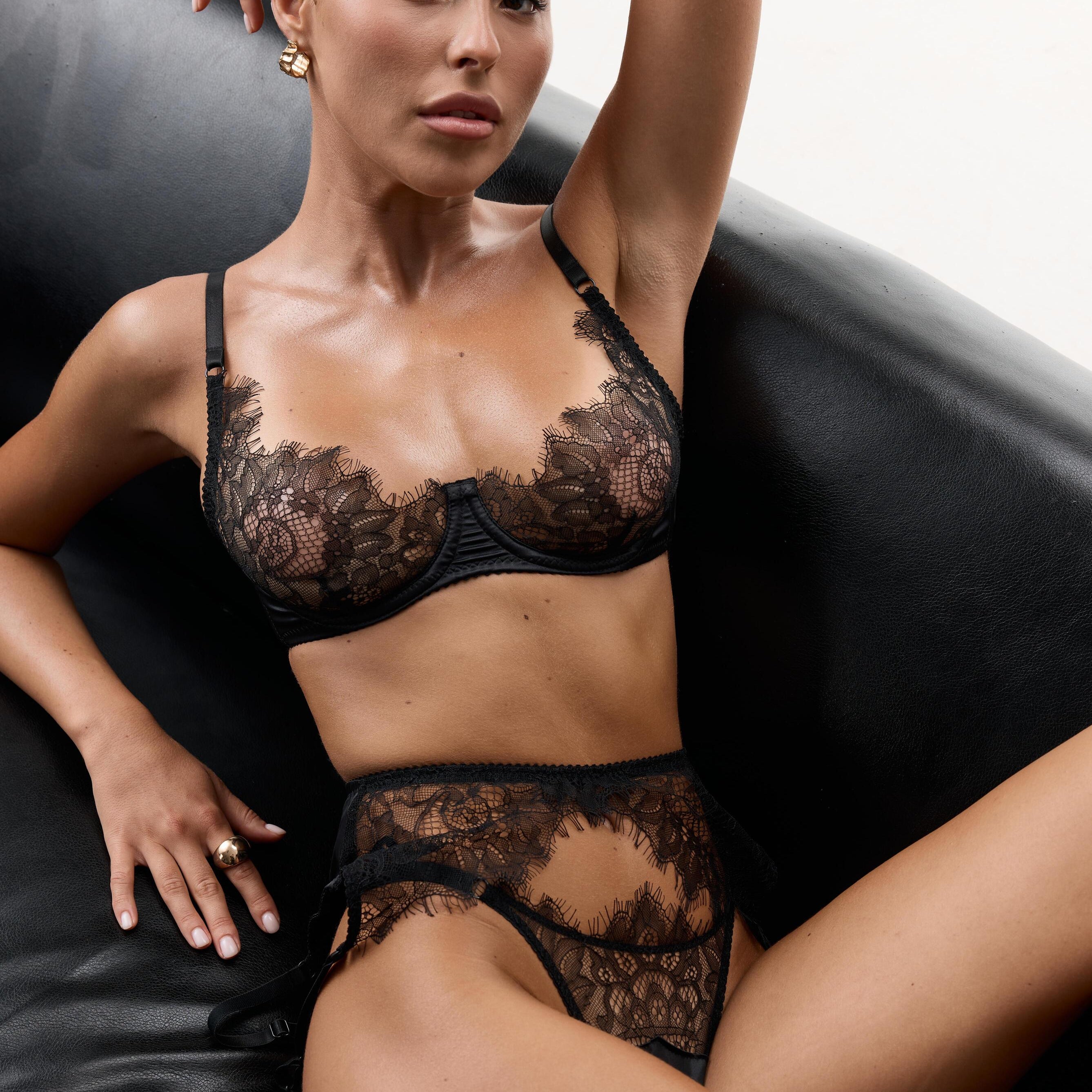
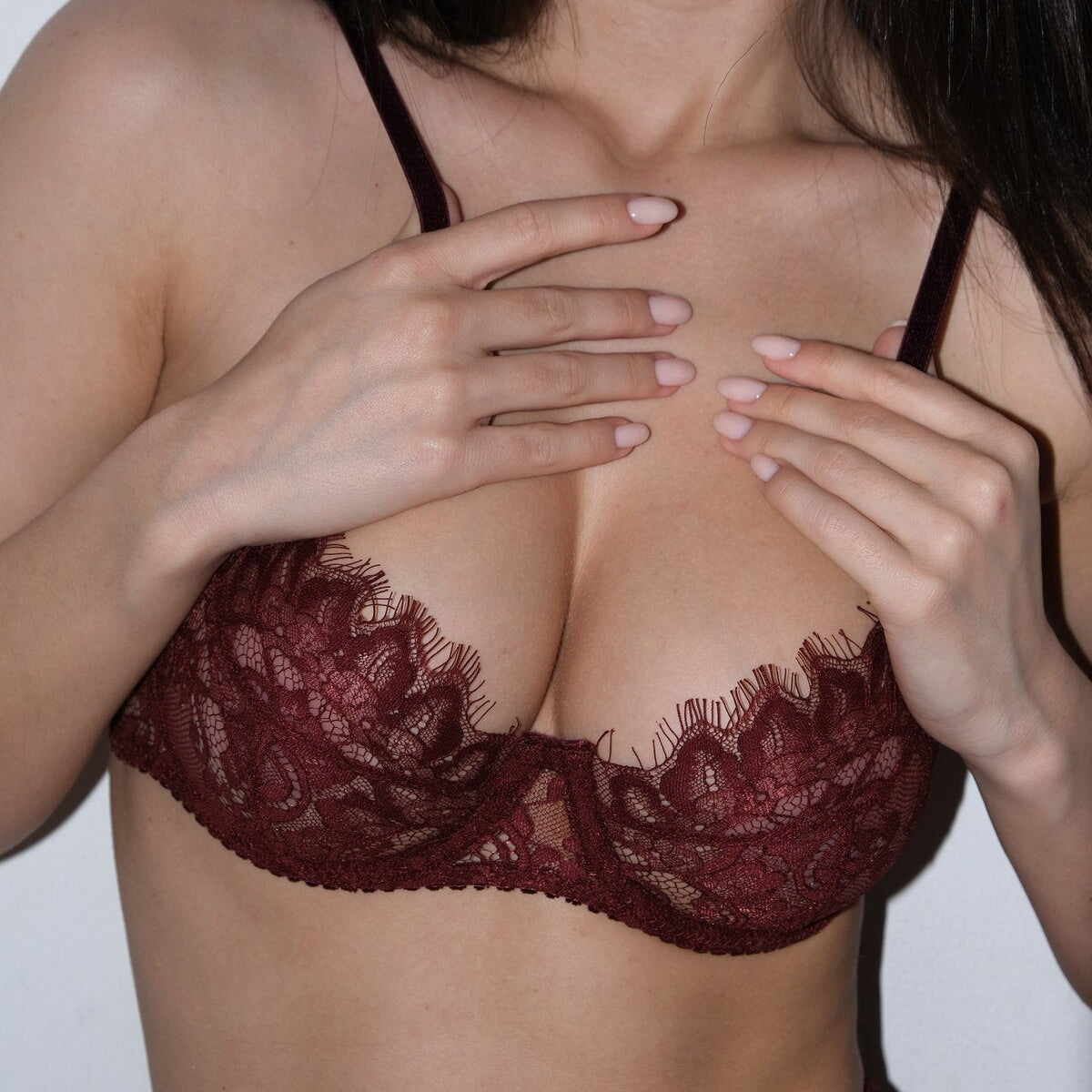
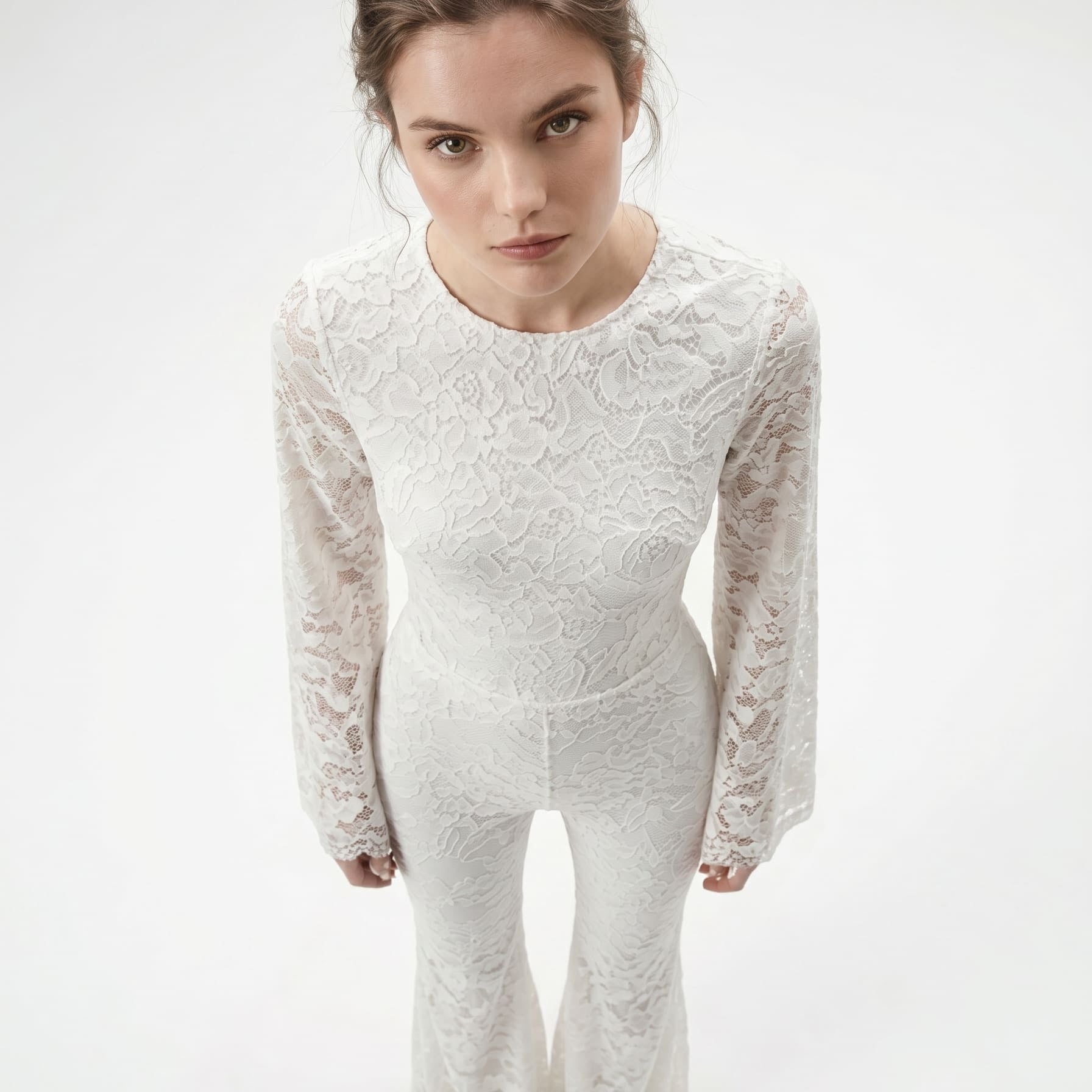
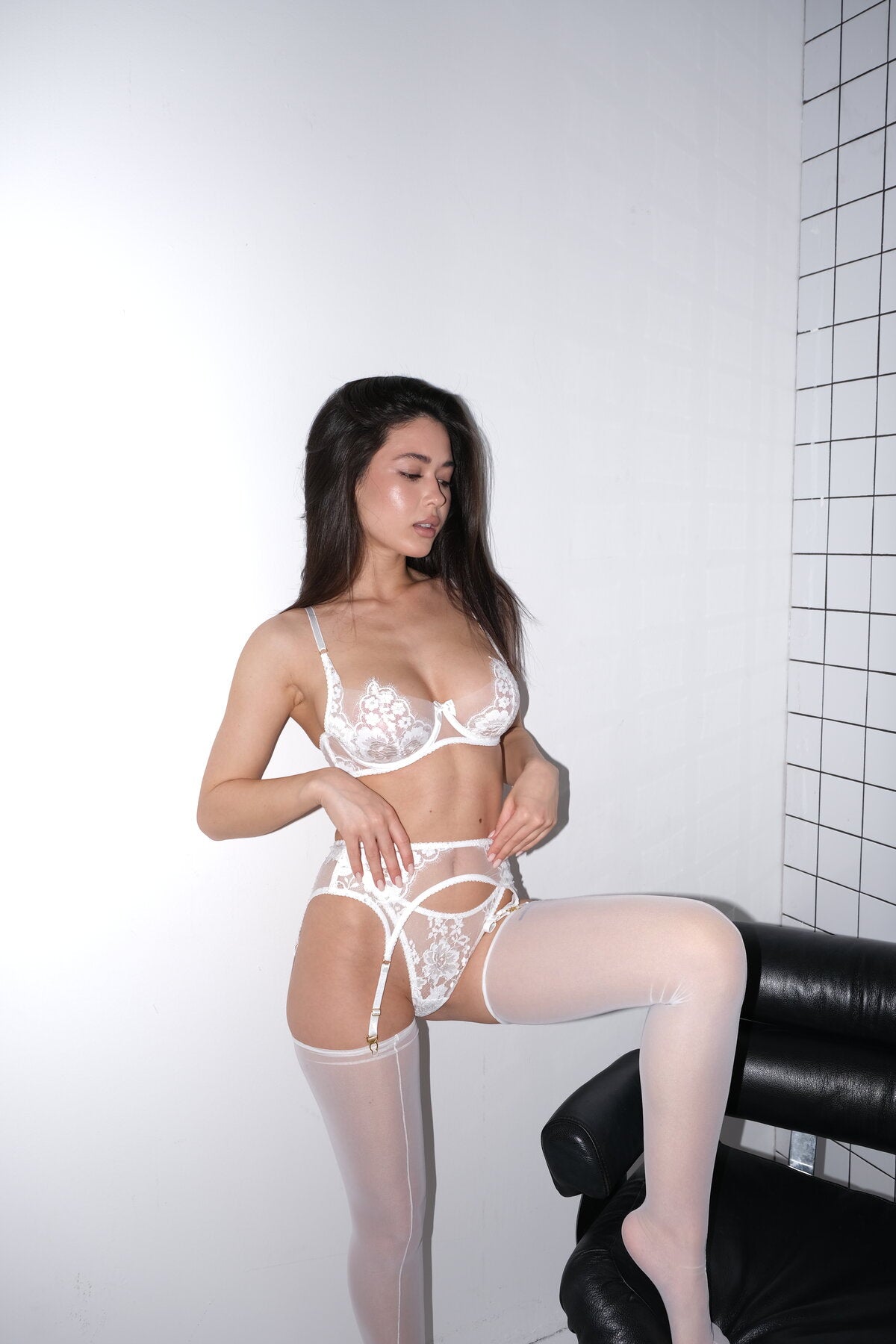
If your gown is sheer, lace-panelled, or has an illusion back, the lingerie becomes part of the look rather than something to hide. That is the one case where a piece from the bridal collection is meant to be visible through the fabric, and worth choosing for how it reads on camera.

Does bridal lingerie have to be white?
No. White is the traditional choice and it photographs well against ivory and champagne gowns, but under a light dress it can show as a brighter block through the fabric. A shade close to your own skin tone is usually the more invisible option, which is why it is standard advice from dressmakers rather than a compromise.
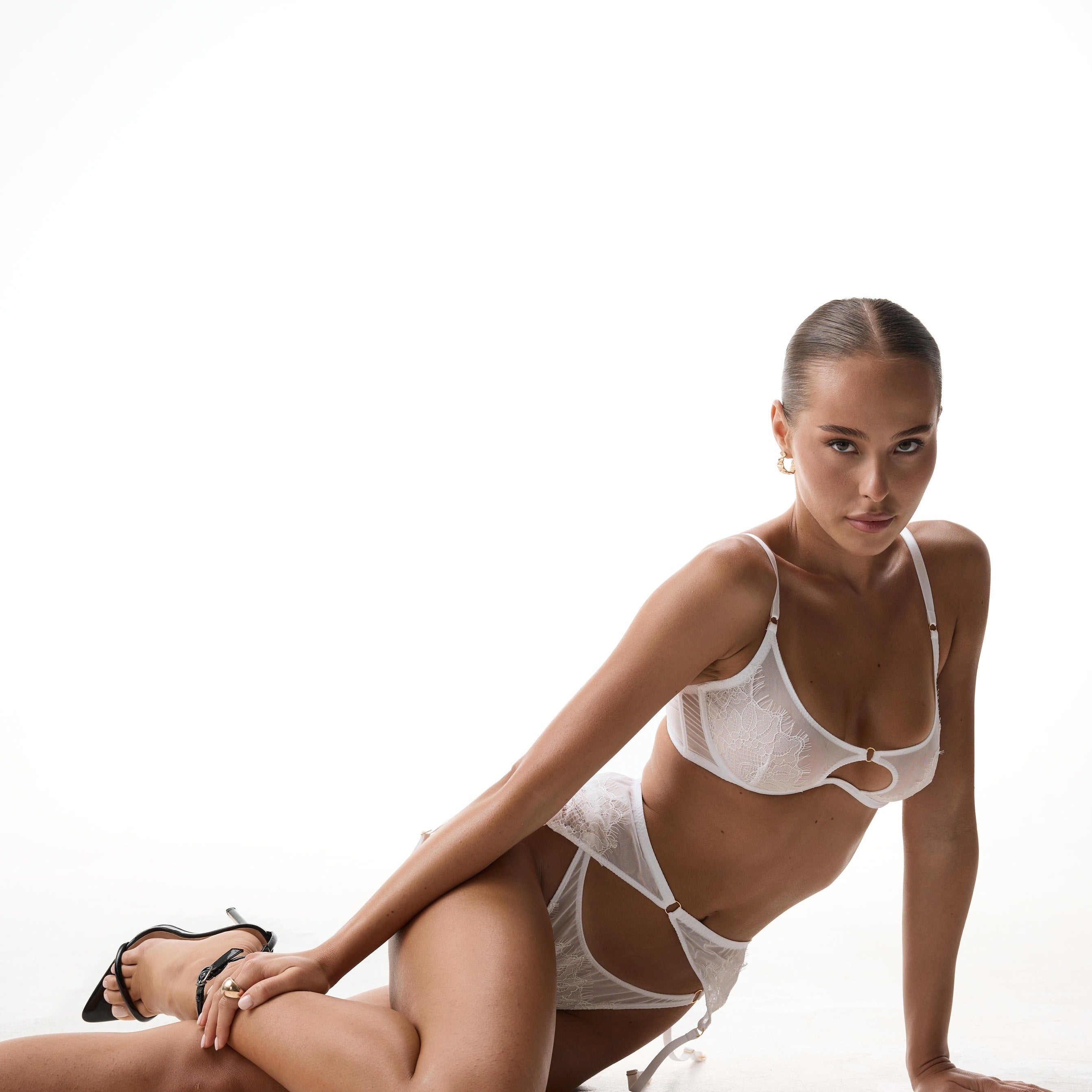
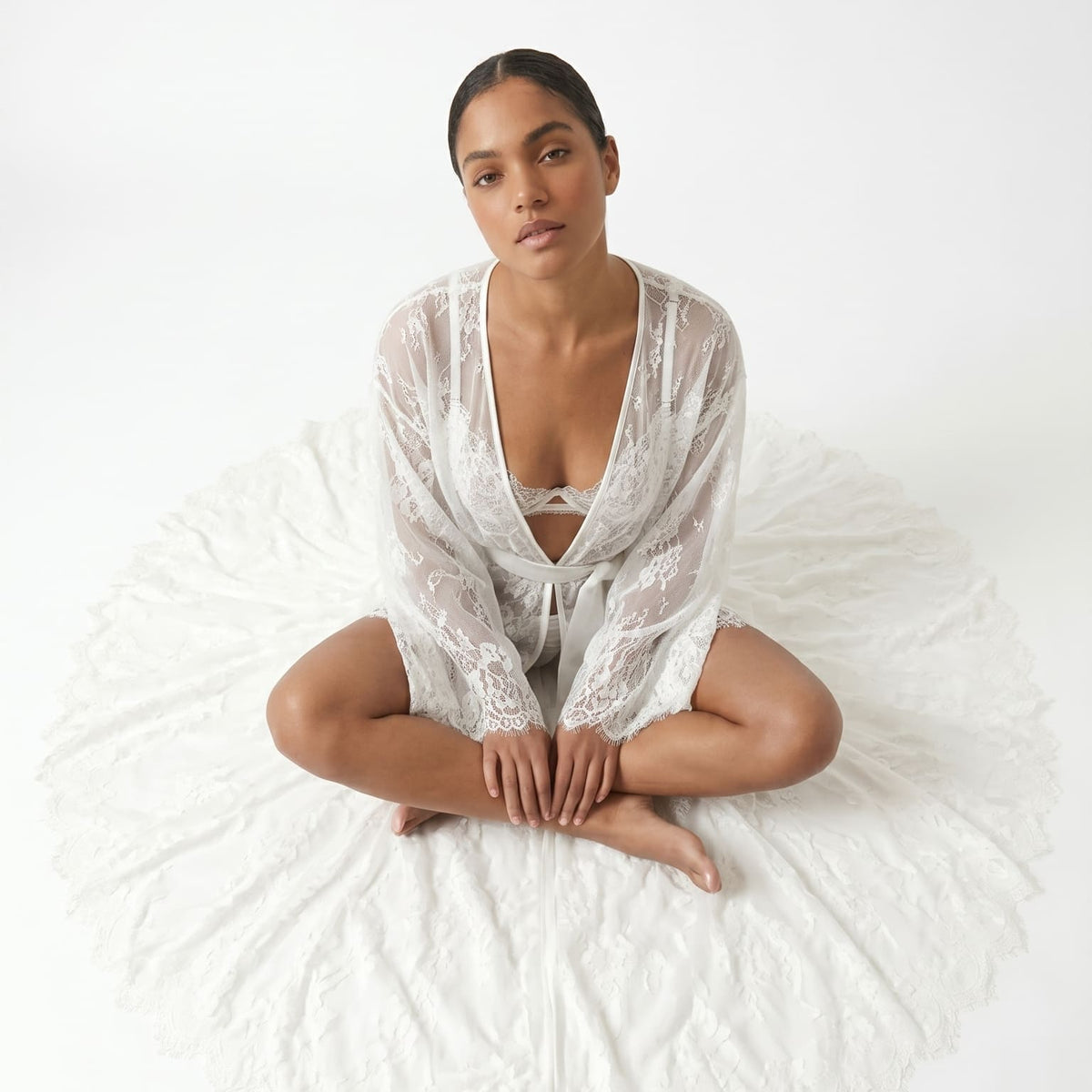
Where white earns its place is the wedding morning and the wedding night, when the piece is meant to be seen. Ivory and soft white sets in the Angelic Whisper and Femme Totale lines are built for exactly that: getting-ready photographs, the robe over the shoulders, the piece you are still wearing at the end of the night.
The wedding night piece
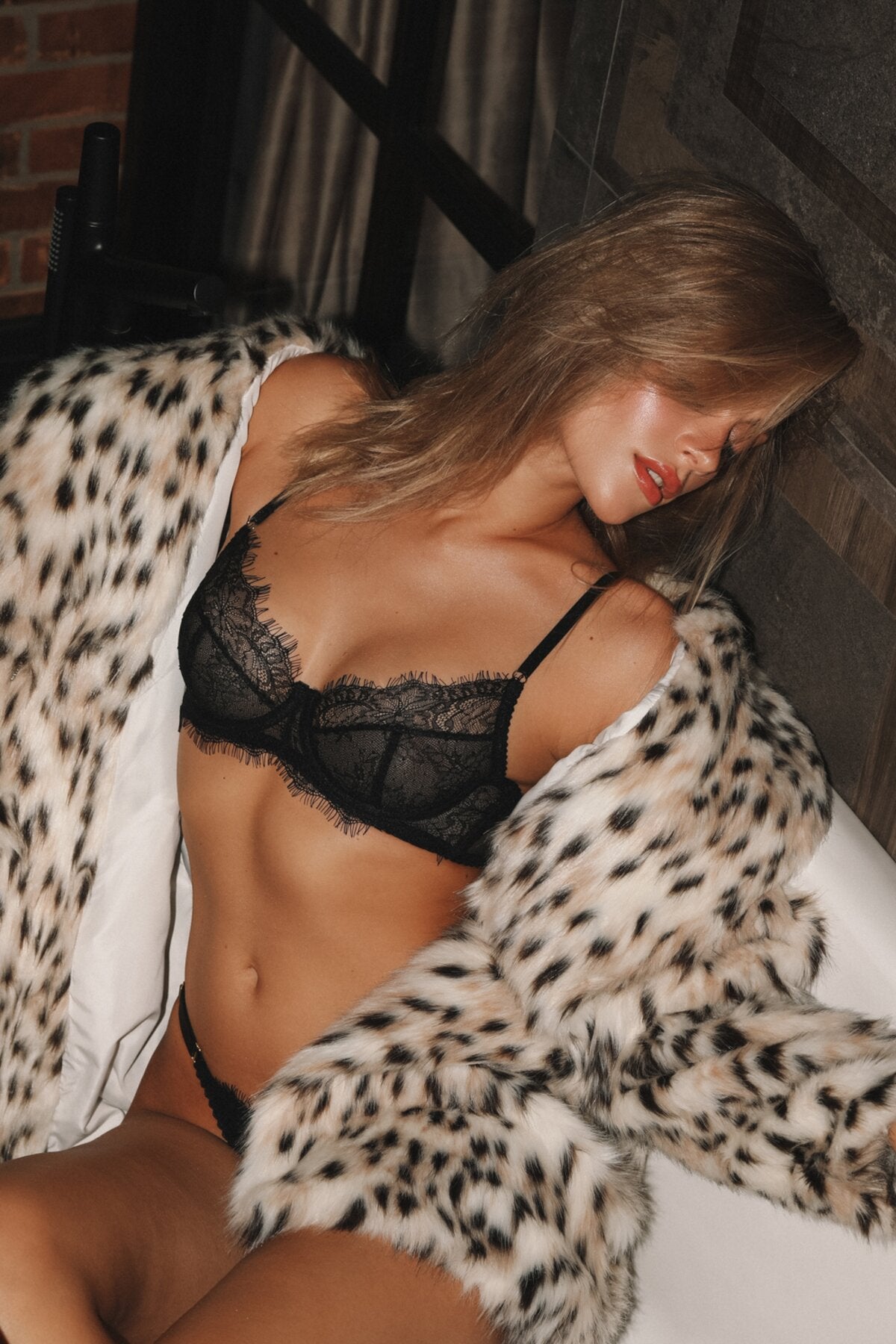
Choose something you would happily wear again on an ordinary Tuesday. That single filter solves most of the anxiety around this purchase. A piece bought purely for one night carries an expectation nobody enjoys, and it usually ends up in a drawer. A piece you already like the fit of gets worn for years, and the wedding night becomes the first time you wore it rather than the only time.
Silk and fine lace both work, though they behave differently: silk from a line like Lea De Paris moves and drapes, while structured lace holds a shape. The one you will reach for again is the right answer.
How many sets to pack for the honeymoon
Pack three or four sets for a week, not seven. Most trips are shorter than people plan for, and lingerie takes up almost no space compared to what you will regret not bringing instead.
The Knot's 2024 Honeymoon Study found that 70% of couples took a honeymoon lasting one week or less, and 56% reported a trip of five to seven days. The single most common length was exactly seven days, chosen by 33% of couples, with five days the next most common at 17%. Details of that study are published in The Knot's report on average honeymoon length.
So the realistic default is a five to seven day trip. Three sets you can rotate, one of which doubles as day-to-day underwear, plus one piece kept aside for the first night, covers it comfortably. If you are taking a mini-moon of two to four days instead, which the same study found is common, two sets is plenty.
What else goes in the honeymoon bag
The pieces people forget are the ones they end up wearing most: a robe, something to sleep in that is not the wedding night piece, and underwear that handles heat.
A robe does more work than its share of the suitcase suggests. It covers room service, balconies, and the walk from the bathroom, and it photographs well if you are taking pictures. The robes and matching sets are cut for that, and a set with a robe means one fewer decision each morning.
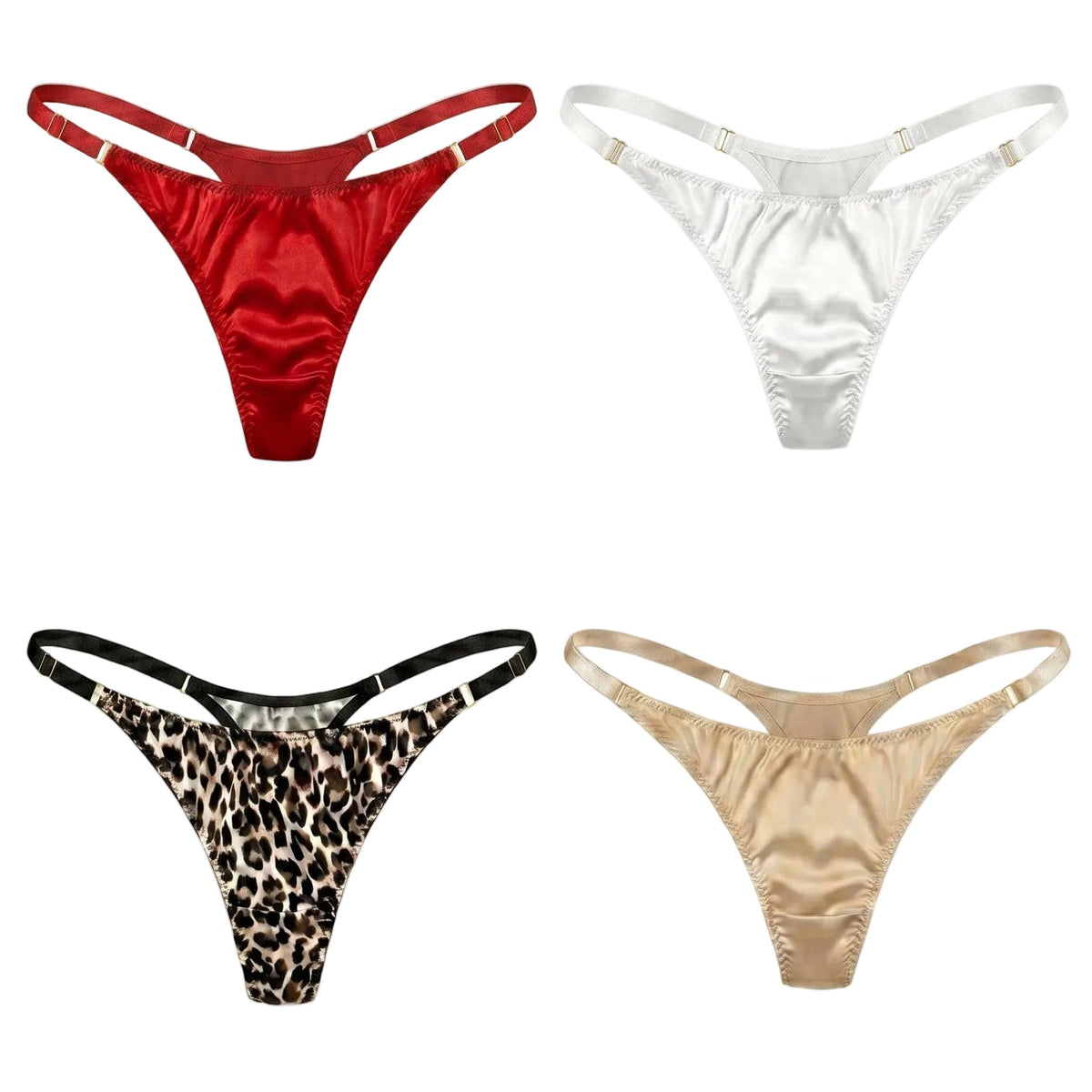
For heat, natural fibres beat anything synthetic. Silk briefs like the ones in the silk box pack flat, wash in a sink, and dry overnight, which matters more on a trip than it does at home. Leave heavily structured pieces at home unless you have a specific evening planned for them.

Something blue, garters, and which traditions to keep
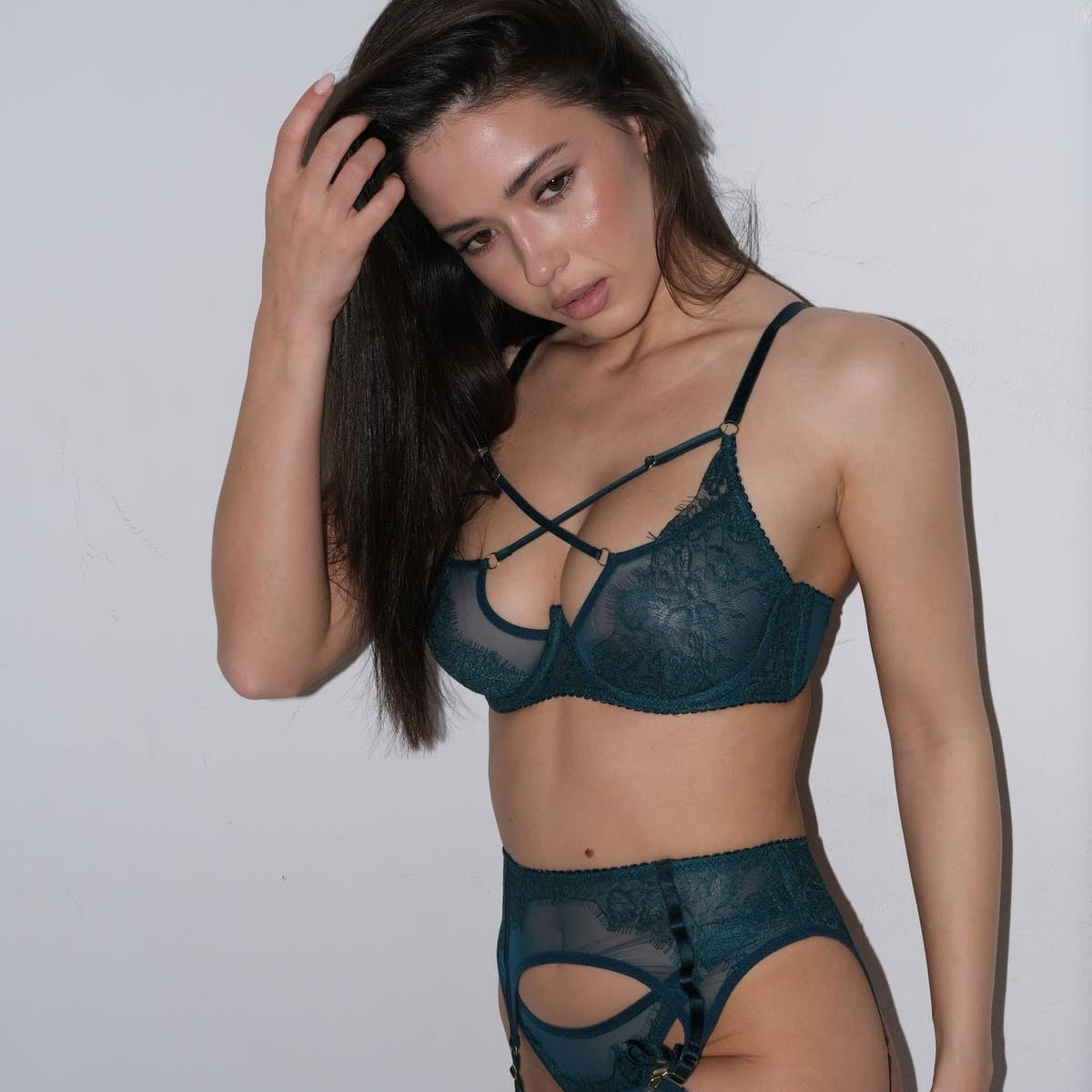
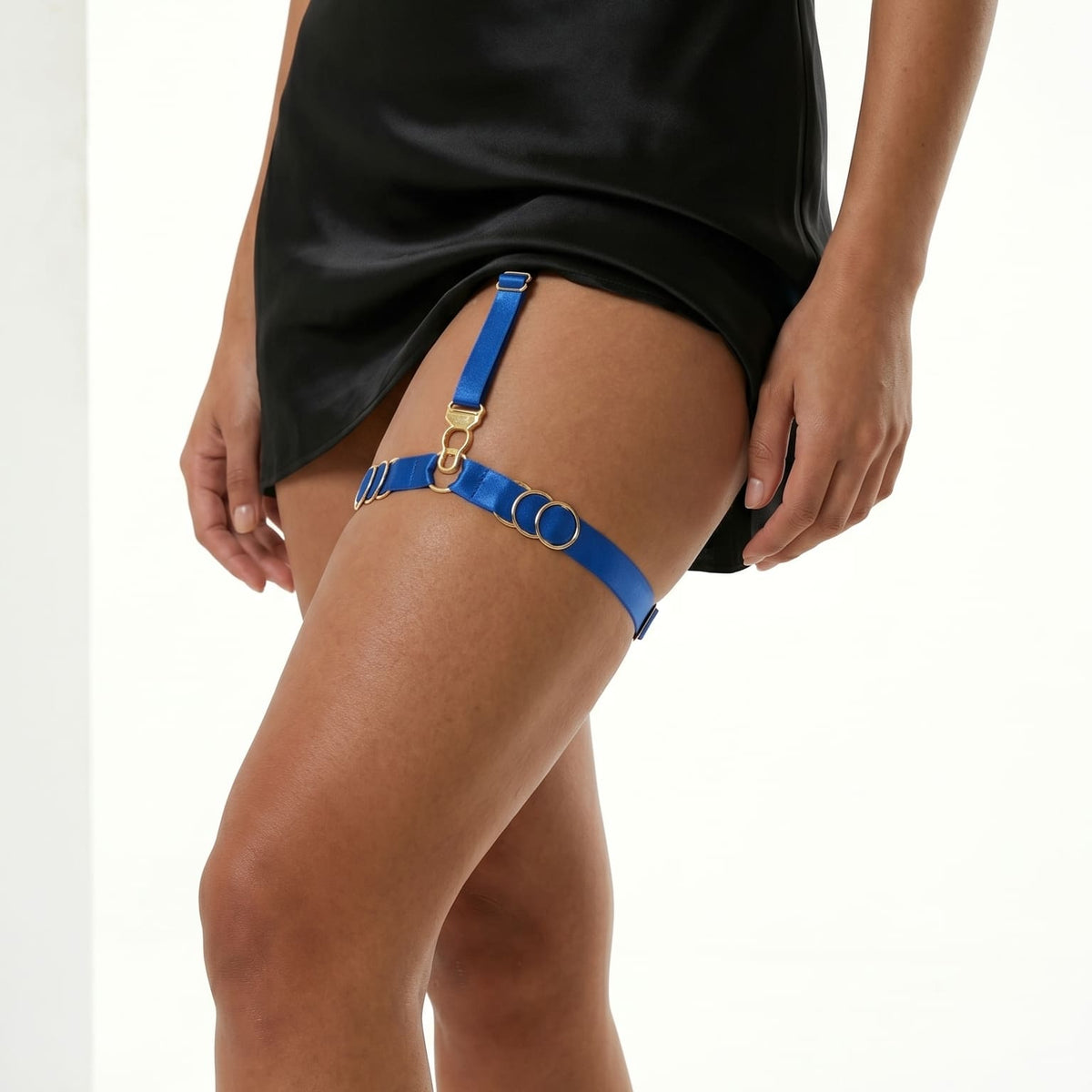
Keep the ones you actually like and drop the rest without guilt. Something blue is the easiest to fold in without it feeling staged, since a blue set worn under the dress does the job invisibly. The Sapphire line exists partly because brides kept asking for exactly that.
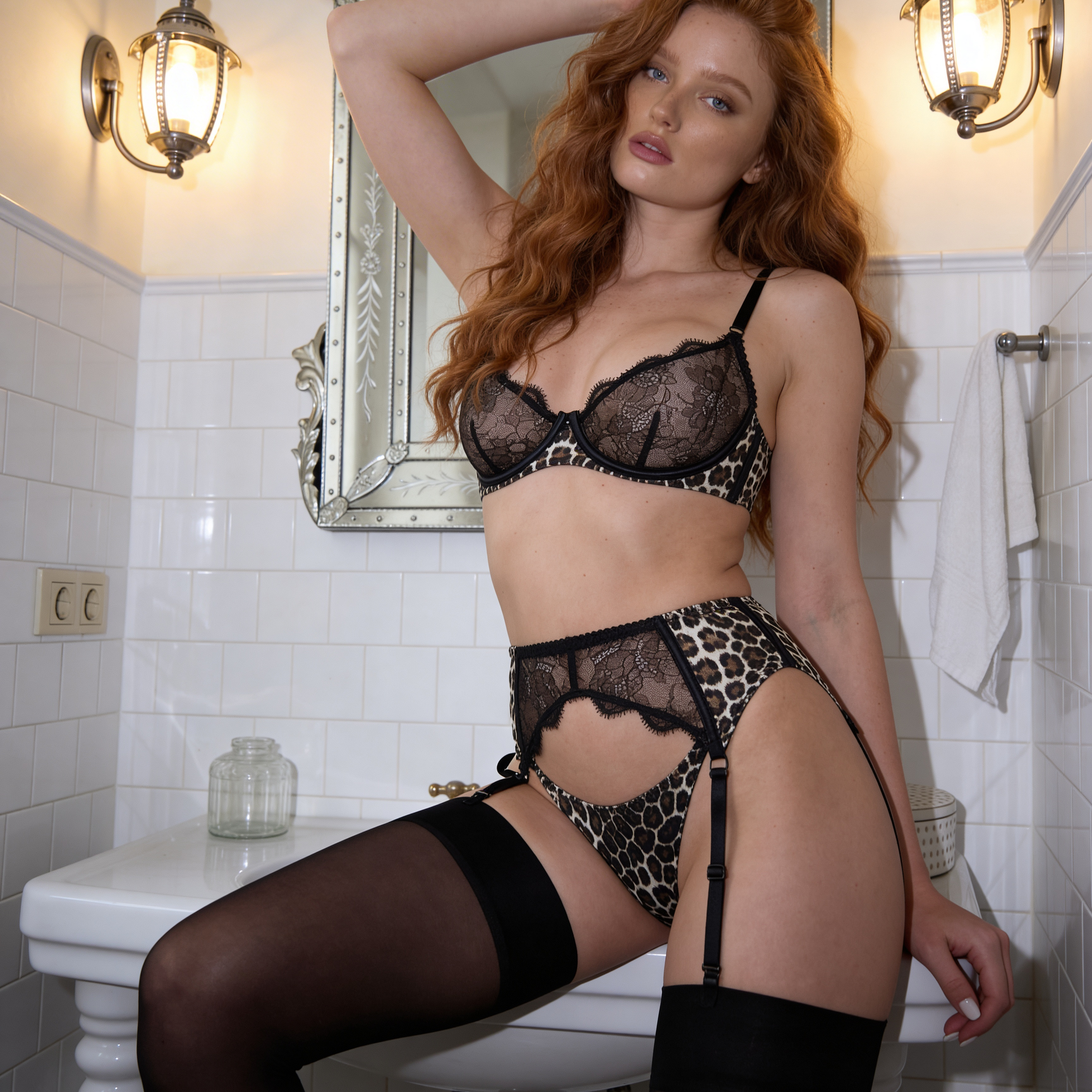
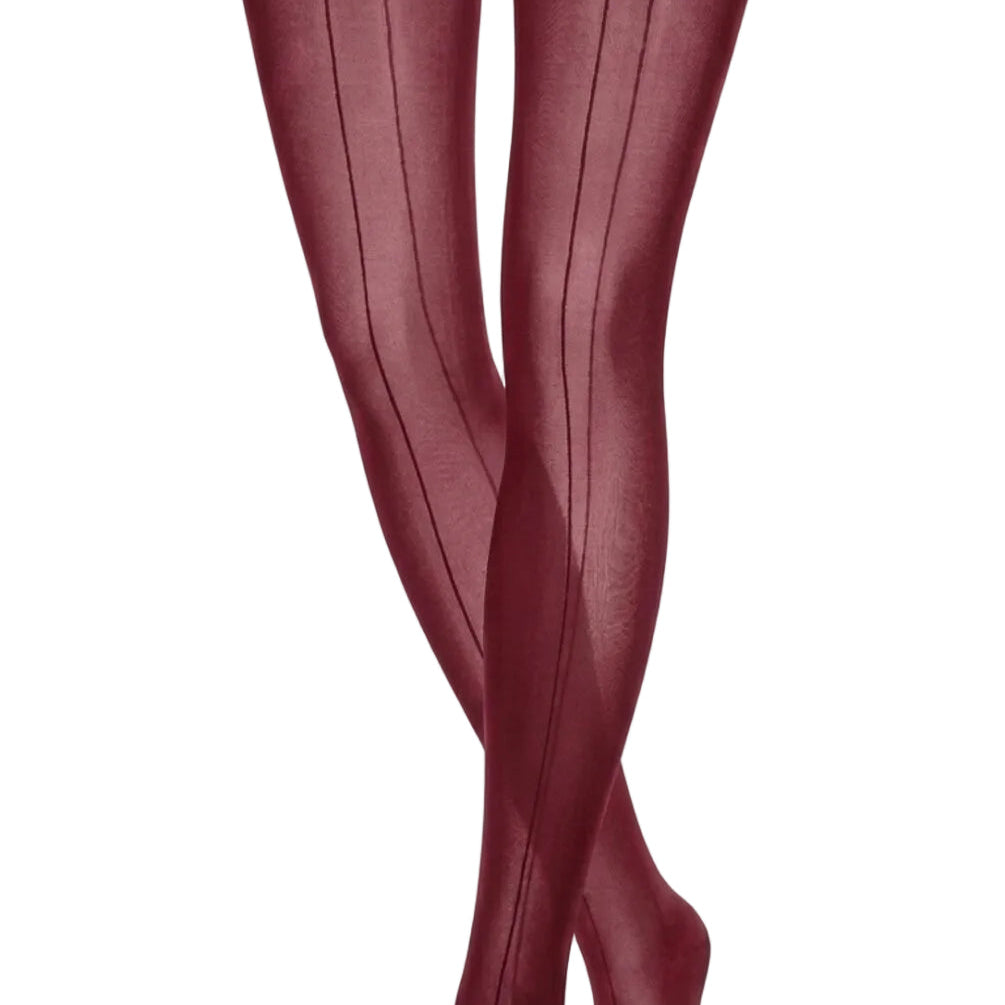
Garters are still worn, though more often kept than thrown. If you want one for photographs or because you like how it sits, a garter works with most gown shapes as long as the skirt has enough room. Pair it with stockings if the dress and the venue temperature allow, and skip it entirely if you are wearing a fitted crepe column where every line shows.
Packing delicates so they survive the suitcase
Lay lingerie flat inside a soft pouch rather than rolling or stuffing it, and put underwired pieces in last so nothing presses the wire out of shape. A crushed wire never fully recovers, and a bent one will dig in for the rest of the trip.
Wash by hand in cool water with a mild detergent and press the water out in a towel rather than wringing. Hotel sinks are fine for this. Dry pieces flat rather than hanging them wet, since the weight of the water stretches the elastic.
Frequently asked questions
When should I buy my bridal lingerie?
Buy your under-the-dress pieces before your final dress fitting and bring them to that appointment, since alterations are cut around what you wear underneath. For made-to-order pieces, allow six to eight weeks so they arrive before the final fitting.
What lingerie works under a backless or low-back wedding dress?
A standard band will show, so the options are a longline piece with a low back, a bodysuit designed for the cut, or relying on the gown's own internal support and wearing briefs only. Check this at the fitting rather than on the day.
Does bridal lingerie have to be white?
No. White is traditional, but a shade close to your skin tone is usually less visible under a light gown. Save white and ivory for the pieces that are meant to be seen, such as getting-ready photographs and the wedding night.
How many lingerie sets should I pack for a honeymoon?
Three or four sets covers a typical five to seven day trip, including one piece kept aside for the first night. For a mini-moon of two to four days, two sets is enough.
Can I wear bridal lingerie again after the wedding?
Yes, and choosing with that in mind is the best filter for the purchase. If you would wear the piece on an ordinary day, you will wear it for years rather than once.
About Lioness Studio
Lioness Studio is the writing side of Lioness Lingerie, where everything is made to order to individual measurements rather than pulled from stock. These guides come out of the questions clients ask us during fittings and over email, written the way we would answer them in person.