
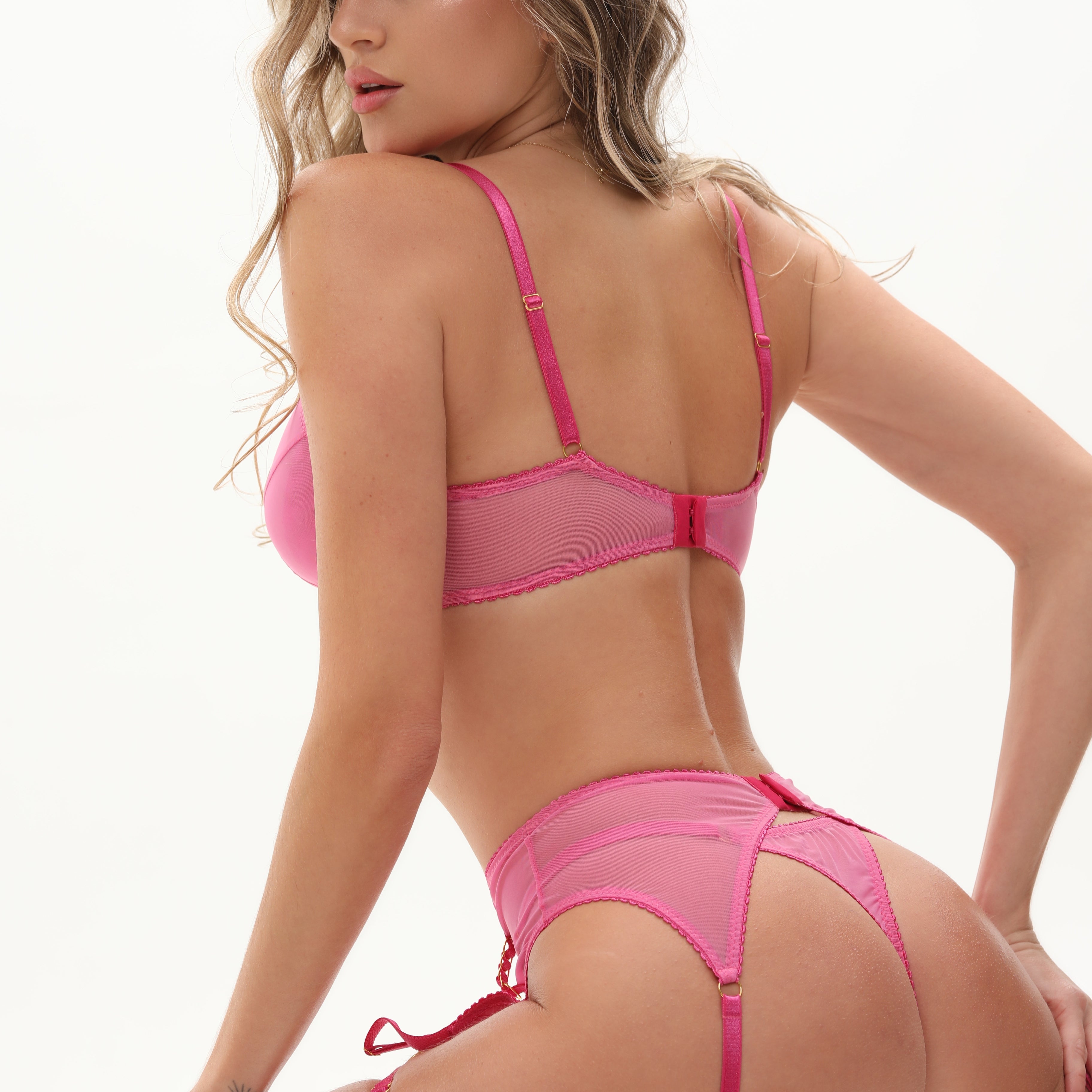
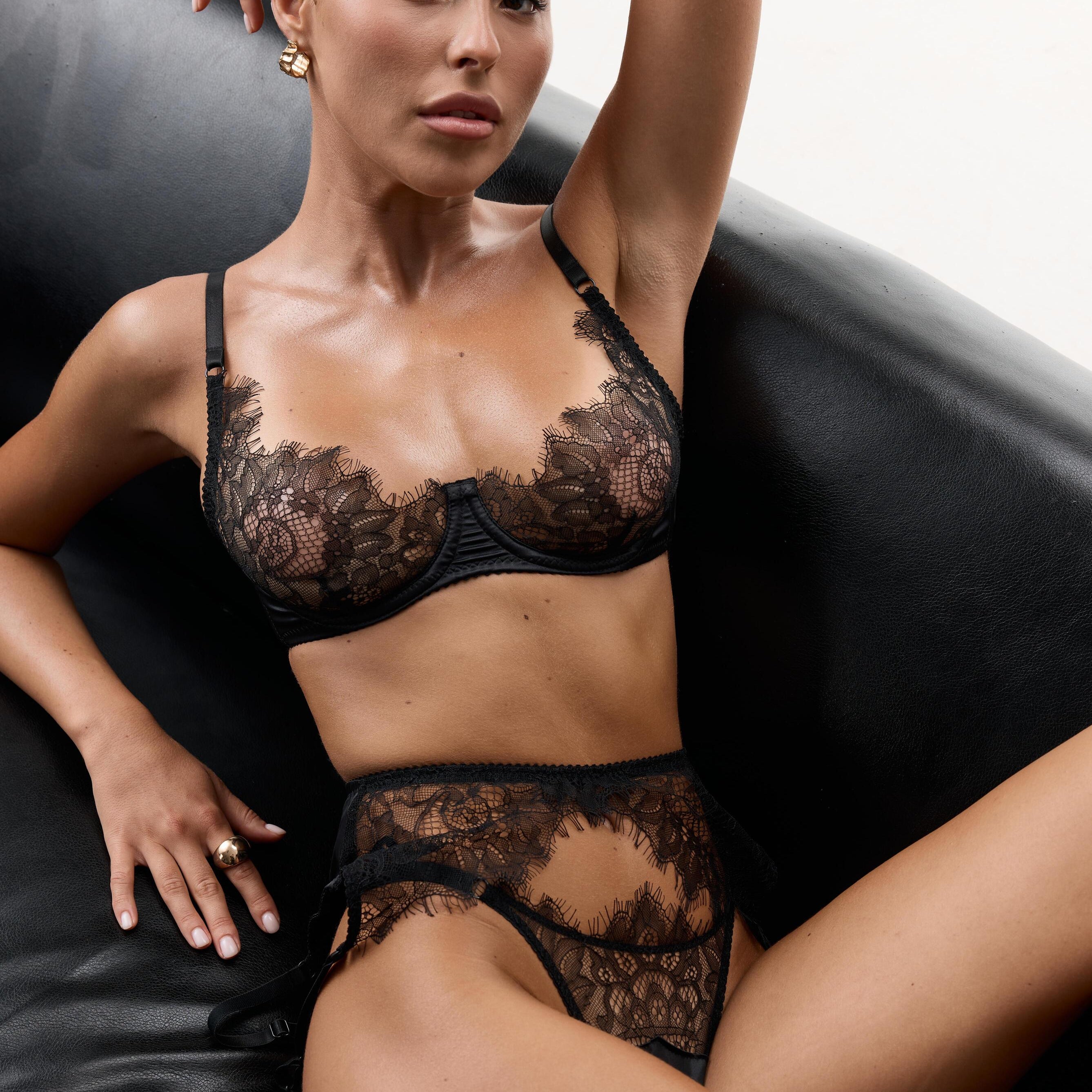
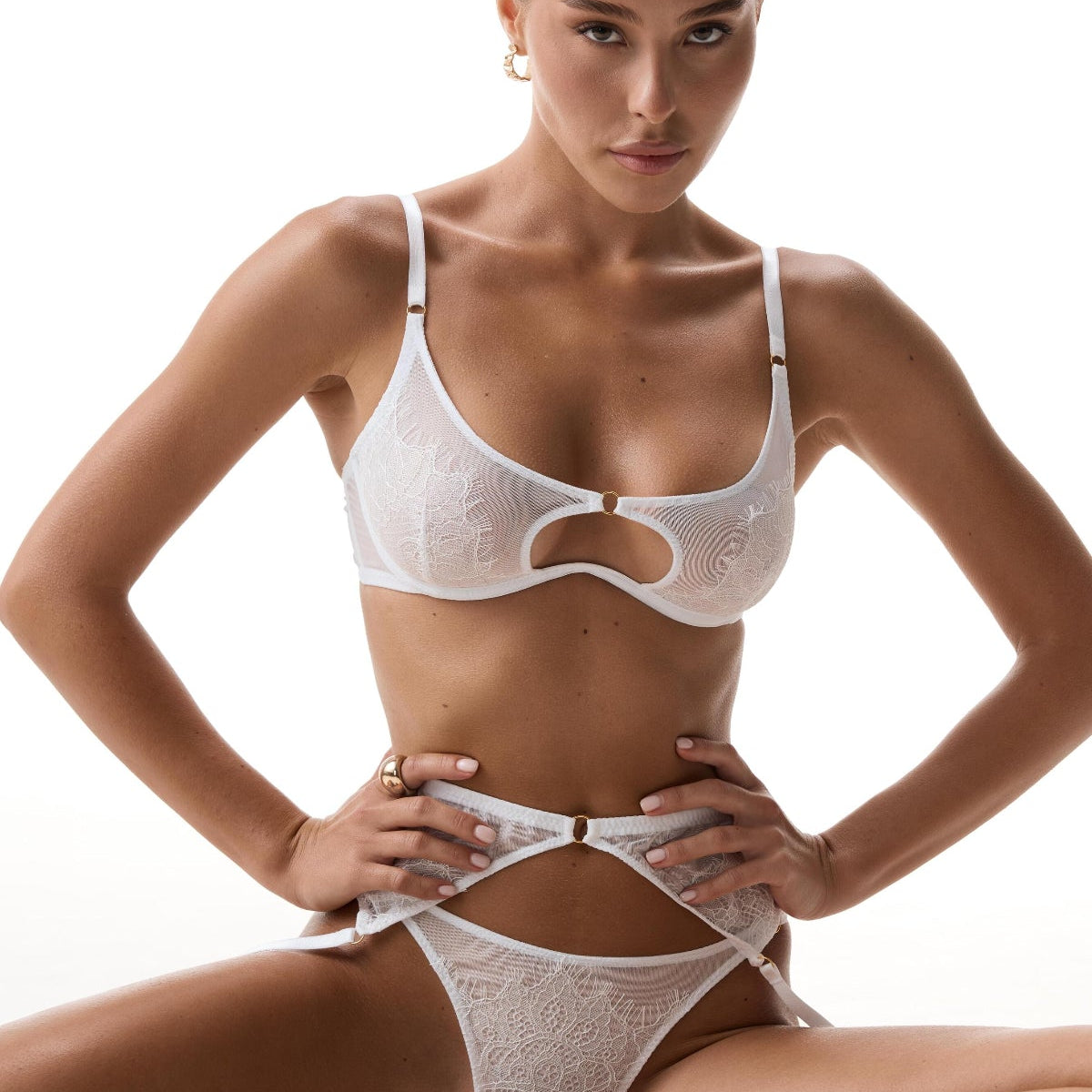
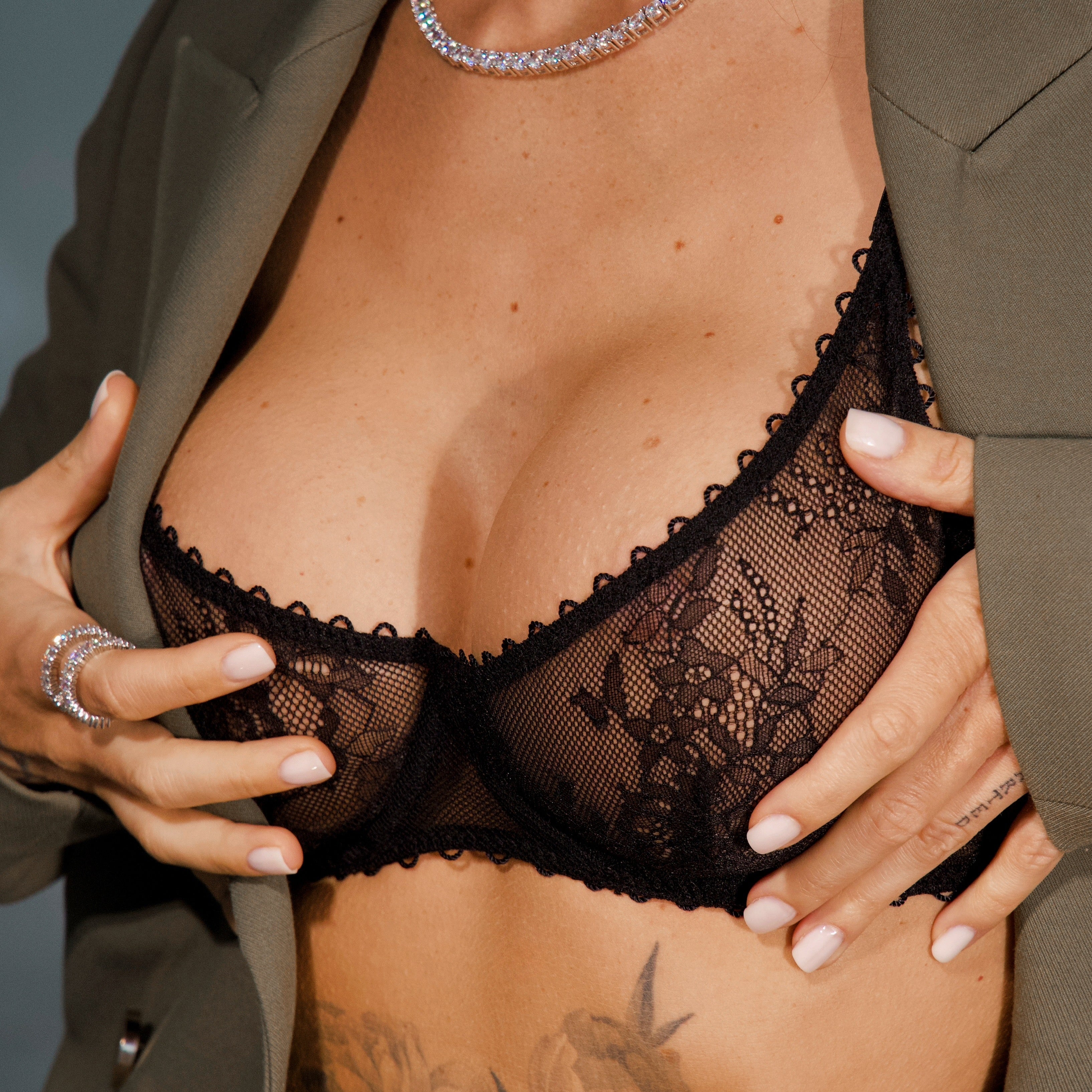




Last updated: July 24, 2026
Most women are wearing the wrong bra size right now. Not because they're careless about it, but because nobody ever taught them the two numbers that actually matter, and most sizing charts assume you already know what you're looking for. This guide walks through how to measure your own bra size at home, using a soft tape measure and about five minutes, with no fitting-room guesswork.
We're writing this because sizing is where a bra succeeds or fails before it's even worn. Every piece in our bra collection is built to a specific band and cup measurement, so getting your numbers right here determines whether the piece you order actually fits the way it's meant to.
Key takeaways
- Bra size has two parts: a band measurement (in inches, taken directly under your bust) and a cup measurement (the difference between your bust and band).
- Measure in an unpadded, well-fitting bra or with no bra at all. A padded or push-up bra will throw off both numbers.
- Each full inch of difference between your bust and band measurement equals one cup letter: 1 inch is an A cup, 2 inches a B, 3 a C, and so on.
- Re-measure every 6 to 12 months, and always after pregnancy, breastfeeding, or a weight change of more than 10 to 15 pounds.
- If your numbers fall between two sizes, sizing down on the band and up on the cup usually gives a snugger, more supportive fit than rounding the other way.
What you need before you start
You need a soft measuring tape, a mirror, and about five minutes. Take the measurements in a bra with no padding and no underwire distortion, or skip the bra entirely and measure over a thin top. Stand straight with your arms relaxed at your sides; measuring with your arms raised or your shoulders hunched will shift the tape and skew both numbers.
How to measure your band size
Wrap the tape around your ribcage directly under your bust, where the band of a bra would sit. Keep the tape level and parallel to the floor all the way around, snug enough that it doesn't slide but not pulled tight. Take the number in inches and round to the nearest whole number.
If the resulting number is odd, most US and Canadian sizing charts round up to the next even number for the band size (a 32.5-inch reading becomes a 34 band). UK and EU charts handle this differently, which is one reason the same body can come out as three different band numbers depending on which country's chart you're reading. If you're shopping a brand that uses a different regional convention than you're used to, check that brand's own size chart rather than assuming your usual number carries over directly.
How to measure your bust size
Wrap the tape around the fullest part of your bust, usually across the nipple line, keeping the tape level front and back. Don't compress the tissue by pulling the tape tight; it should sit against the skin the way a bra cup would, not squeeze. Round this number to the nearest whole inch as well.
How to calculate your bra size from these two numbers
Subtract your band measurement from your bust measurement. The difference in inches maps to a cup letter: a 1-inch difference is an A cup, 2 inches a B, 3 inches a C, 4 inches a D, 5 inches a DD or E depending on the chart, and so on up the alphabet.
As an example: a band measurement of 34 inches and a bust measurement of 37 inches gives a 3-inch difference, which is a C cup. Your size would be 34C. That's the exact logic our Odri and Lola pieces are built around, both offered across a full band-and-cup range rather than a handful of generic sizes.
The measuring mistakes that throw off your result
A few habits quietly produce wrong numbers even when someone follows the steps above. Measuring over a padded or push-up bra adds an inch or more to the bust reading. Pulling the tape too tight on the band, out of a reflex to get a "smaller" number, produces a band size that will feel tight within an hour of wearing it. Slouching or letting the tape ride up in the back changes both measurements. And measuring completely alone, without a mirror to check the tape stays level all the way around your back, is the single most common source of an inaccurate reading, since it's easy for the tape to dip several inches in the back without you noticing.
A 2012 University of Portsmouth study published in the journal Ergonomics measured 45 women against a five-point best-fit standard covering the band, cup, underwire, straps, and front band, and found that traditional measuring methods overestimated band size in 76% of women and underestimated cup size in 84%. That gap is part of the evidence behind the widely cited estimate that somewhere between 70% and 90% of women wear an incorrectly sized bra, and it traces to measuring habits and outdated size charts more than to unusual body shapes, which lines up with the mistakes above.
Why your bra size changes after weight loss, pregnancy, or time
Bra size isn't fixed. Weight change of more than about 10 to 15 pounds usually shifts the band measurement, the bust measurement, or both, even when the change happens gradually. Pregnancy and breastfeeding change both numbers repeatedly over months, sometimes by two or three band sizes and a full cup letter or more; most people who are nursing need to re-measure every few weeks during the first months rather than assuming one size will carry them through. Age and general body changes over years do the same thing more slowly. None of this means anything went wrong with your first measurement. It means the body it was measuring changed, and the bra needs to catch up.
Five signs your current bra doesn't fit, even if the tag says it does
The band rides up in the back instead of sitting level with the front. The straps dig into your shoulders or slip down repeatedly through the day, which usually means the band isn't doing its share of the support work. The underwire sits on breast tissue instead of against your ribcage, or pokes at the center or sides. The cup gaps at the top, or tissue spills over the top or sides. And the band feels loose again within a few wears, even though it fit snugly on day one, which often means the band size was already too big and the elastic simply had further to stretch.

What to do if you land between two sizes
If your measurements put you between, say, a 34 and a 36 band, most fitters recommend sizing down on the band and up one cup letter to compensate, known as "sister sizing." A 34C and a 36B cover roughly the same cup volume, but the smaller band gives more consistent support since the band, not the straps, carries most of a bra's weight. Try the smaller band first if you're choosing between the two.
How often to re-measure
Once every 6 to 12 months for most people, and immediately after any weight change of 10 to 15 pounds or more, a pregnancy, or several months of breastfeeding. If a bra that fit well six months ago suddenly feels off in one of the ways described above, that's a sign to re-measure rather than assume the bra itself has failed.
Frequently asked questions
What if I don't have a tape measure?
A piece of string or ribbon works as a substitute. Wrap it the same way you would a tape measure, mark where it overlaps, then lay it flat against a ruler or yardstick to read the length.
Are US, UK, and EU bra sizes the same?
No. The band number and cup letter can both shift between regional charts even for the exact same body measurements. Always check the size chart for the specific brand or region you're shopping, rather than assuming your usual number applies.
Can I measure myself accurately without help?
Yes, with a mirror to confirm the tape stays level across your back. It's harder to get a precise reading completely alone than with a second person helping, but it's not required.
Does bra size really change after pregnancy?
Yes, often significantly and more than once. Many people need at least two or three re-fittings across pregnancy and the early months of breastfeeding, since both the band and cup measurements shift as milk supply and body changes settle.
What if my band and cup calculation doesn't match what I've always worn?
That's common, and usually means the size you've been wearing was already off. Trust the measurement over habit, and if a specific piece still feels wrong once you receive it, our full lingerie collection spans a wide band-and-cup range, so sizing up or down a step within the same style is usually straightforward.
Getting these two numbers right is the least glamorous part of buying lingerie and the part that determines whether everything else about a piece, the lace, the construction, the way it's supposed to sit, actually works the way it was designed to. Once you have your size, our Basic, Odri, and Lola lines are all built across the full range, along with matching pieces in panties and structural belts for sets that are meant to be worn together.
About Lioness Studio. Lioness Studio is the editorial voice behind the Lioness Journal, written by the same team that handcrafts every made-to-order piece in the collection. We write about fit, fabric, and care because we think a well-made piece only does its job if it's sized and looked after correctly.