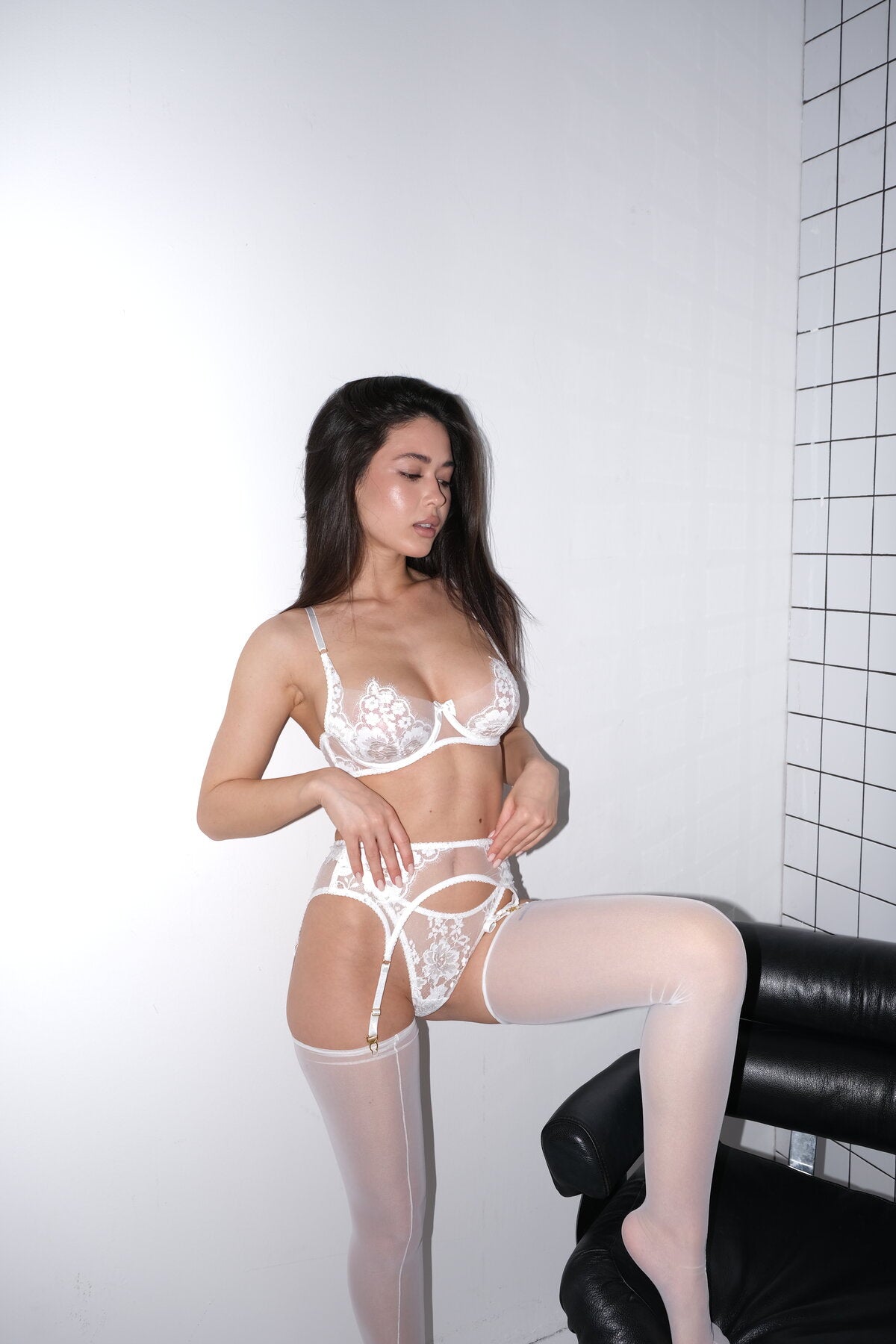


Last updated: August 19, 2026
A plunge bra is built to disappear under a low neckline, not to make one. If a V-neck top or a low-cut dress leaves your regular bra sitting an inch above the fabric, cups showing at the edges, the fix usually isn't a smaller size. It's a different cup shape and a lower center gore, cut specifically to sit invisibly under exactly that kind of neckline. This guide covers what a plunge bra is, how it should fit, when it earns a spot in your rotation, and where it genuinely falls short.
Key Takeaways
- A plunge bra is defined by a lower, narrower center gore and cups angled inward, not by padding or wire shape alone.
- It's a different tool than a balconette or a bralette: each solves a different neckline and support problem.
- Fit hinges on the center gore sitting flat against your sternum and the cups closing without gaping, not on cup size alone.
- A well-engineered plunge bra can support a fuller bust; a poorly cut one can't, regardless of size.

What is a plunge bra, exactly?
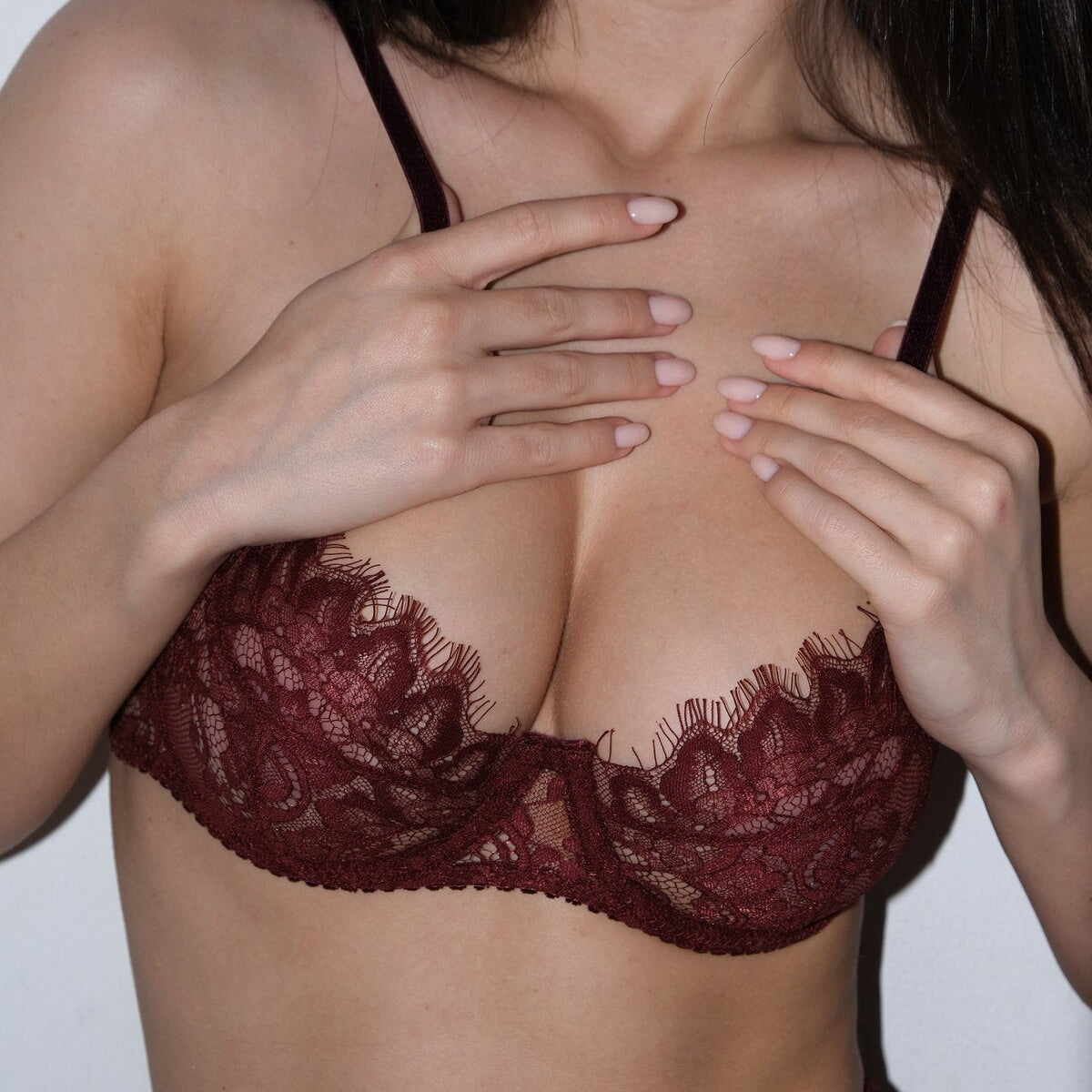
A plunge bra is a bra where the center gore, the piece of fabric between the cups, sits noticeably lower and narrower than on a standard bra, and the cups themselves are angled inward and downward to draw breast tissue toward the center. That combination creates a deep V shape at the front, which is the entire point: it lets the bra sit below a low neckline instead of peeking above it.
Underwire on a plunge bra typically follows a shorter, more angled line than a full-cup bra's wire, which is what allows the low center point without the wire digging in. It isn't the same thing as a push-up bra, though the two are often sold together: push-up refers to padding that lifts and adds volume, while plunge refers to the shape of the gore and cups. A bra can be plunge without padding, and padded without being cut as a plunge.
How is a plunge bra different from a balconette or a bralette?
Each of the three solves a different problem, and mixing them up is the most common reason a plunge bra ends up disappointing someone who needed something else. Our balconette bra guide covers the horizontal, structured top line that works under wide or off-shoulder necklines, the opposite job from a plunge bra's vertical V. Our bralette guide covers soft, often wireless styles built for comfort and a rounder neckline, not for disappearing under a deep V.
If your problem is a deep V-neck or a wrap-style top, a plunge bra is the right tool. If the problem is a wide scoop or boat neckline, a balconette will do a better job. If you don't need structure at all, a bralette solves for comfort instead.
How should a plunge bra fit?
The center gore should rest flat against your sternum with no gap and no pressure, the same fit check that matters on any underwire bra, but more important here because a plunge gore that doesn't sit flat defeats the entire design. If you can slide more than a finger's width between the gore and your skin, the cup size is too small; if the gore digs in or won't lie down at all, the band or cup is too tight.
Check the cups next: the fabric should lie smooth against your breast tissue at the outer and lower edges, without gaping at the top or spilling at the sides. A gap at the top of the cup on a plunge style usually means the cup is too large for your shape at that particular angle, even if the rest of the fit feels right, since the angled cut is less forgiving of a shape mismatch than a full cup. Straps should sit close to your shoulders without digging, and the band should run parallel to the floor all the way around, not riding up at the back. Our full measuring guide covers how to get your starting numbers right before you try any of this.

Can a plunge bra support a fuller bust?
Yes, if it's engineered for it, and no, if it isn't. A plunge bra's shorter wire and lower gore mean the cup has to do more of the lifting work that a full-coverage cup would otherwise share with a taller wire and wider band, so cup construction and fabric structure matter more here than on other styles. Look for reinforced side panels and a firm, well-boned wire rather than a soft, stretchy cup, since the latter tends to lose shape fast on a fuller bust regardless of size.
The honest limitation is that a plunge bra will rarely give you the same lift and containment as a full-cup or balconette style at the same size, because the design deliberately cuts away some of the coverage that provides support to create the low center point. That's a fair trade for a specific neckline, not a flaw to fix, but it's worth knowing going in rather than being disappointed by it later.
Where the deep-V shape comes from
On November 3, 1914, Mary Phelps Jacob patented the "Backless Brassiere" after her corset's whalebone stays showed through the plunging neckline of a sheer evening gown. Her makeshift fix, two silk handkerchiefs stitched with pink ribbon, became the direct ancestor of the modern plunge bra: built from the start around a neckline a standard undergarment couldn't hide under.
When does a plunge bra earn a place in your wardrobe?
Reach for one under any true V-neck or wrap-style top, a low-cut dress, or a blouse that buttons low enough to show a standard bra's edge. It's also a good choice under halter necklines when paired with convertible or multiway straps, since the deep front leaves more strap-configuration room than a full cup would. Skip it under crew necks, high scoop necklines, or anything that doesn't expose the center of your chest, since a plunge bra's tradeoffs, less coverage and sometimes less support, aren't worth making for a neckline that doesn't need them.

Plunge bra vs. plunge bodysuit: when the whole shape should do the work
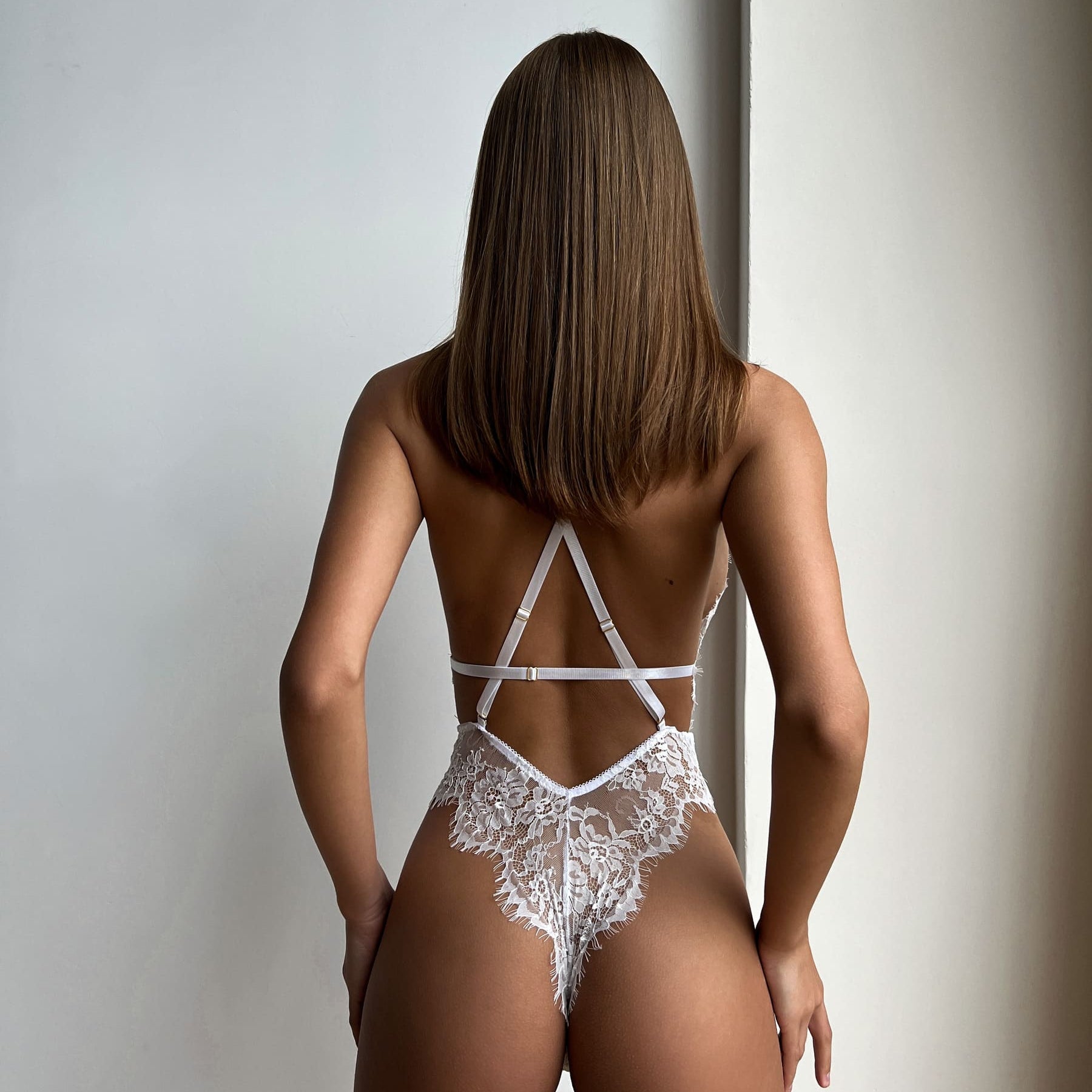
A plunge bodysuit takes the same low, angled front and extends it into a full one-piece silhouette, which solves a slightly different problem: a smooth, unbroken line under fitted clothing rather than support paired with a separate bottom. Our Mistic Lace collection is built around this shape, with a plunge front and an open strapped back designed to sit under sheer or fitted fabric without a visible seam at the waist. If you're choosing between the two, a bodysuit makes more sense under a fitted dress with no natural break at the hip; a separate plunge bra gives you more flexibility to mix and match with different bottoms.
The plunge bra fit mistakes that show up most often
Buying a plunge bra a full cup size down to make the gore sit lower is the most common mistake, and it backfires: an undersized cup gapes at the top and spills at the sides instead of sitting flat, which reads as a worse fit than a correctly sized bra with a slightly higher gore. Ignoring gore contact is the second: if the center panel isn't touching your sternum, the band is doing too much of the work and will ride up within an hour of wear, regardless of how good the bra looked in the mirror standing still.
The third is assuming padding equals plunge. A heavily padded demi bra can look similar to a plunge style in a photo, but without the shorter wire and angled cup, it won't sit low enough for a true deep V, and you'll end up back where you started, with visible edges above the neckline.
Finding the right plunge style when it isn't labeled "plunge"
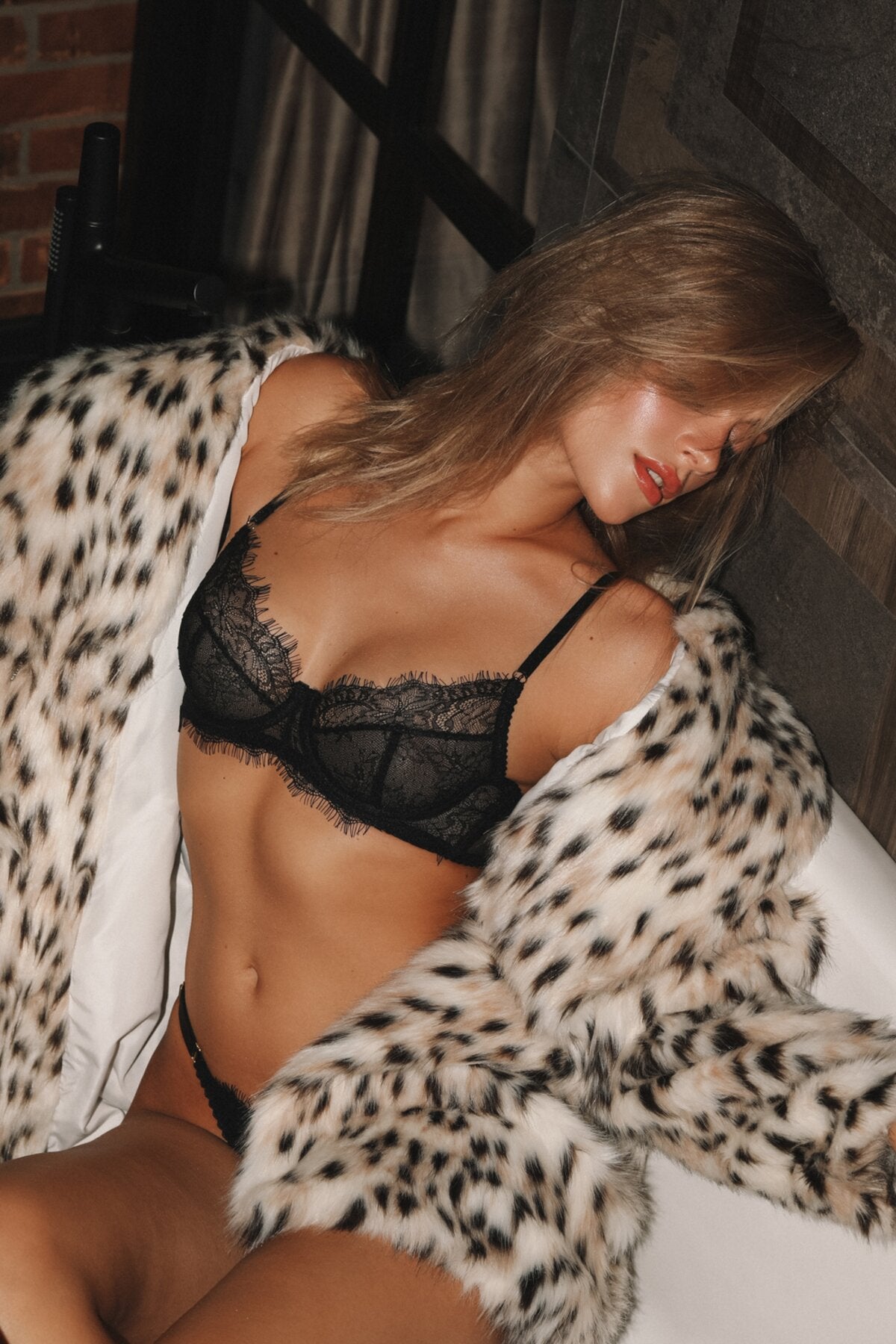
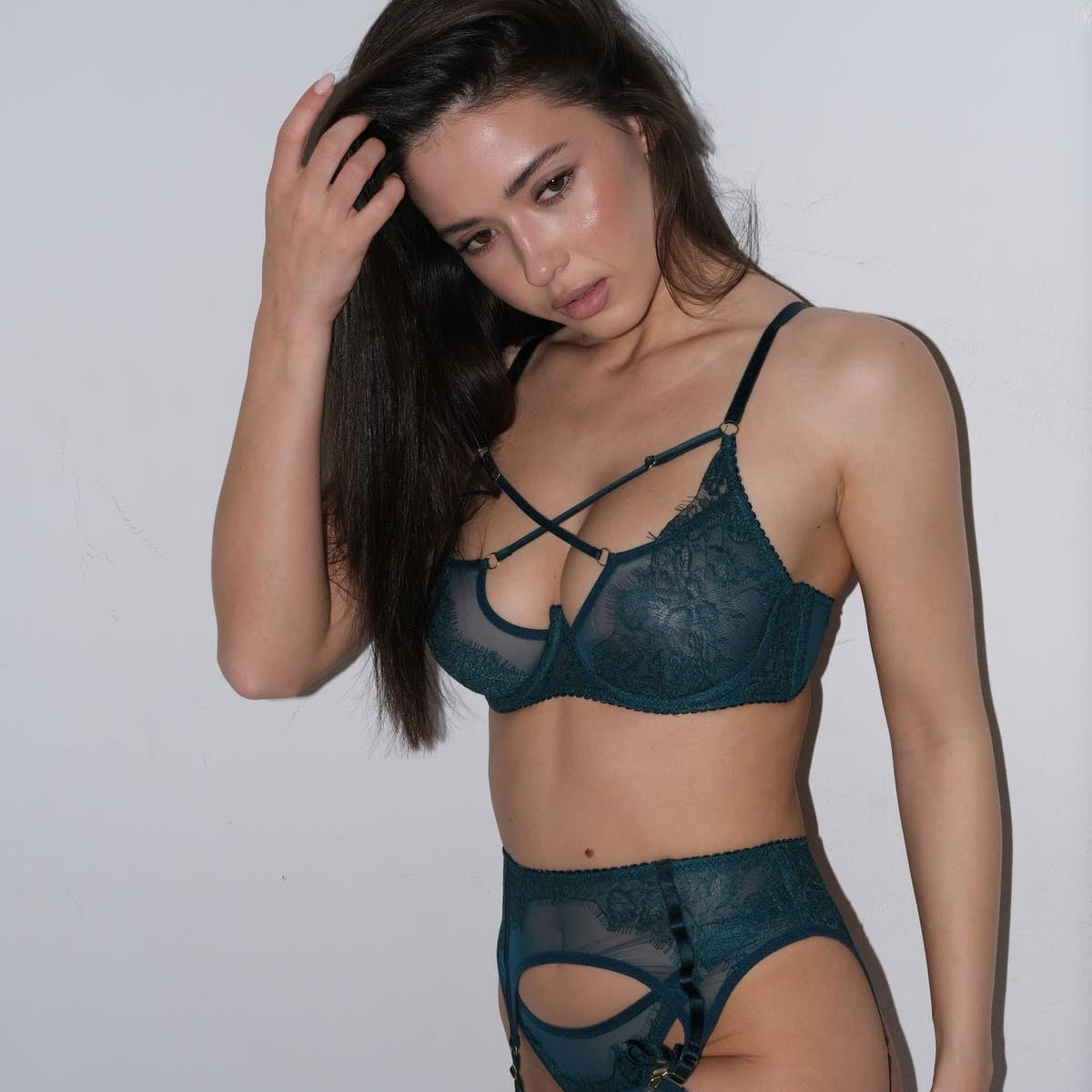
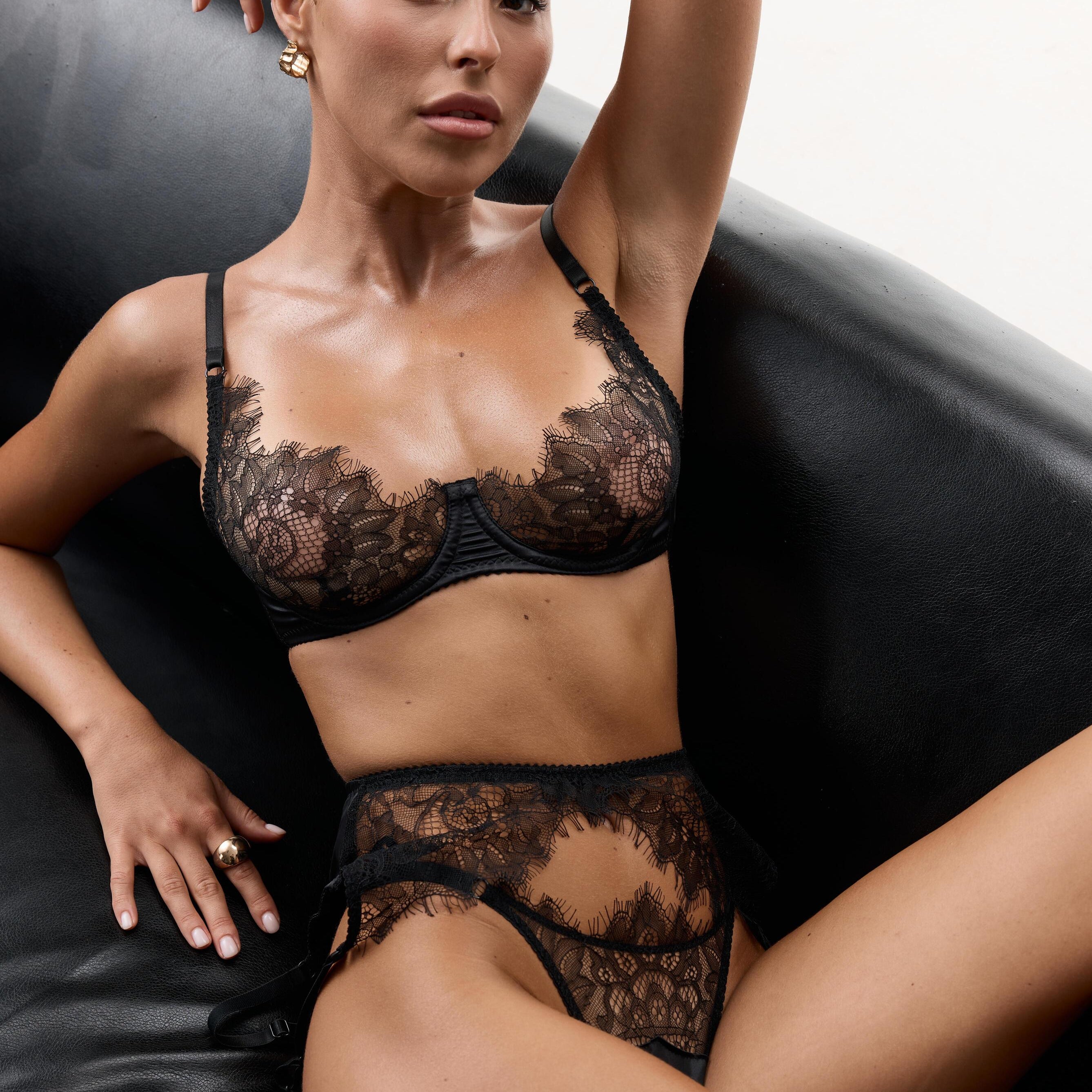
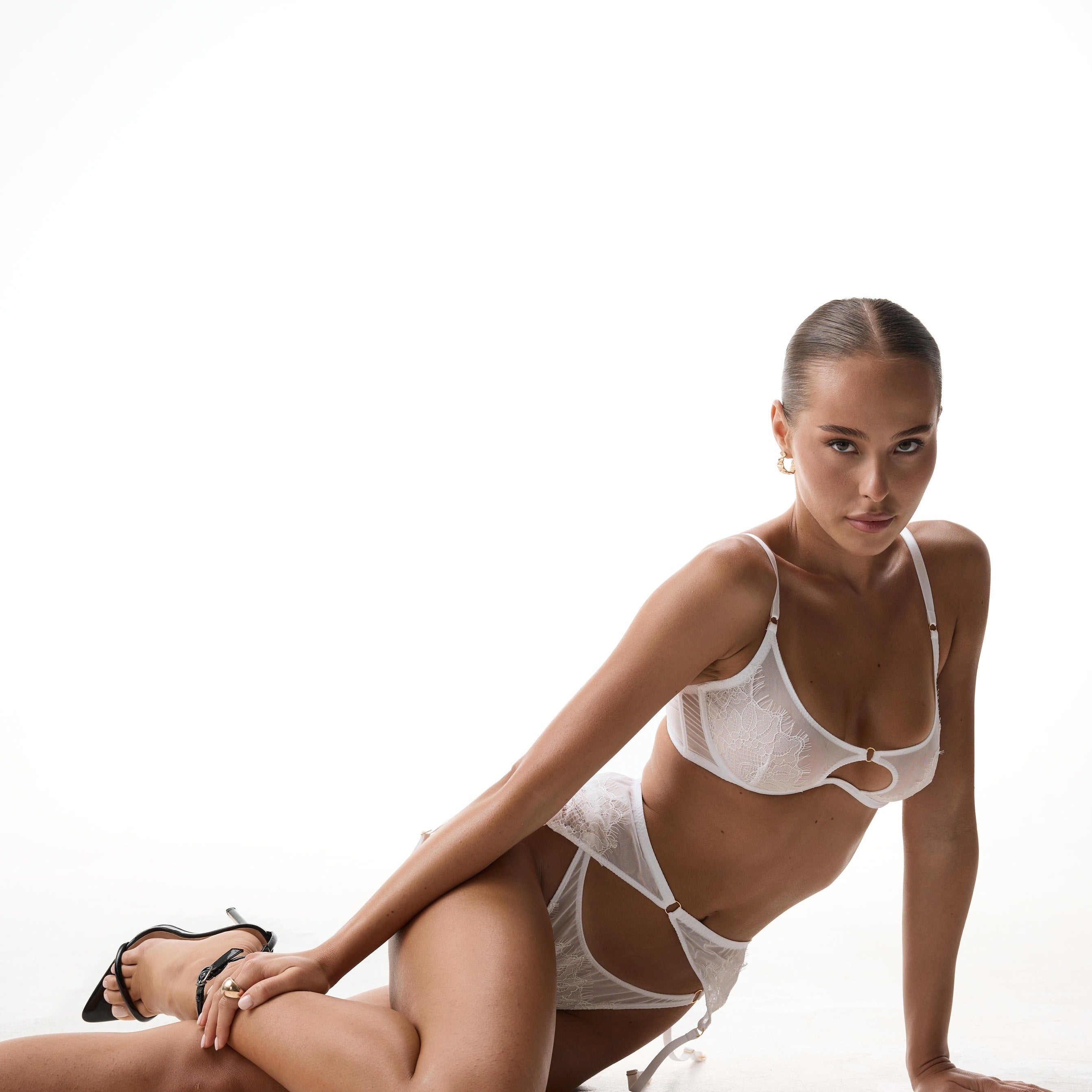
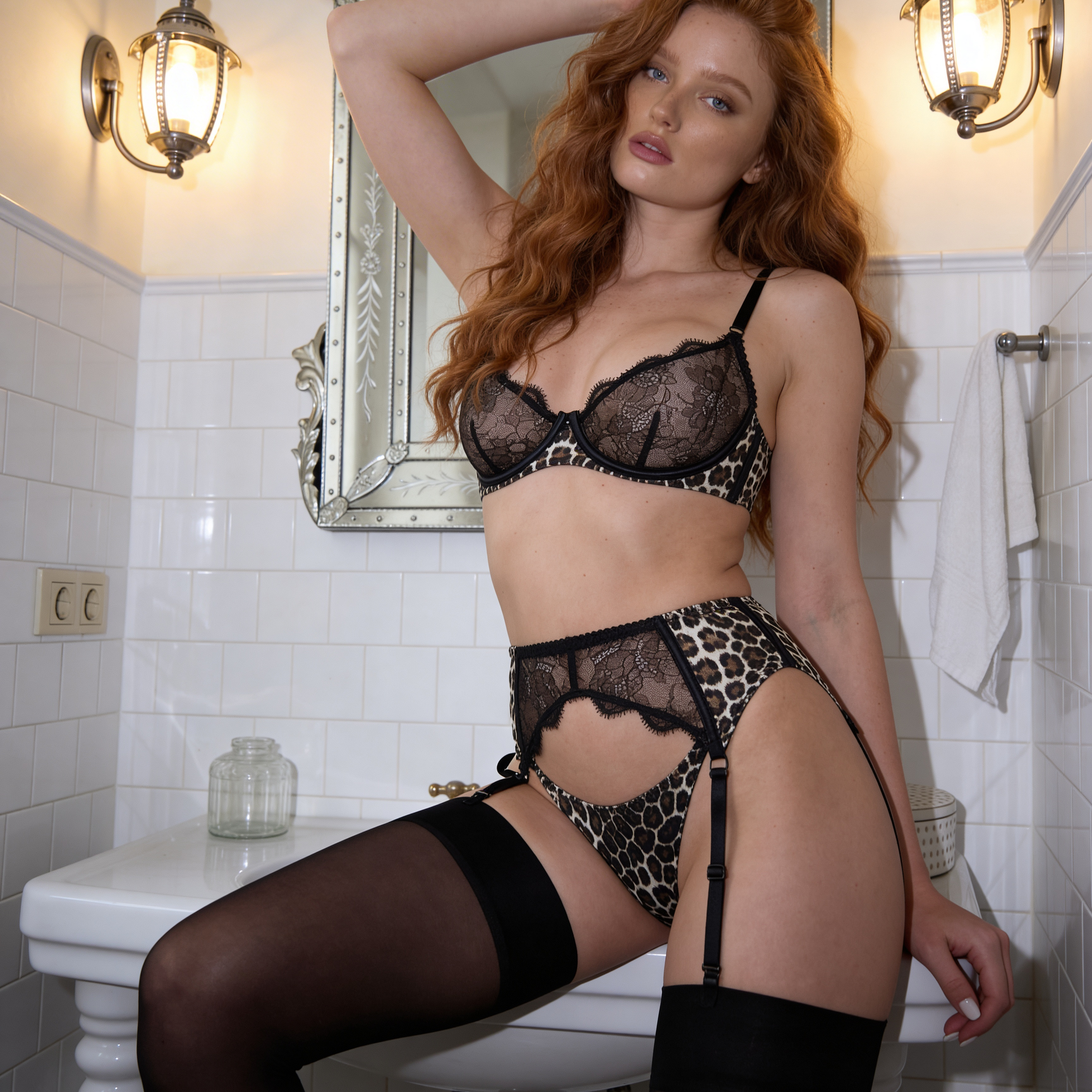
Lioness doesn't currently tag any bra as "plunge" specifically. Rather than force that label onto a piece it doesn't fit, the honest answer is that our structured underwire sets in Emily, Jasmine, and Samantha come closest, with lower center panels and angled cup lines that work under most V-neck and wrap styles, alongside the plunge-front Mistic Lace bodysuit above. Our Amella and Black Flowers sets offer a similar lower-front line in different lace weights, worth comparing if fabric weight or color is your deciding factor. Since every Lioness piece is made to order, a genuinely custom gore depth is also worth asking about through Instagram DM within the 12-hour adjustment window after ordering.
If your size sits between two of these collections, sister sizing (moving up a cup while going down a band, or the reverse) often solves a gore-fit problem before you rule a style out entirely. Our broader Bras and Lingerie collections cover the full range if none of the above quite match what you're picturing.
Frequently asked questions
What's the actual difference between a plunge bra and a demi bra?
A demi bra covers roughly half the breast with a higher, straighter neckline than a plunge style. A plunge bra's center gore sits lower and its cups angle further inward, built specifically for necklines a demi bra can't disappear under.
Can a plunge bra work for a larger bust?
Yes, provided the wire is firm and the side panels are reinforced. A soft, unstructured plunge cup will lose shape fast on a fuller bust regardless of the size printed on the tag.
Why does my plunge bra gape at the top of the cup?
Usually the cup is too large for your shape at that specific angle, even if the band and gore feel right. Try a smaller cup with a looser band, known as sister sizing, before assuming the style doesn't work for you.
What should I wear under a plunge bra?
Anything with a true V-neck, wrap front, or low buttoned neckline. It's not the right choice under crew necks or high scoop tops, where the extra coverage of a balconette or full cup serves you better.
How do I know if a plunge bra is the right size?
Check gore contact first: the center panel should sit flat against your sternum with no gap. Then check the cup edges for gaping or spilling. If either fails, adjust the size before assuming the style is wrong for you.
Written by Lioness Studio, the in-house team behind every piece we make and every guide we publish. We cut, fit, and finish each order by hand, and we write about fit the same way we build a garment: precisely, and without pretending every style works for every neckline.