






Last updated: 5 August 2026
The word bralette gets attached to almost anything soft. A lace triangle top, a ribbed cotton crop, a bandeau with no straps at all. They end up in the same drawer and the same online category, and then people are surprised when one of them holds and another does nothing.
What follows is what the garment is, what it can and cannot do, how to tell whether the one you own fits, and which days it is the right choice. Tape measure instructions live in our guide to measuring your bra size at home. This one starts after the measuring.
Key takeaways
- A bralette is a bra without moulded cups or underwire. Shape comes from the fabric and the seams, not from a frame.
- Most of the holding power sits in the band. A loose band turns a bralette into a decorative top.
- Alpha sizing (S, M, L) is a compromise. Band-and-cup construction fits a much wider range of bodies.
- Fuller busts are not excluded from bralettes, but they need real seaming, a firm band, and wider straps.
- Soft-cup styles are excellent for low-movement days and poor for running. Match the piece to the day.
What a bralette actually is
A bralette is a bra built without underwire and without moulded foam cups. Everything it does structurally, it does through fabric tension, seam placement, and band width.
That definition sounds narrow, and it covers a surprising range. A triangle bralette in stretch lace and a fully seamed soft-cup bra with a three-inch underband are both bralettes by this rule, and they behave completely differently on the body. The first skims. The second genuinely holds. Nothing on the label tells you which is which, which is why the fit checks below matter more than the category name.
The confusion is not new. Soft-cup bras predate the wired bra by decades, and the wire was added to solve a problem the soft-cup shape could not solve alone. The soft cup came first.

Bralette, bandeau, crop top: the differences that matter
A bandeau has no straps and relies entirely on band grip. A crop top is outerwear with no bust engineering at all. A bralette sits between them, with straps and some form of cup shaping.
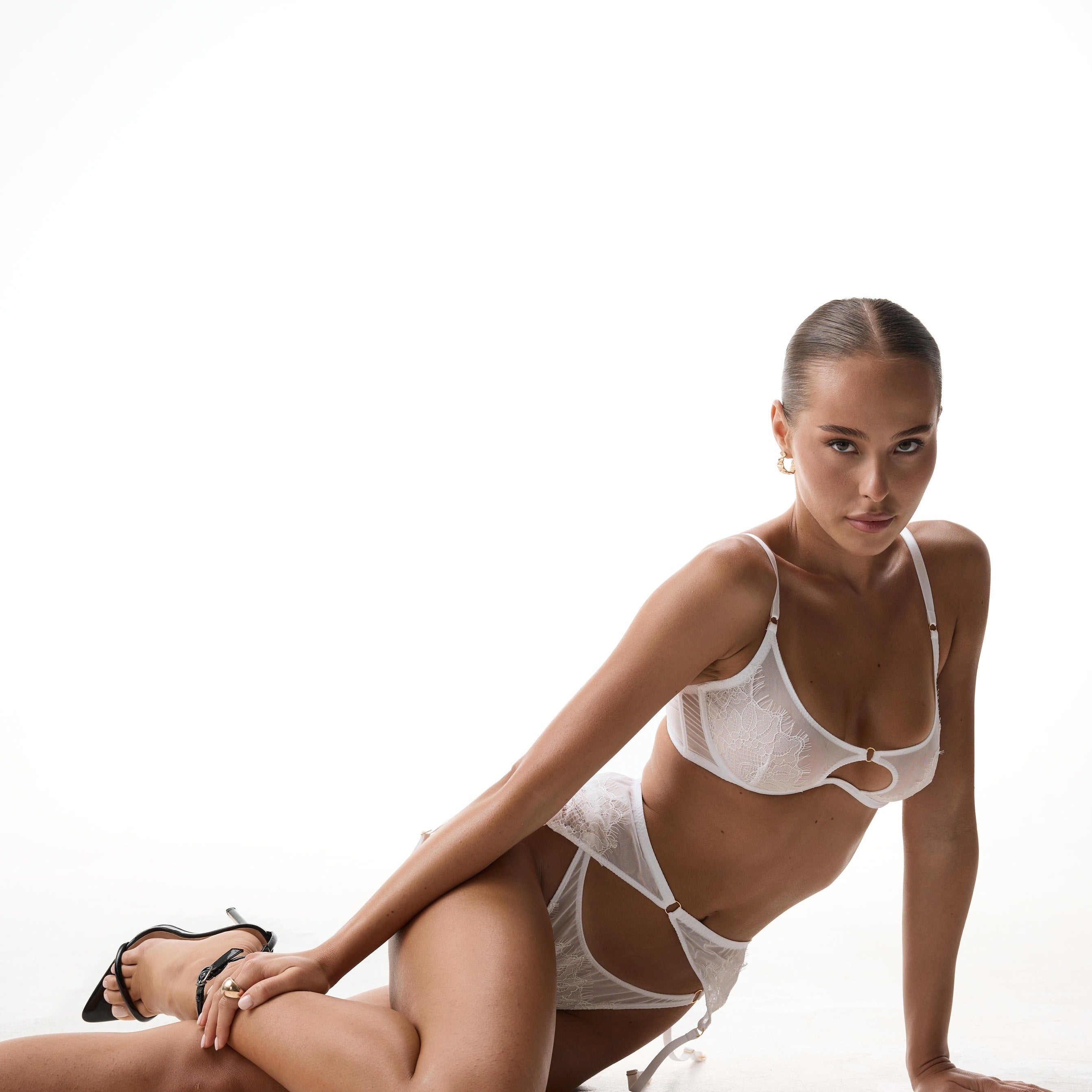
Practically, a bandeau slips when you raise your arms unless the band is very firm, and a bralette can behave like either neighbour depending on how it is made. Our Goddess Aura pieces are built as bandeau tops, so the whole load runs through the band, which changes how that band has to be cut.
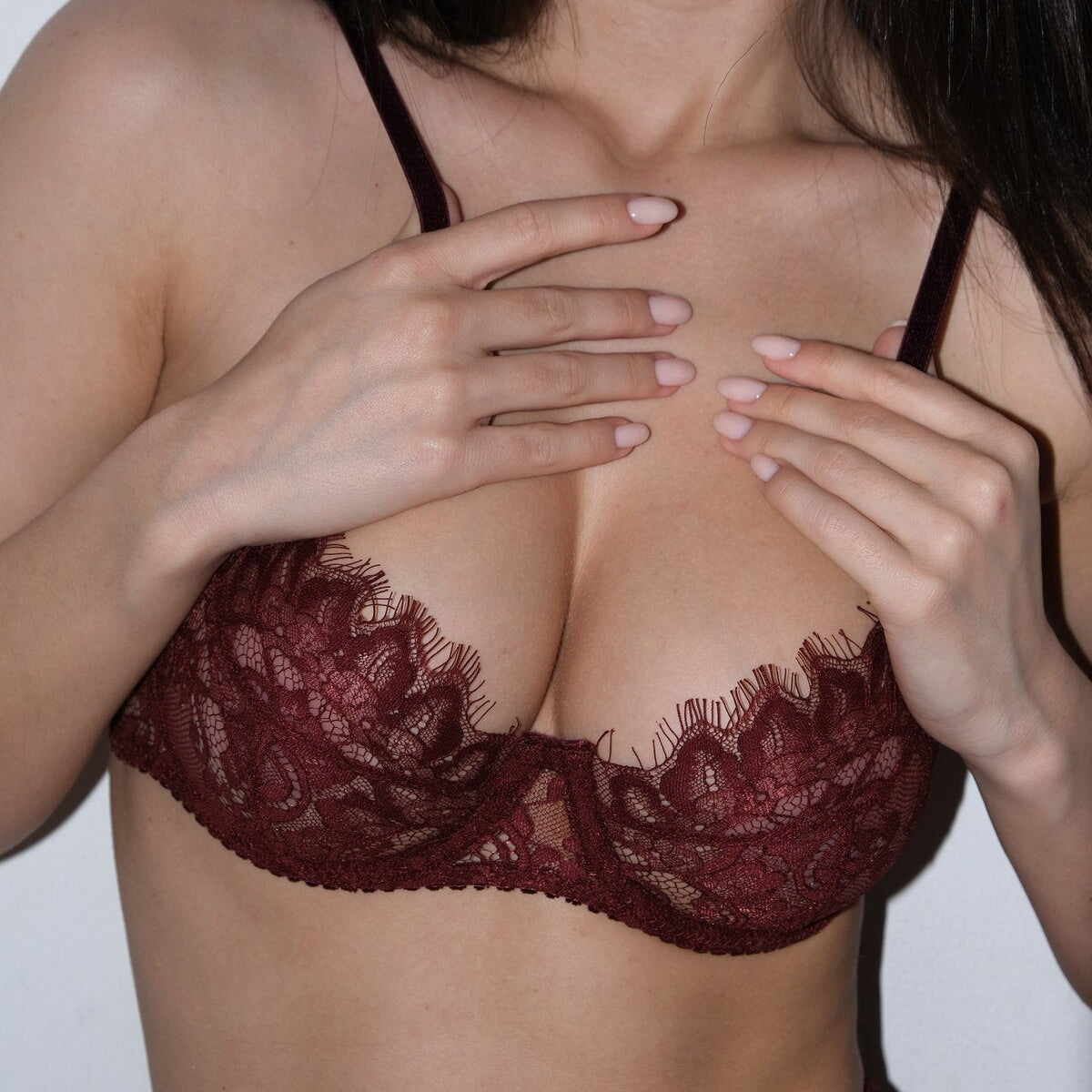
If a product page does not say, look at the photographs. Seams running through the cup mean the shape was engineered. A single flat panel of lace means the shape is coming from your body, not the garment.
How much support does a bralette give?
Less than a well-fitted wired bra, and more than most people expect once the band is right. Support in any bra is mostly a band problem, not a cup problem.
The band anchors the garment against your ribcage and stops the weight travelling up into your shoulders. When a bralette feels useless, the usual cause is a band that has stretched out, ridden up at the back, or was cut too loose to begin with. Straps only position the cups. If you can feel yours digging in, the band underneath has already stopped doing its job.
The load itself is real and worth taking seriously. A 2020 cross-sectional study in the journal Women's Health surveyed 269 Australian women aged 40 to 85, with bra bands from 8 to 26 and cups from A to HH. Each one-size increase in breast size score made a woman 13% more likely to report upper back pain, and less likely to be satisfied with her bra fit.
That second finding is the interesting one. Dissatisfaction rose with size, which says something about the garments available rather than about the bodies wearing them.
How a bralette should fit
The band should sit level all the way around and stay put when you lift your arms. The cups should contain everything without gaping at the top edge or cutting a line into the side.
Start with the band, because nothing else can be judged until it is right. Hook a new piece on its loosest setting so you have somewhere to go as the elastic relaxes, then slide two fingers underneath at the centre back. Two fingers with resistance is correct; a whole hand means it is too big. Raise both arms overhead. If the band climbs and stays climbed, no amount of strap tightening will fix it.
Then look at where the fabric meets your skin along the top of the cup. It should follow the curve without a gap and without pressing in. A gap means the cup is too roomy for the shape; pressure means the opposite. Straps should be snug enough to stop the cups shifting and loose enough to leave no groove after a few hours. Wider straps distribute better than thin ones, and the difference is noticeable by evening.
Last, run a finger down the seam under your arm. It should lie flat against your ribs. If it stands away, the cup volume is wrong for the band you are wearing. Our bra fitting guide works through the same checks for wired styles.

Bralette sizing: S, M, L versus band and cup
Alpha sizing groups several band and cup combinations into one garment, which works for a narrow middle of the range and fails on either side of it.
Consider what a size medium has to cover. It might be intended for a 34B and a 32C and a 36A, and those three people have different ribcage circumferences and different cup volumes. Hence the familiar experience of a bralette that fits at the band and gapes at the cup, or holds the cup and rides up at the back.
This is the part where I have a bias, and it is worth saying openly: everything we make is cut to individual measurements, so alpha sizing is a problem we do not have to solve. It is not always wrong. It is fine for lounge pieces where a centimetre either way changes nothing, and a poor system for anything you expect to hold you. Pieces in our Jasmine line and Samantha line are cut from your own band and cup figures for that reason.
Do bralettes work for a fuller bust?
Yes, with conditions. The construction has to do more work: a wider underband, real seaming through the cup, and straps set closer to the centre of the shoulder.
The version that fails is the flat unseamed triangle, and it fails at every size once there is volume to hold. The version that works looks almost like a wired bra with the wire left out: a cut-and-sewn cup of two or three panels, a band deep enough to sit stable, and enough side height to keep everything forward instead of migrating toward the underarm.
What you give up is the projected, sharply defined shape a wire creates. What you get back is a softer line under clothing and no pressure point at the centre front. Some people prefer that trade every day. Others prefer it on some days and not others, which is the honest answer for most of us.
When to wear one, and when to reach for structure
A bralette is the right call for low-movement days, sleep, travel, and anything worn under a soft or draped fabric. It is the wrong call for running, high-impact training, or a long day on your feet in a fitted garment.
- Long flights and long drives, where a wire pressing against the ribs for six hours is genuinely uncomfortable.
- Sleep, if you prefer to wear something. Pieces from our Angelic Whisper and wider loungewear and nightwear ranges are cut for this.
- Under knitwear and anything with a soft drape, where a moulded cup edge would print through.
- Recovery periods after surgery or during tenderness, when pressure at the underbust is the problem you are trying to avoid.
Structure earns its place on fitted tailoring, anything strapless, and any activity with real vertical movement. Our wired bras exist for those days, and there is no prize for choosing the softer option when the day calls for the other one.
Wearing a bralette as outerwear
A bralette worn visibly needs opaque construction at the front and a finished band, because both will be seen. Lace under an open shirt reads as considered; the same piece under a sheer top reads as an accident.
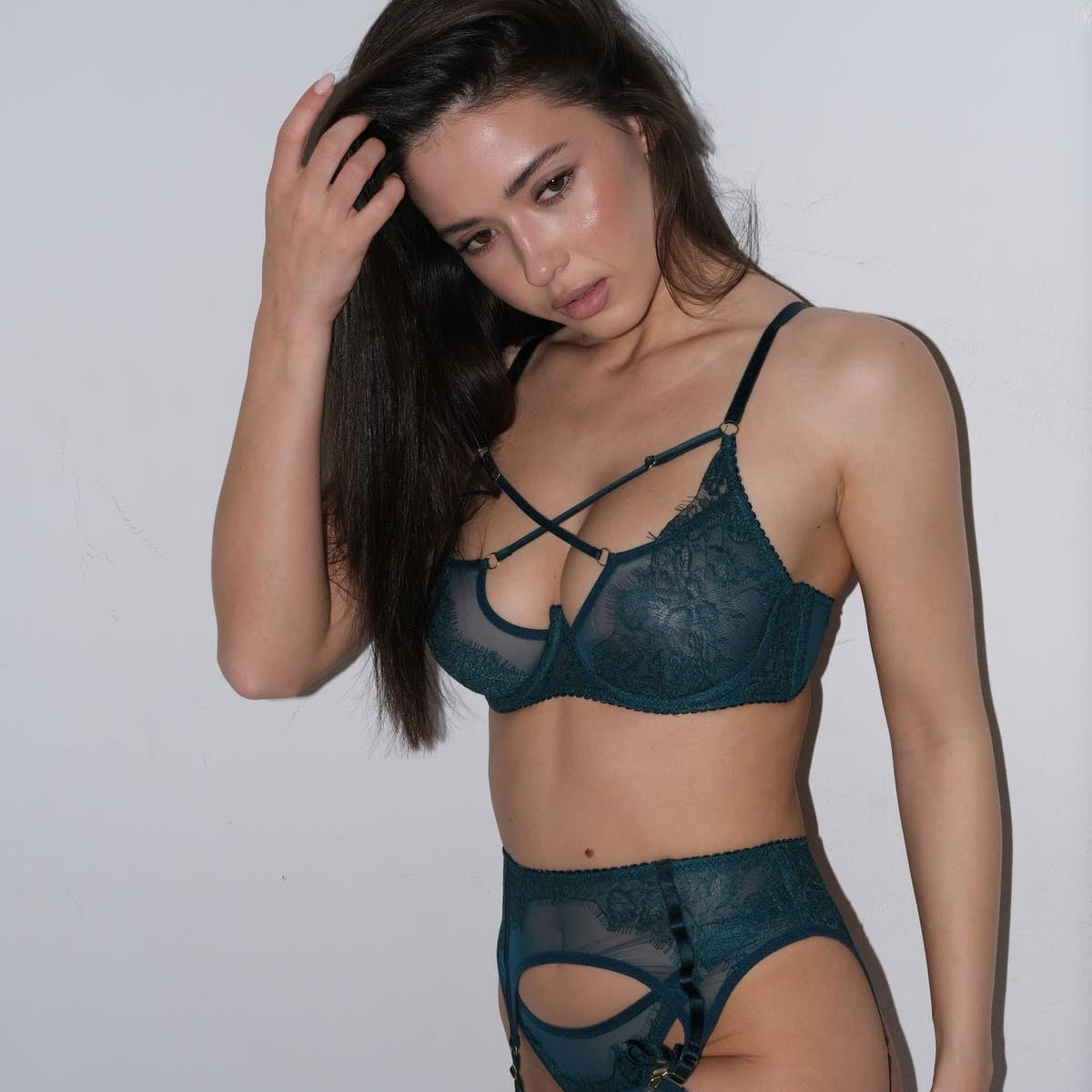
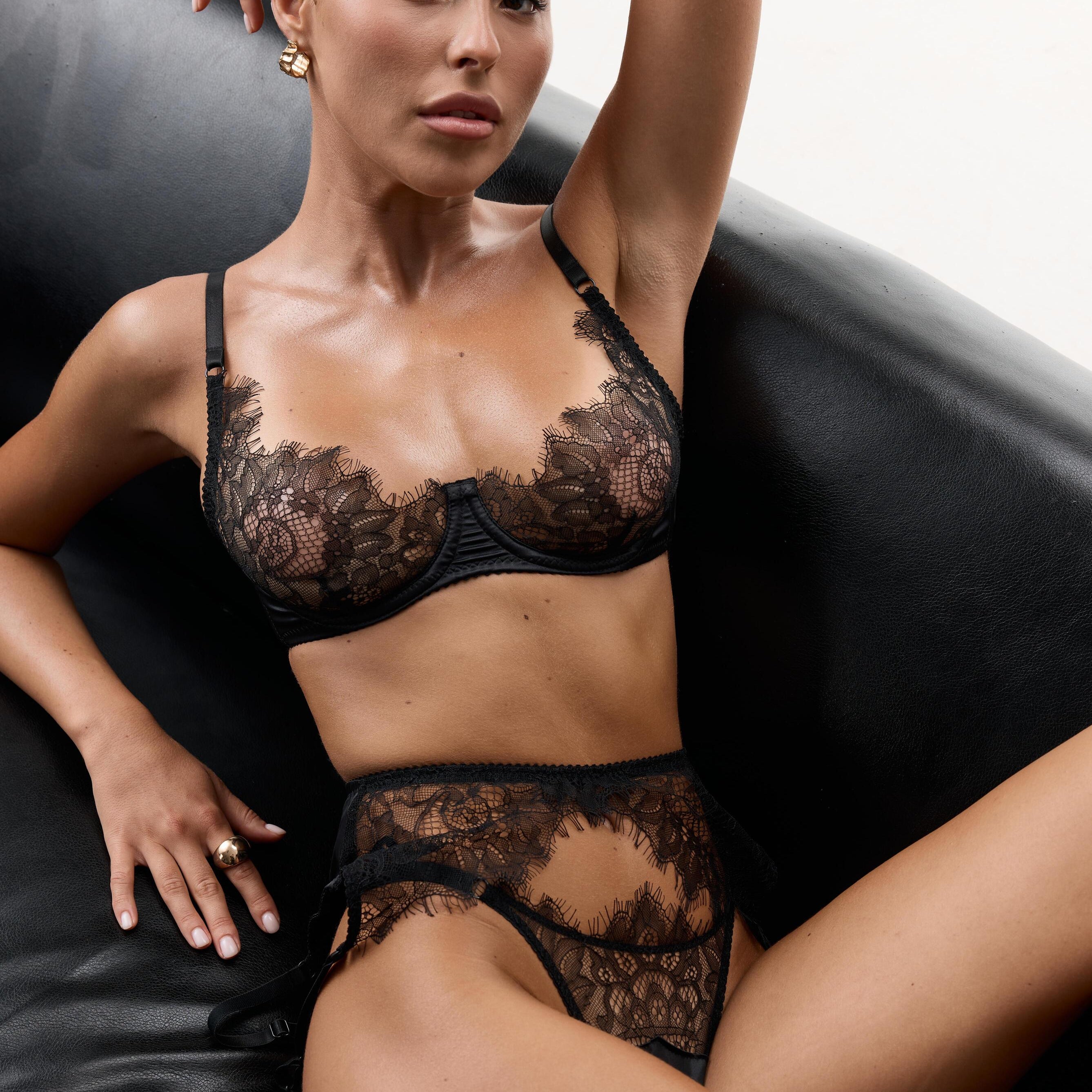
The pieces that carry this best have some graphic quality: strap geometry, a strong lace edge, colour that was chosen rather than defaulted to. Leo and Lace Poetry both hold up under a jacket, and a fitted bodysuit solves the same problem with a cleaner waistline.

Caring for a soft-cup piece
Hand wash in cool water and dry flat. Elastic is the first thing to fail in a bralette, and heat is what kills it.
Because a bralette has no wire holding its shape, a stretched band ends the garment rather than inconveniencing it. A machine cycle at 40 degrees, a tumble dryer, or fabric softener will all shorten its life measurably. Rotating between two or three pieces, so the elastic gets a day to recover between wears, does more for lifespan than anything else. The full method is in our lingerie washing guide, and the Emerland and wider lingerie ranges follow the same rules, matching panties included.
Frequently asked questions
Is a bralette the same as a bra?
A bralette is a type of bra, built without underwire or moulded foam cups. Every bralette is a bra; not every bra is a bralette.
Do bralettes cause sagging?
No. Breast shape over time is governed by skin elasticity, genetics, age, pregnancy and weight change. No bra style has been shown to prevent or cause that process, so choose on comfort and on what the day demands.
Can you wear a bralette if you are a D cup or above?
Yes, provided the piece is built for it. Look for a cut-and-sewn cup with two or more panels, an underband at least five centimetres wide, and straps set close to the centre of the shoulder. Avoid unseamed single-panel triangles.
How do I know if my bralette band is too loose?
Raise both arms above your head. If the band climbs your ribcage and stays there, it is too loose. At the centre back, two fingers should slide under with resistance; a whole hand should not.
How long should a bralette last?
With hand washing, flat drying, and rotation between pieces, one to two years of regular wear. The elastic in the band ages first, and once it stops recovering its shape the garment cannot be repaired back to its original fit.
Written by Lioness Studio. We make lingerie to individual measurements from our own atelier, one piece at a time. What we publish here comes out of fittings, pattern corrections, and the questions clients actually ask. See the full collection.