

Last updated: August 12, 2026
Balconette bras pull the highest search volume of any style in this guide's queue, 74,000 searches a month in the US. That volume comes from confusion as much as demand. Guides use "balconette" and "demi" as if they describe the same cut, and most of them skip the part that actually matters: how the shape sits on a real body, and what it does or doesn't do for support.
Key takeaways
- A balconette bra has a horizontal cup line, wide-set straps, and shallow cup height, built to lift from below rather than push up or compress in.
- It differs from a demi bra (diagonal cup line, more coverage) and a plunge bra (low center gore, deep necklines).
- Fuller busts need a balconette with more seaming or a wider side panel, not a bigger cup on the same flat design.
- Balconette bras are built for square necks, off-the-shoulder tops, and wide boat necks, not deep V or plunge necklines.
- Lioness doesn't sell a style tagged "balconette," but several of our structured bras share the same horizontal-seam, wide-strap construction.
What is a balconette bra?
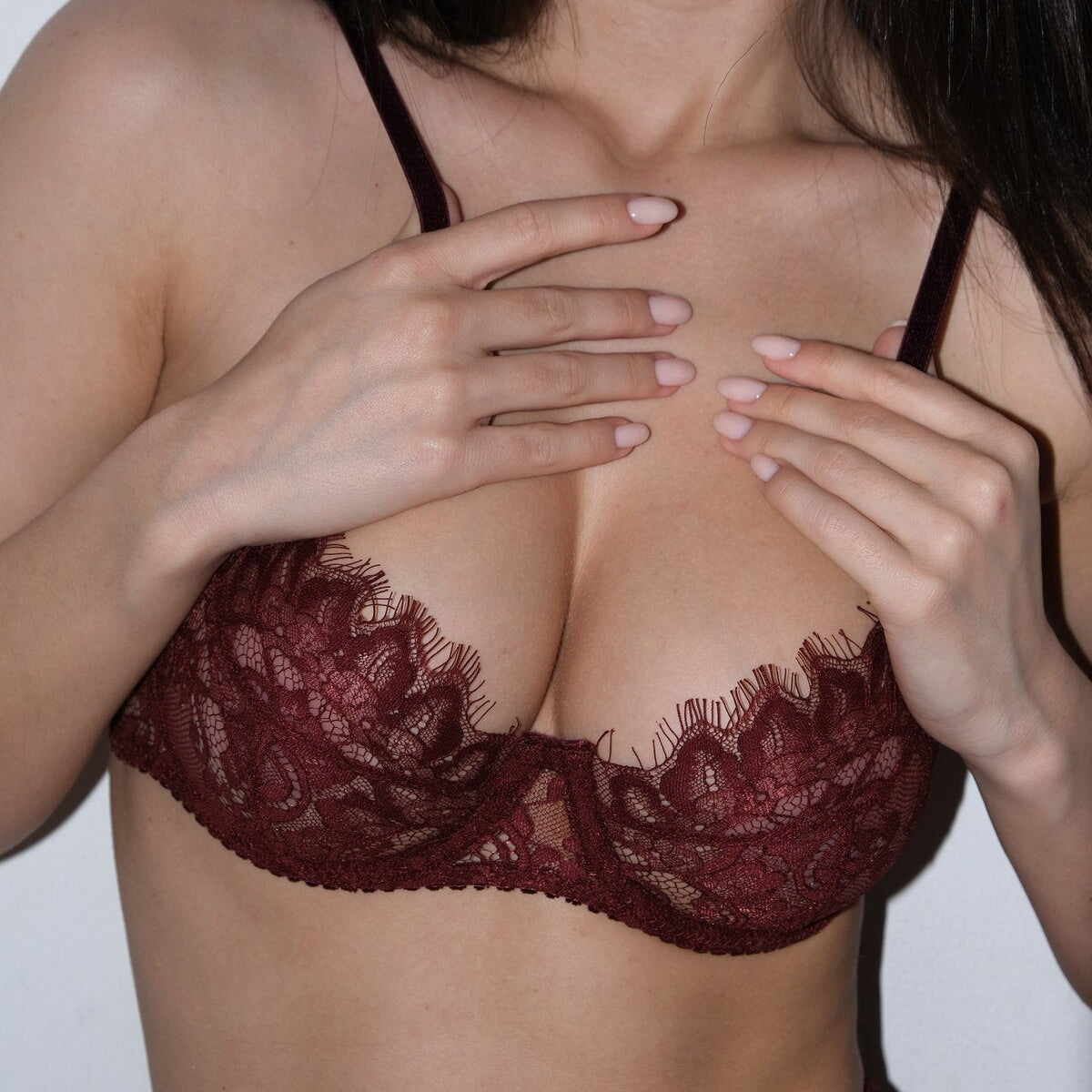
A balconette bra is a half-cup style with a horizontal top line, straps set wider apart than a standard bra, and less cup height than a full-coverage design. The lift comes from the shape of the cup and the placement of the wire, not from padding or a push-up insert underneath.
The cup usually covers the lower two-thirds of the breast, cutting straight across near the top rather than curving up toward the collarbone. That horizontal line works like a small shelf: it holds the breast tissue up and forward instead of squeezing it inward the way a plunge bra does.
The word balconette comes from French architecture. A balconet is a false balcony, a railing at a window opening that only reads as a balcony from outside. Applied to a bra, per Wikipedia's entry on the term, wide-set straps and a horizontal shelf line lift from below, and by the same story, a balconette bra cannot be seen from above.

Balconette vs. demi vs. plunge vs. full cup
These four terms get used loosely, and the differences are mostly about where the cup line sits and how much of the breast it covers.
- Demi bra: a diagonal cup line, slightly more coverage than a balconette, rounds over the top of the breast rather than cutting straight across.
- Plunge bra: a low, curved center gore built for deep V necklines, with cups that angle inward and down.
- Balconette: a horizontal cup line, wide-set straps, the most coverage at the sides and the least at the top.
- Full cup or t-shirt bra: covers the entire breast, built for containment and a smooth line under clothing rather than for lift alone.
None of these is objectively better. They solve different problems: containment, a deep neckline, a square neckline, or a smooth silhouette under fitted clothing. A structured underwire bra in any of these cuts should still pass the same basic fit checks below.
How should a balconette bra fit?
A balconette fits correctly when the band sits level and snug on the loosest hook, the wire lies flat against the ribcage without gapping, and the horizontal cup line sits at the middle of the breast instead of cutting across the fullest point.
- Band: parallel to the floor, snug enough to do most of the support work on its own, with two or three hooks left for the band to stretch into over time.
- Wire: flat against the ribcage at the center and sides, never poking, floating, or digging into breast tissue.
- Cup edge: the horizontal line should sit roughly at the midpoint of the breast. If tissue spills over the top edge or the cup gaps at the outer corner, the size or the style is off, not the body wearing it. Our bra fitting guide covers the full troubleshooting checklist for gaps, spillage, and wire placement.
- Straps: set closer to the outer edge of the shoulder than a standard bra. They should stay in place without cutting in. If they slide constantly, the band isn't holding its share of the load.

Who does a balconette actually suit?
Balconette bras work across most cup sizes because the lift comes from the shape of the cup rather than added padding, but the construction has to change as cup volume increases.
On a smaller bust, a balconette gives shape and a lifted line without adding bulk. It's one of the few structured styles that doesn't over-project or add volume that isn't there. On a fuller bust, the same flat, single-seam design will under-support. Look for a balconette with more seaming across the cup, a wider side panel, or reinforced wire, since a shape built for a smaller cup will let tissue spill both above the top edge and out to the sides.
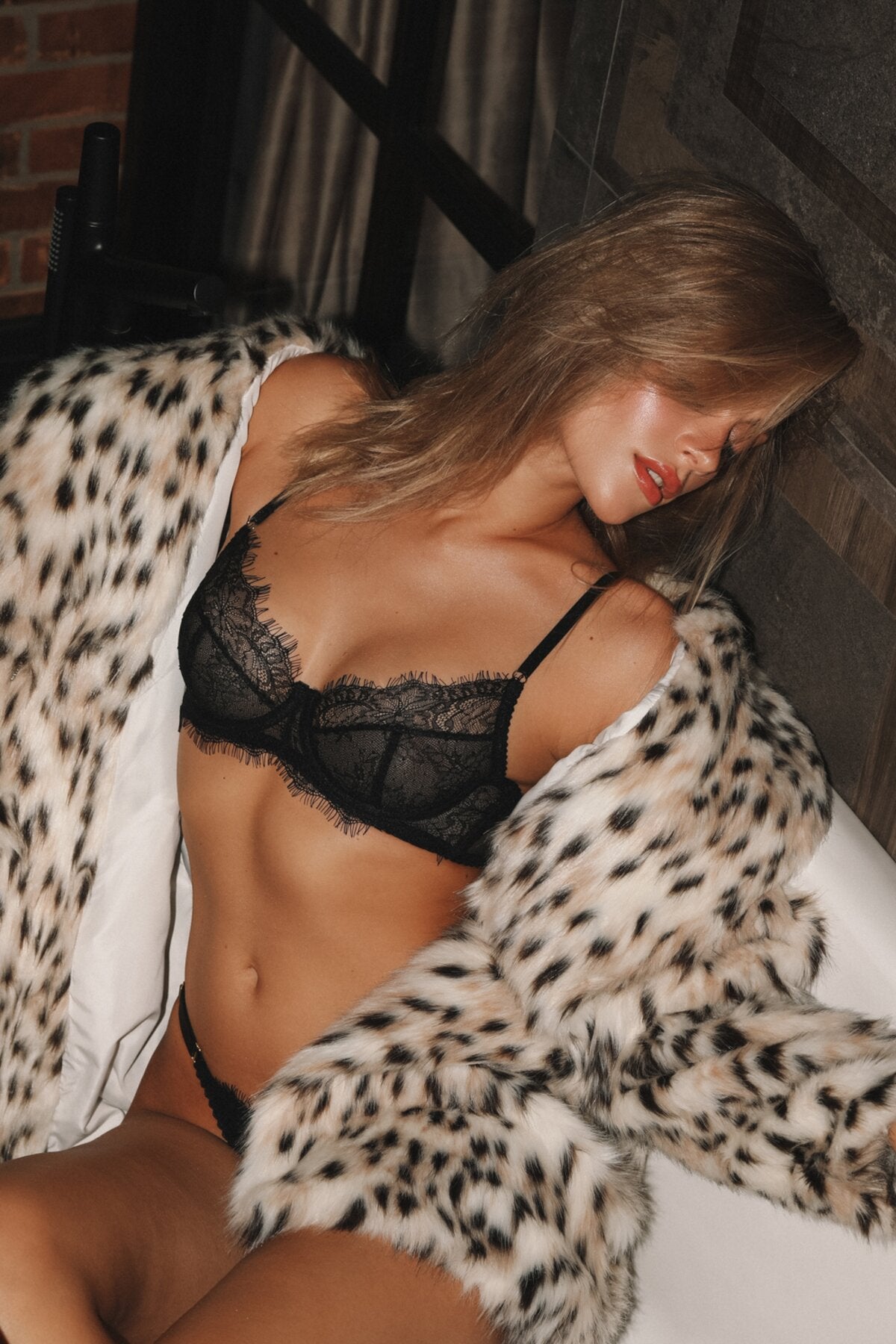
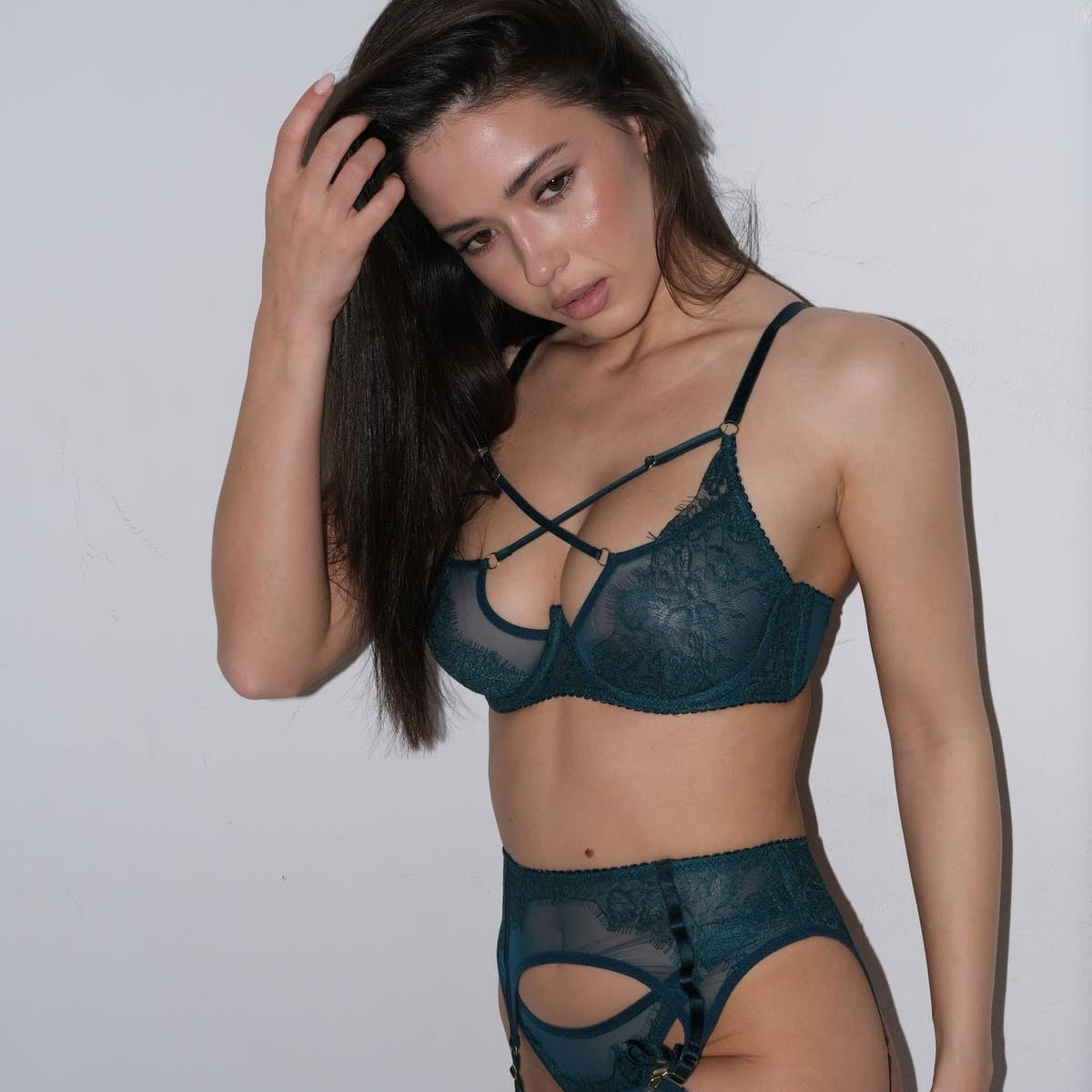
Lioness doesn't tag any style "balconette" specifically, since every piece is made to order rather than built to a mass-market spec sheet. What we do have is a set of structured underwire bras that share the same construction logic: a horizontal or near-horizontal cup line, wide-set straps, and wire built to lift rather than compress. Provocation is cut specifically to define the upper silhouette. Erin and Jia both use an architectural cup structure with a similar shelf effect. Naomi pairs underwire support with adjustable geometric straps set wider than our softer styles. Any of these is a closer starting point for a balconette-style fit than a generic underwire bra.
What to wear under a balconette bra
Balconette bras are built for necklines that expose the top of the chest: square necks, off-the-shoulder tops, wide boat necks, and sweetheart necklines.
The horizontal cup line matches a square neckline almost exactly, so nothing shows above the fabric edge. The wider strap placement disappears under an off-the-shoulder cut or a wide boat neck, where a standard bra's straps would sit visibly inside the neckline. A balconette is the wrong tool for a deep V or plunge neckline, since the cup coverage sits too high at the center front and will show above the fabric. That's a plunge bra's job, not a balconette's.

Balconette or bralette: which one do you actually need?
Choose a balconette when the day calls for structured lift and support that holds through hours of wear. Choose a bralette when comfort and a soft, unstructured shape matter more than support.
A balconette uses underwire and structured cups engineered to lift and hold shape. A bralette is wire-free or lightly wired, with a soft cup built for comfort and light shaping rather than support. Our bralette guide covers fit, sizing, and when a soft cup is genuinely enough. Most people end up needing both rather than picking one as a permanent answer: a structured balconette for a full day out, a soft bralette for the hours you're not planning to leave the house.
Sizing a balconette: band, cup, and sister sizing
Size a balconette the same way you'd size any structured bra: start from an accurate band and bust measurement, then adjust with sister sizing if the cup runs shallow.
Because balconette cups are shorter top-to-bottom than a full cup at the same letter, sizing down a cup or up a band, a sister size, often fixes shallow-cup spillage without changing how the band feels around the ribcage. Our bra size guide walks through the actual measuring steps, and the fitting guide covers what to do once you have a number that still doesn't feel right.
Styling a balconette bra
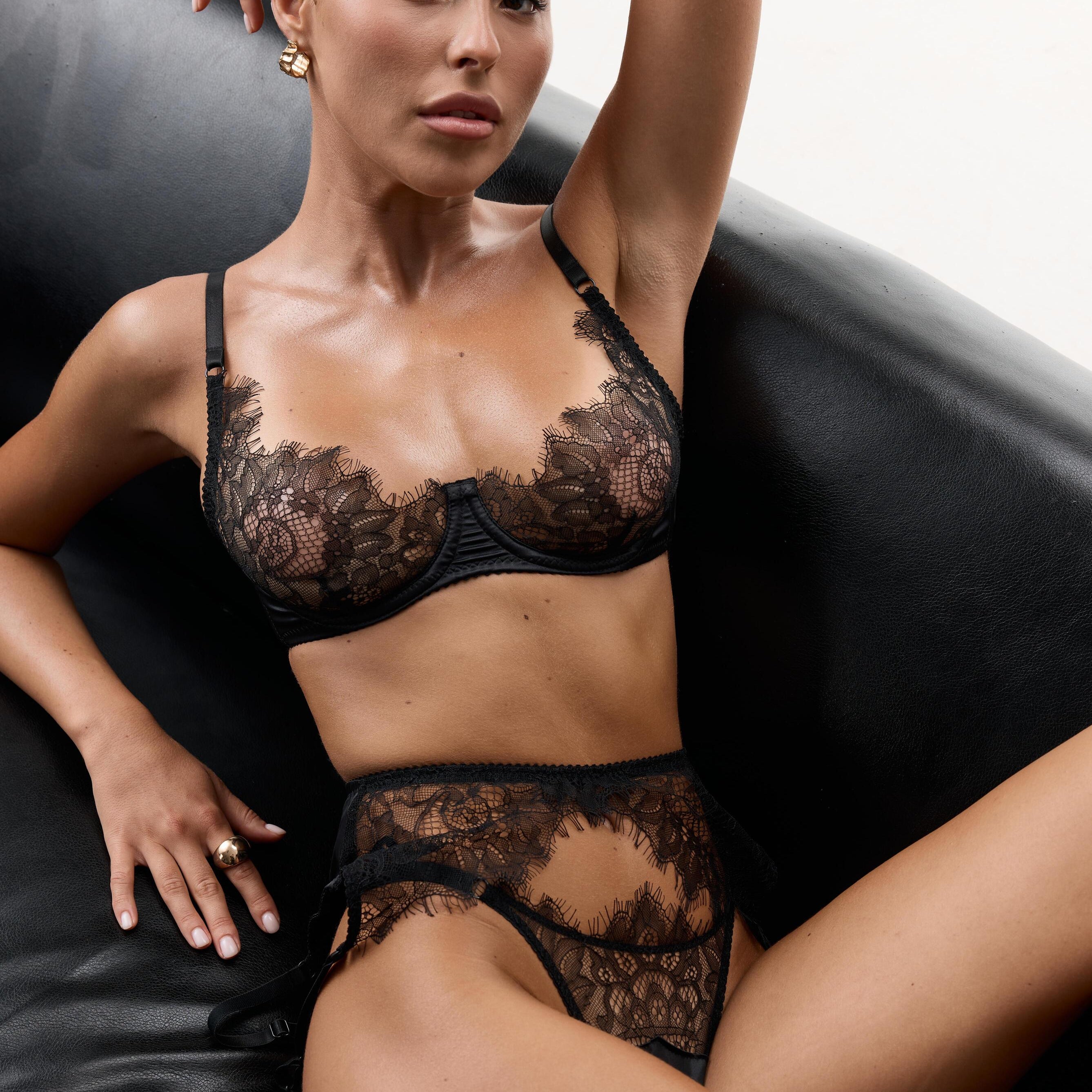
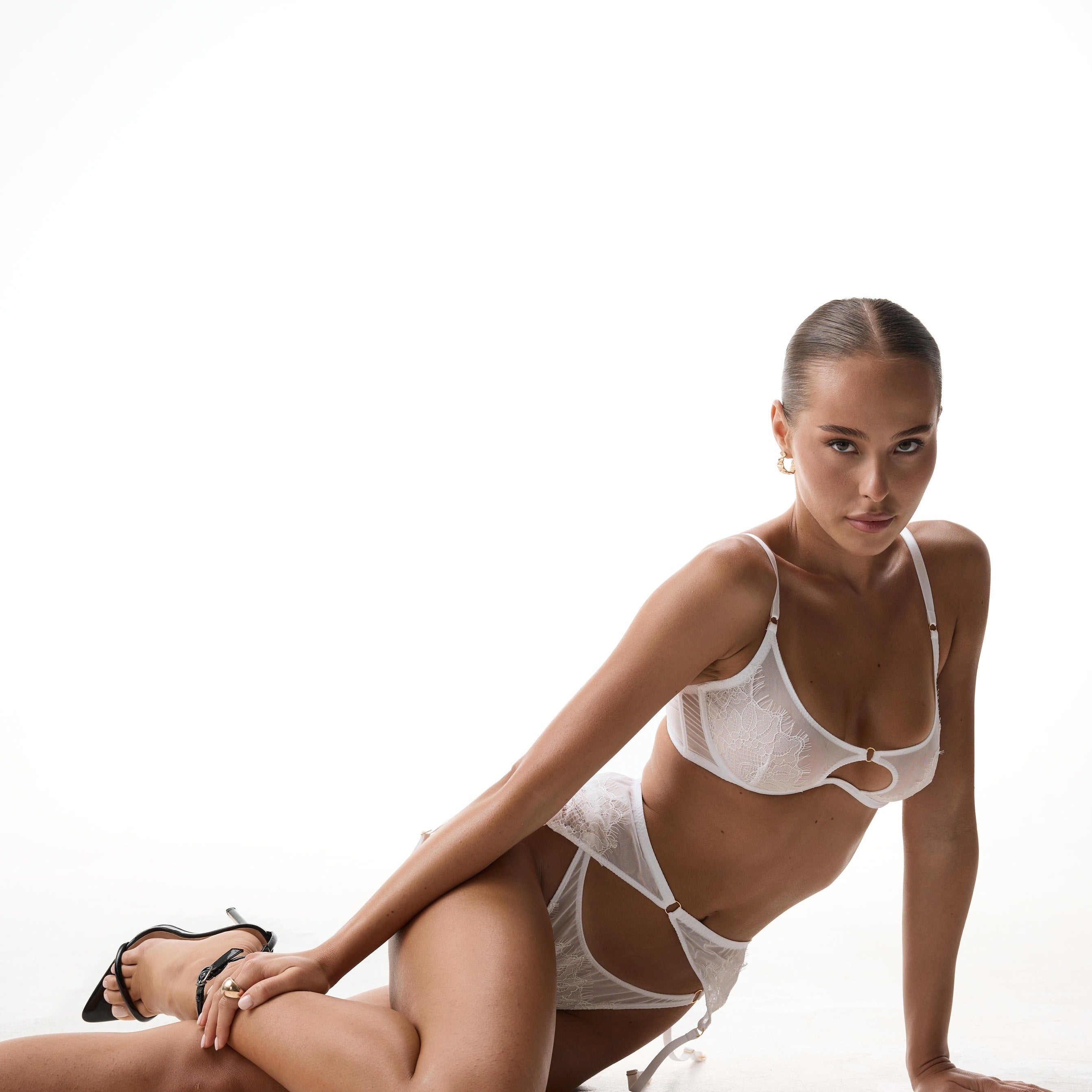
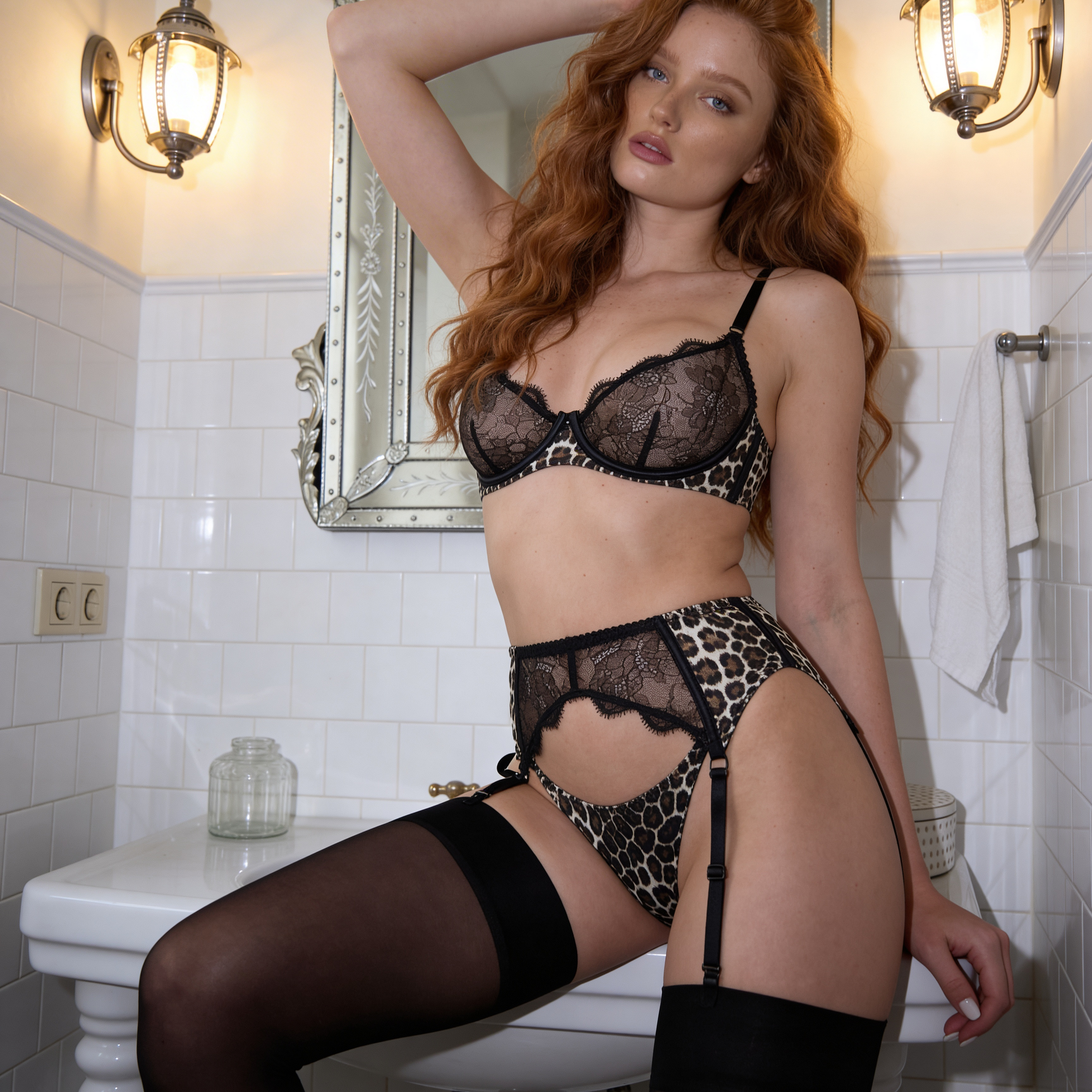
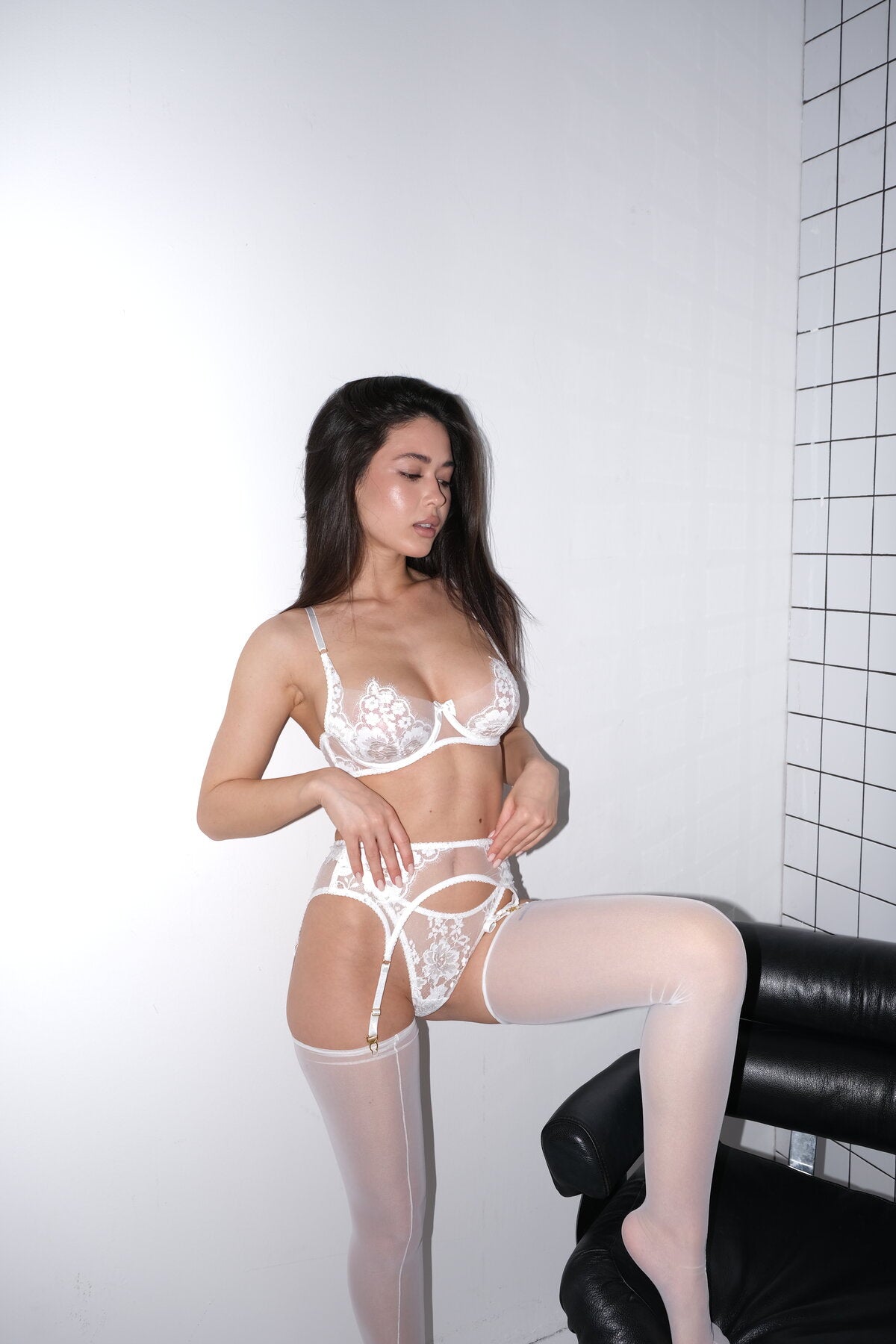
A balconette reads as intentional rather than accidental when it's worn as part of a full look, not hidden under everything. The horizontal shelf line and wide straps hold their shape under a structured button-down left open at the collar, or on their own as the top half of a set with a garter belt and stockings for occasions where the lingerie is meant to be seen.
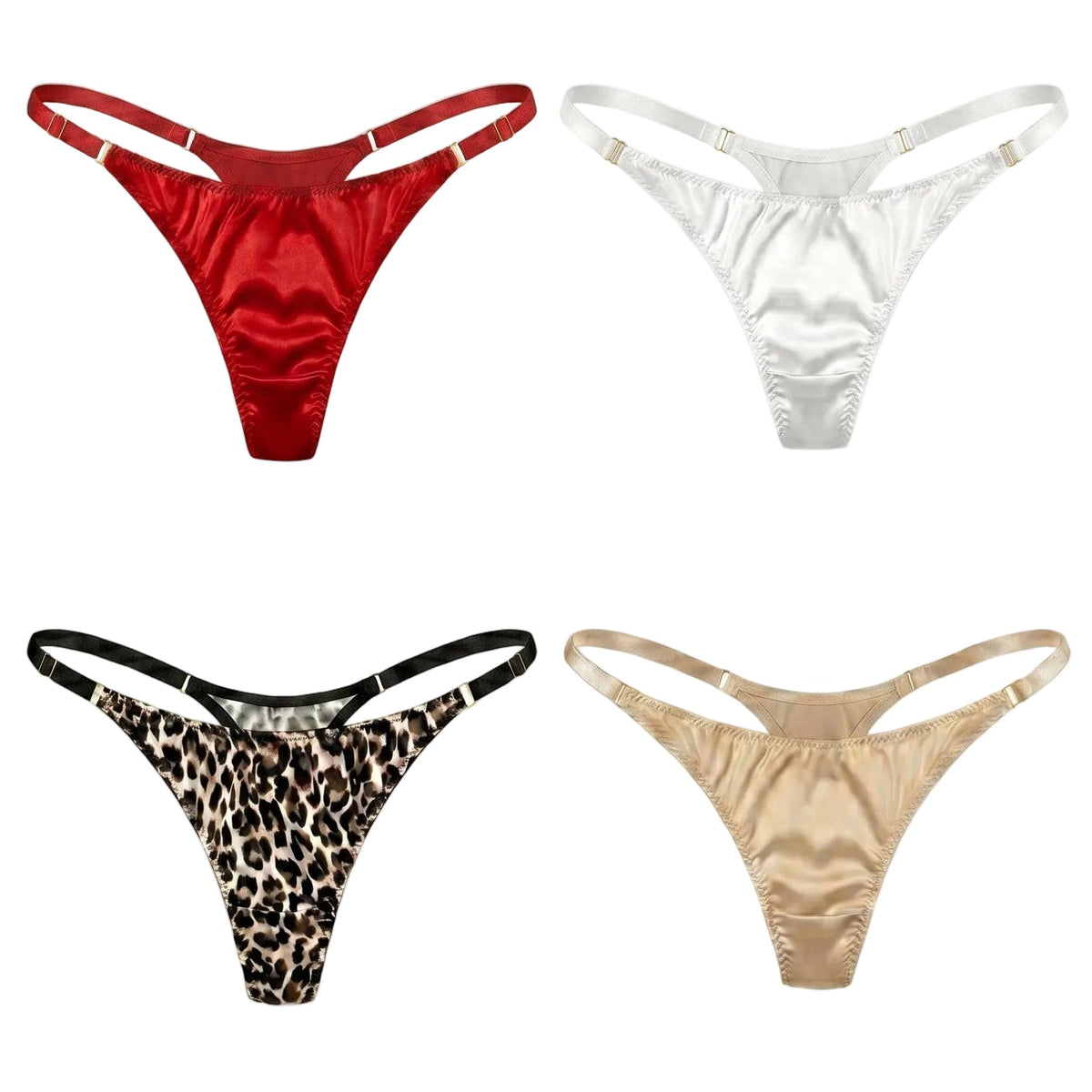
For matching sets built around this same structured silhouette, Jia, Erin, and Black Swan all pair the bra with coordinating panties and belt pieces cut from the same fabric run.

Frequently asked questions
What's the difference between a balconette and a demi bra?
A balconette has a horizontal cup line and wider-set straps, giving the most coverage at the sides and the least at the top. A demi bra's cup line sits at a diagonal angle and covers slightly more of the breast, with straps set closer together.
Can a balconette bra work for a larger bust?
Yes, but look for a version with extra seaming, a wider side panel, or reinforced wire rather than a plain horizontal-line cup built for a smaller size. A flat balconette cut for a small band and cup will under-support a fuller bust.
Is a balconette bra the same as a push-up bra?
No. A push-up bra uses padding or gel inserts to add volume and lift. A balconette lifts through cup shape and wire placement alone, without necessarily adding any padding.
What necklines does a balconette bra work best under?
Square necks, off-the-shoulder tops, and wide boat necks, since the horizontal cup line and wide-set straps sit exactly where those necklines expose the chest. It isn't the right structure for a deep V or plunge neckline.
Does a balconette bra show under clothes?
The straps sit wider than a standard bra, so they can show under narrow-strap tops or halter necklines. Under square necks, boat necks, or off-the-shoulder styles, that wider set works in your favor instead of showing.
About Lioness Studio
Lioness Studio is the team behind every made-to-order piece at Lioness Lingerie. Every article here is written from the same place the pieces are cut from: real measurements, real fit problems, and the adjustments that actually solve them, not a generic size chart.