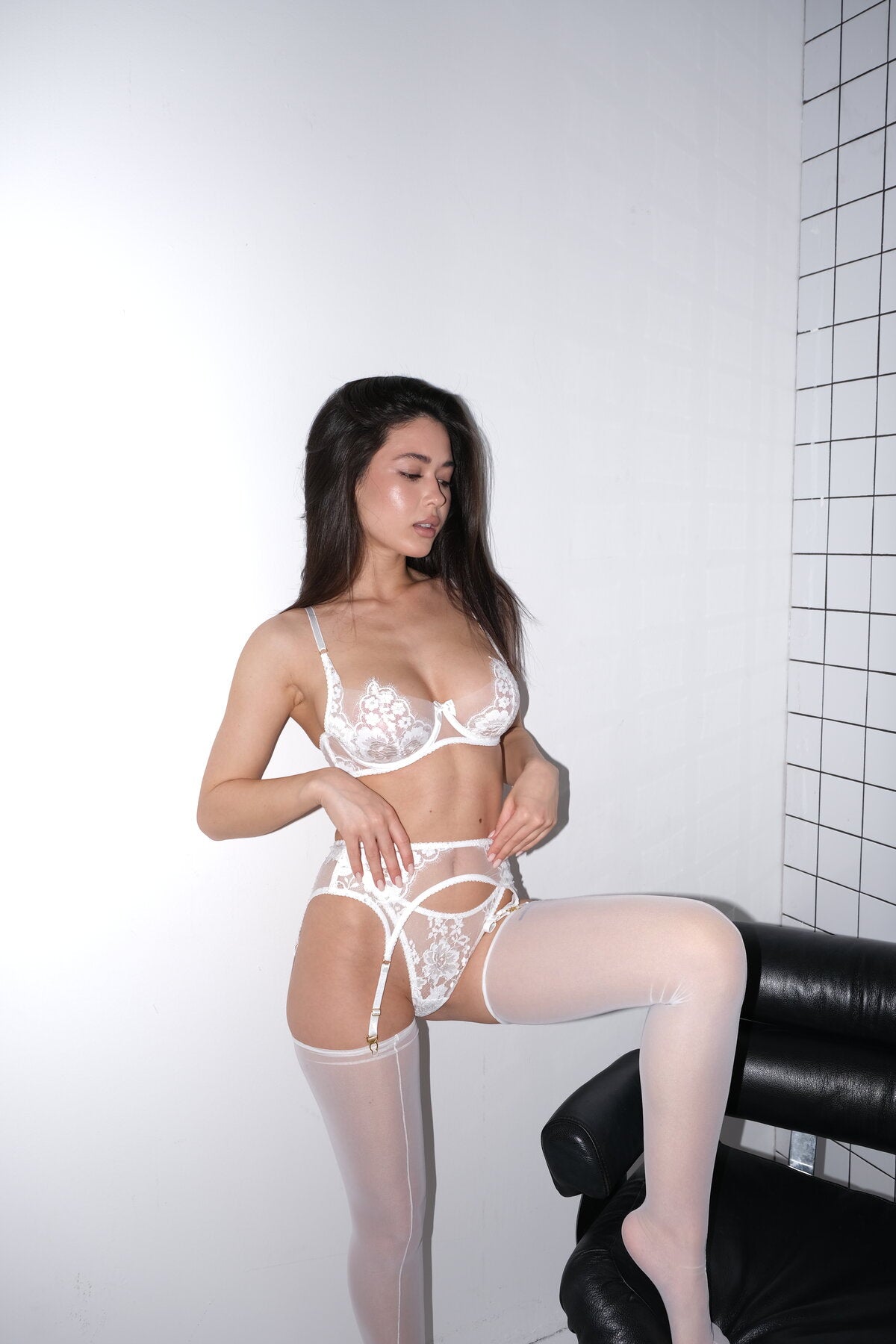


Last updated: August 26, 2026
A "best bra" list that treats every bust size the same way misses the point. A band and cup number tells you what size to order. It doesn't tell you which construction holds its shape on you. That's the real difference between a bra that still looks right after fifty wears and one that only looked right in the fitting room: whether the straps, wire, and band were built for the load they're carrying.
Key Takeaways
- A fuller bust needs the strap, wire, and band doing real structural work. A smaller bust needs the opposite problem solved: a cup and band that aren't built for weight that isn't there.
- Strap width matters more than most shoppers realize. A 2015 University of Wollongong study measured meaningfully lower pressure and discomfort from wider straps on women with D+ cup sizes.
- Because every Lioness piece is cut to your own measurements instead of pulled from a fixed size run, the decision that matters most is construction (strap width, band structure, wire gauge), not which generic box to tick.
- Balconette, plunge, and full-coverage cuts suit different bust sizes and different necklines. Choosing the cut before the size solves more fit complaints than switching brands does.
- Cup gapping on a smaller bust and straps digging into the shoulder on a fuller bust are the two most common, and most fixable, size-specific complaints we hear.
What changes between a small bust and a full bust is the load, not the bra itself
Breast tissue has real weight, and that weight goes somewhere: the band, the straps, or both. A small or petite bust puts very little strain on either, so the main risk is a bra built for more support than it needs: stiff wire, a heavily boned band, thick padding that changes the shape instead of following it. A full or large bust puts real, continuous load on the same two points, so under-built construction shows up fast: straps that stretch and dig in, a band that rides up at the back, wire that flexes instead of holding.

What a full or large bust needs from construction, not just size
Once cup size moves past a D, engineering matters more than the label. Three things carry most of the work: strap width and placement, band rigidity, and wire gauge.
Wide, vertically set straps spread weight across more of the shoulder instead of cutting a thin line into it. That isn't a styling preference.
A 2015 study from the University of Wollongong's Biomechanics Research Laboratory measured shoulder strap pressure and discomfort in 23 women with D+ cup sizes, across six different strap conditions during running and standing. Wide straps, about 4.5 cm across, produced significantly lower discomfort and pressure than standard-width straps (p < 0.001), and vertical placement was preferred over a cross-back design. Read the full study.
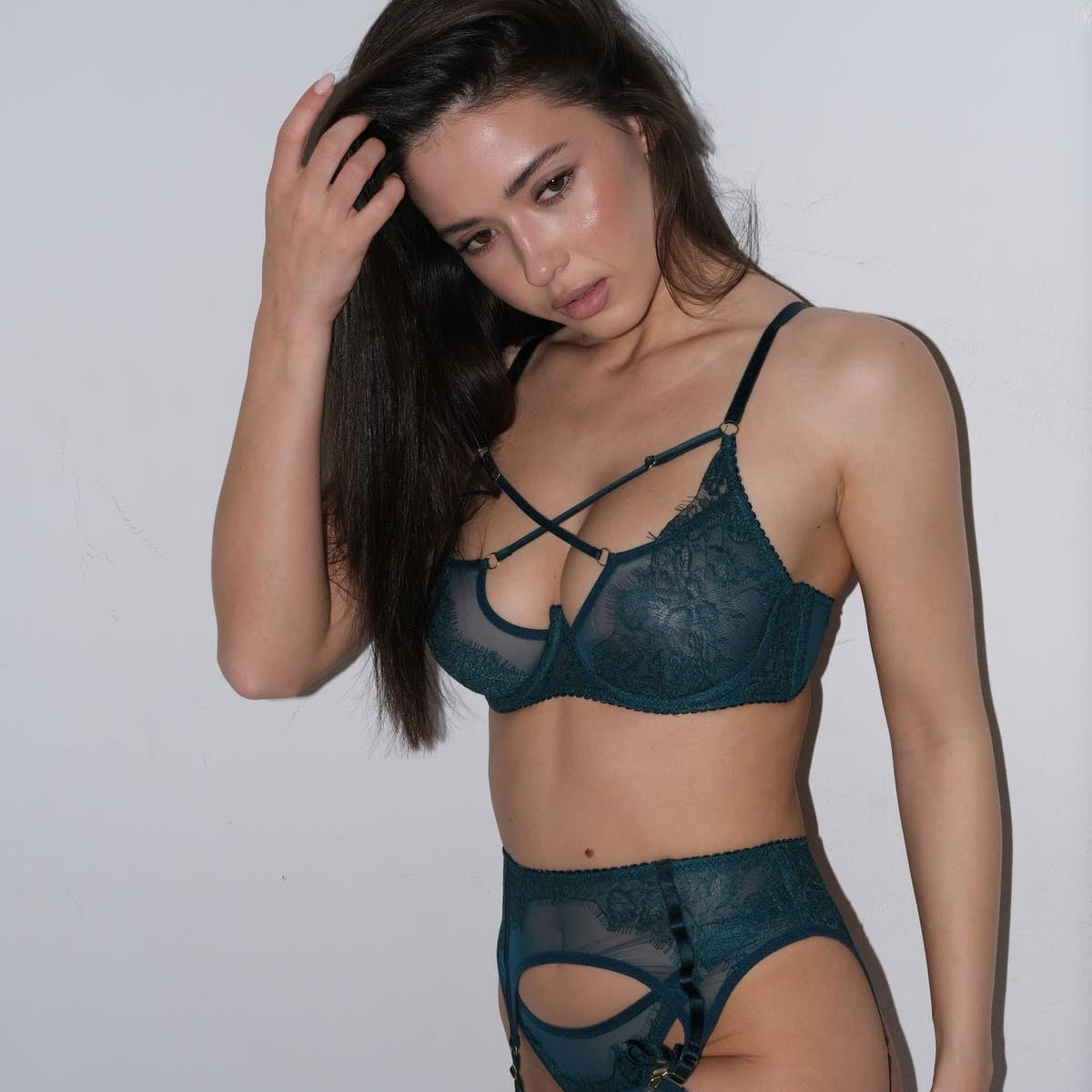
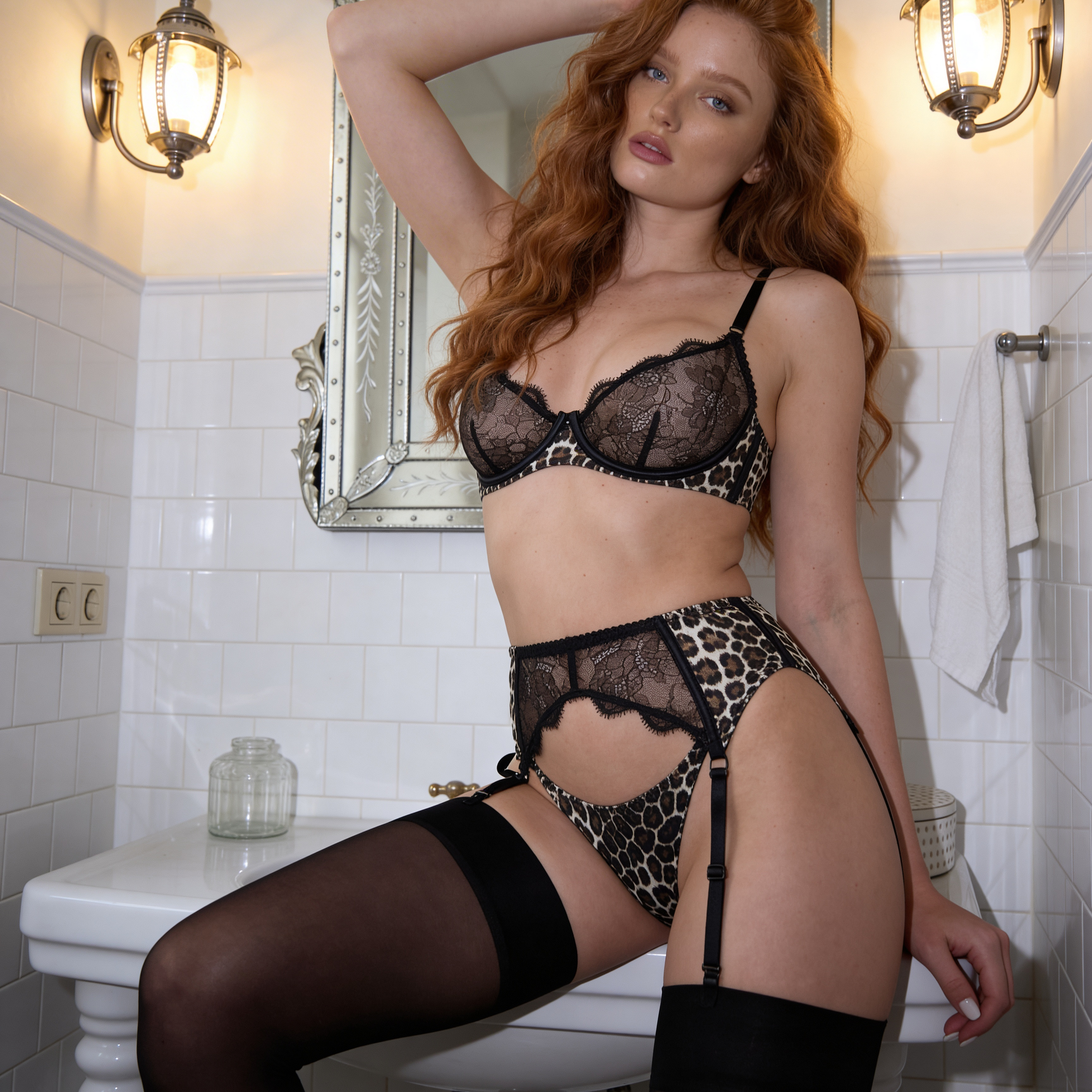
A wider band with a firmer weave holds its line instead of stretching out by midday, and a slightly heavier wire gauge keeps its shape under real weight instead of bending toward the center. Side support matters just as much as the wire itself: a structural side panel in a firmer mesh keeps tissue from shifting outward under the arm, which is often the real source of a "band feels loose" complaint that isn't a band problem at all. Lioness's structural sets, like Naomi and Bella, build the strap and band this way from the start, not as an afterthought.
What a small or petite bust needs
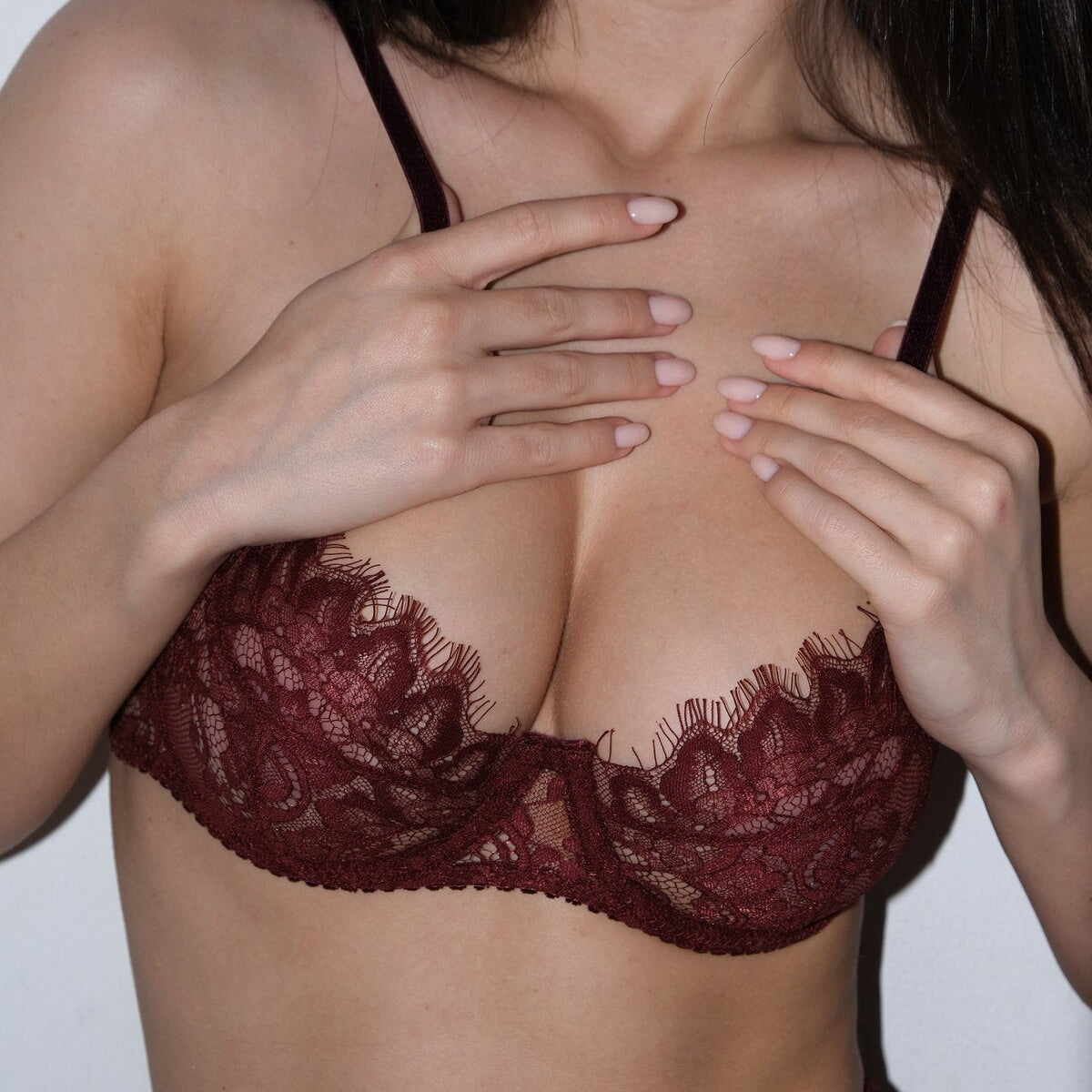
The common mistake is a bra engineered for a size that isn't yours: heavy wire, thick foam, and a stiff band assume there's more breast tissue to manage than there is. Without that weight, the cup gapes at the top, the wire sits away from the body instead of against it, and the whole piece ends up wearing you instead of the other way around. What helps is closer to precision fit: a cup cut tight to the shape underneath it, straps set to hold rather than lift, and a lighter band that still keeps its structure. Jia and Carolina both use this lighter lace-and-mesh cup construction. If what you want is no wire and no structure at all, that's a different garment, and our bralette guide covers where a soft-cup style makes more sense than a structured bra scaled down.

The two mistakes that split almost entirely by bust size
Two complaints account for most of the "this doesn't fit right" messages we get, and they split cleanly by size. On a fuller bust, straps that dig in and a band that creeps up the back point to the same problem: the band isn't carrying enough of the load, so the straps are compensating for it. On a smaller bust, gapping at the top of the cup and a band that spins around the ribcage point the other way: the cup and band were built for more breast tissue than is actually there. Both point to a construction mismatch, not a sizing mistake, and our full bra fitting guide walks through the checklist for either direction.
Matching the cut to the size, not just the size to the tape measure
Once construction is right, the neckline and cut decide how a bra wears under clothes. A balconette cut lifts and rounds the shape, which reads well on a fuller bust under fitted tops. A plunge cut lowers the center gore, which works across a wider range of sizes under a deep neckline as long as the side support is doing real work. Full-coverage cups bring in more fabric at the top and sides, which tends to suit a fuller bust that needs containment more than lift. A longline band under a fitted dress does a similar job to a firmer core garment: it extends support down toward the waist instead of concentrating it at one horizontal line. None of these cuts belong to one bust size alone, but they solve different problems, so it's worth choosing the cut for the outfit and the support need first, then confirming the size second.

Why made-to-order sizing changes the question you're answering
Standard retail sizing forces a compromise: your band, your cup, and your torso length all have to fit inside one manufacturer's fixed grading, and for most people, at least one of those three doesn't quite match. Because every Lioness piece is cut to the measurements you provide, that compromise mostly disappears. The band is built to your underbust, the cup to your bust measurement, and the strap length to your torso, all from the same order. That moves the real decision away from "which size" and back to the construction choices above: how much structure, which strap width, which cut. Our measuring guide covers how to get those numbers right before ordering, and our custom fitting process covers what happens after you submit them.
Frequently asked questions
Is there really one best bra for a large bust?
No single style, but there is a consistent construction pattern: wider straps, a firmer band, and a wire gauge built to hold its shape under real weight. Balconette and full-coverage cuts both work within that construction, depending on the neckline.
What's the biggest mistake people with a small or petite bust make?
Buying a bra built for more breast tissue than they have. A heavily wired, thickly padded style meant for a fuller cup will gap and shift on a smaller bust no matter how carefully the band size is chosen.
Does strap width make a measurable difference?
Yes. In laboratory testing on women with D+ cup sizes, wider straps produced significantly lower shoulder pressure and discomfort scores than standard-width straps, and vertical placement outperformed a cross-back design.
Should I size up or down if a bra gaps or digs in?
Usually neither. Gaping and digging are almost always a construction mismatch, the wrong wire, band, or padding for your shape, rather than a size that's simply too big or small. Our bra fitting guide walks through how to tell the difference before you reorder.
How does made-to-order sizing change any of this?
It removes the compromise of fixed retail grading. Band, cup, and strap length are all built to your own measurements in the same order, so the construction choices above (strap width, band structure, cut) matter more than picking a size off a chart.
Written by Lioness Studio, the team behind every made-to-order piece at Lioness Lingerie. We build each bra to the measurements sent to us, which means we spend a lot of time thinking about what changes between one bust size and another so the construction, not just the size chart, gets it right.