

Last updated: August 28, 2026
A backless dress removes the one thing most bras are built around: a full band and set of straps sitting flat across your back. That does not mean support disappears with the fabric. It means the solution has to come from somewhere else, and which solution works depends almost entirely on how low the back actually goes and how much support you need to begin with.
Key takeaways
- How low the back cuts determines your options more than anything else. A scoop to the waistband allows different solutions than an open back down to the tailbone.
- Low-back and convertible-strap bras reroute the band below the open area instead of removing support altogether.
- Adhesive bras work best on smaller to mid cup sizes and for a few hours of wear, not full support all evening.
- A structured bodysuit with an open back can solve support and coverage in one piece, without visible straps at all.
- When there is nothing left to hide at the back, a garter belt or waist piece becomes a visible design choice instead of an accessory underneath everything else.
Can you wear a bra under a backless dress?
Yes, but not a standard one. A dress cut low enough to show your entire back removes the horizontal band that gives most bras their support, so the bra has to be built or adjusted specifically for that gap. The right choice depends on two things: where the open section starts and stops, and how much bust support you actually need once the band is gone.
How low does the back go? Why the cut decides everything
Backless dresses are not one category. A scoop back that dips to the bra line still allows a standard bra with the band lowered or the straps rerouted. An open back that drops past the waist or all the way to the tailbone removes almost every anchor point a bra normally relies on, which is why the same dress can call for completely different solutions depending on where exactly the fabric starts again.
Before deciding what to wear underneath, look at three points on the dress: where the open section begins between the shoulder blades, how far down it goes, and whether the sides stay closed or open too. A halter dress with a high, narrow open back gives you more anchor points than a dress that opens from the nape of the neck to well below the waist. A dress with an open back but closed sides can still hide a band running horizontally at the waist, which a fully open side cannot.
Low-back and convertible-strap bras
A low-back or convertible bra does not remove the band. It repositions it. The straps cross, hook, or clip in a pattern that sits below the open section of the dress instead of straight across the shoulder blades, and some styles include a low-back extender clip that drops the entire band several centimeters lower than a standard closure.

These work well for scoop and moderate open backs where the dress still closes somewhere above the waist. They are less useful once the open section runs past where a lowered band could realistically sit, which is where the next two options take over.
Adhesive and stick-on bras: what they actually do
An adhesive bra uses two silicone cups that stick directly to the skin, with no band and no straps at all. There is nothing for a backless dress to reveal because there is nothing crossing the back to begin with.
The honest limitation: adhesive bras lift and shape more than they support. They work reliably for smaller to mid-range cup sizes over a few hours. For a fuller bust or a full evening on your feet, the adhesion alone is unlikely to hold the same way underwire and structured cups do, and reapplying mid-event is rarely practical. This is a real and growing category of the lingerie market, driven specifically by the popularity of backless and off-shoulder styles that leave few other options.
Nipple covers and going without structure entirely
For dresses with enough built-in structure of their own, such as a lined bodice, boning, or a heavier fabric that already holds its shape, some people skip a bra altogether and use nipple covers or petals for coverage only, not support. This works best when the dress itself is doing the structural work and you only need the smallest layer underneath, not a substitute bra. It is rarely the right call for a fuller bust or a dress with little built-in lining, where the fabric alone was never meant to carry that job.
Bodysuits and open-back pieces
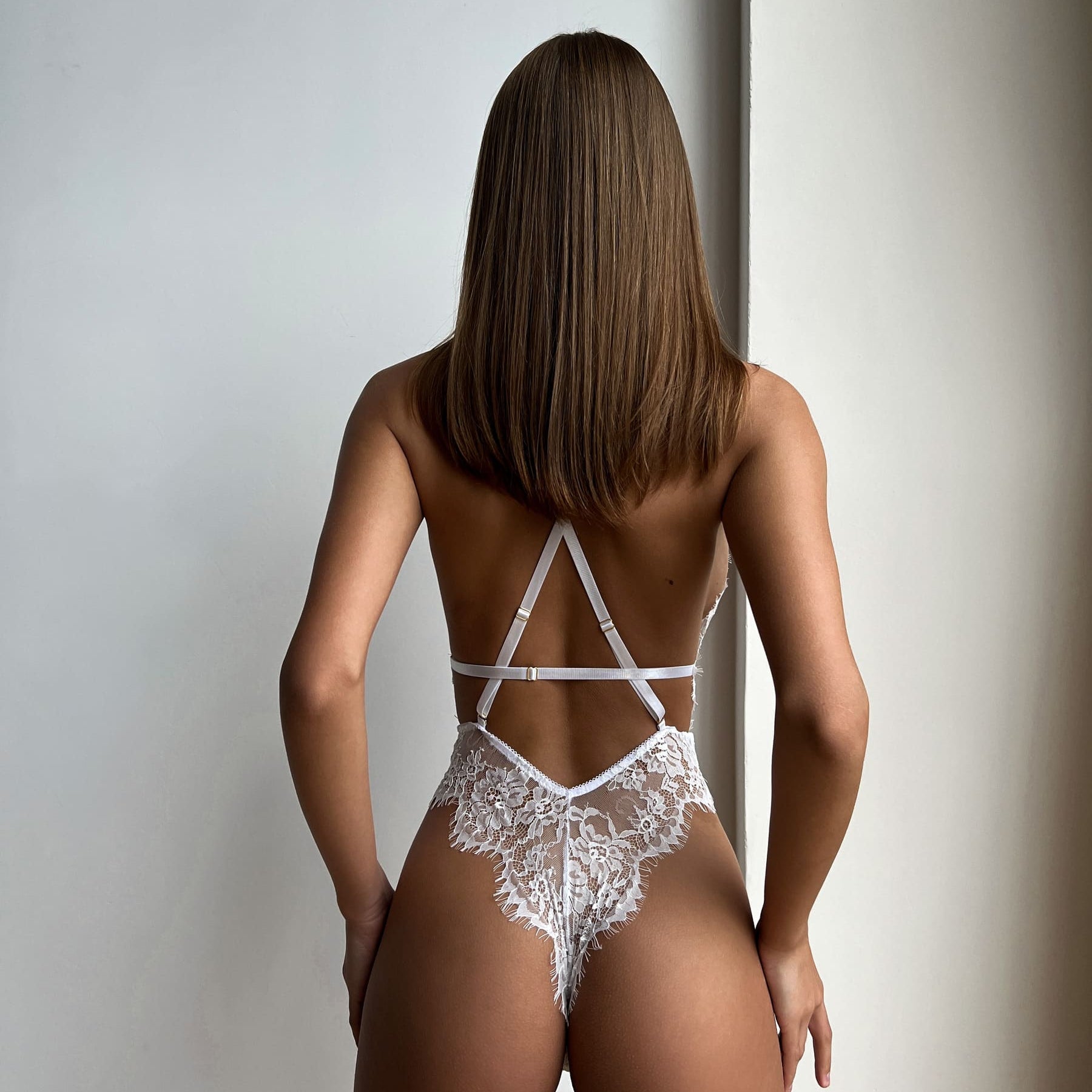
A bodysuit built with an open or low back solves the same problem from the opposite direction: instead of hiding a bra, it becomes the only layer, with structure built into the front panel and no back band to work around at all.

This is often the simplest solution for a dress with a back that opens well past the waist, since a bodysuit is designed as one continuous piece rather than a band-and-strap system trying to route around a gap. Browse the bodysuit collection for structured pieces with open-back options, or the full suits collection for one-piece styles cut with the same problem already solved.
When the back has nothing to hide: the garter belt as a visible piece
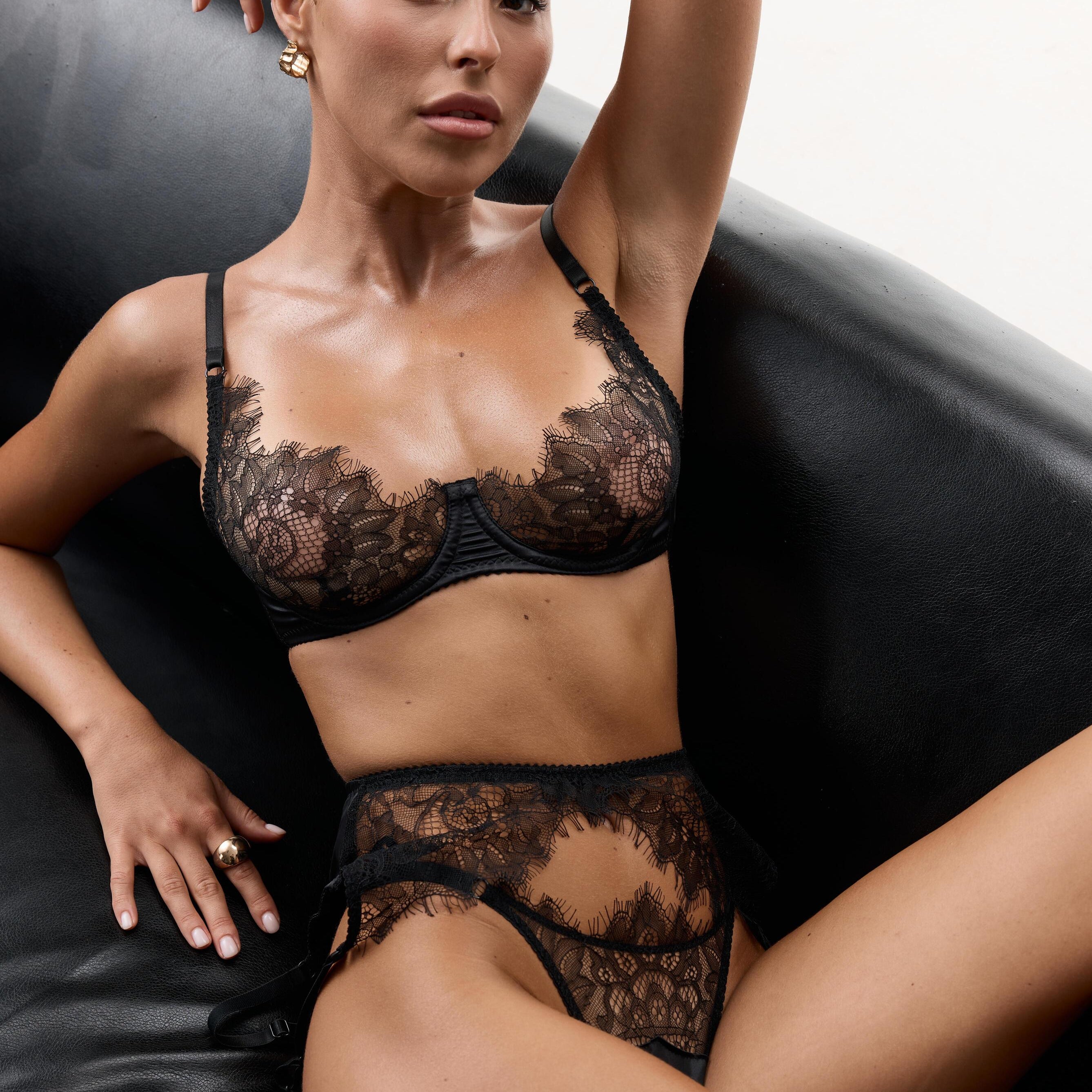
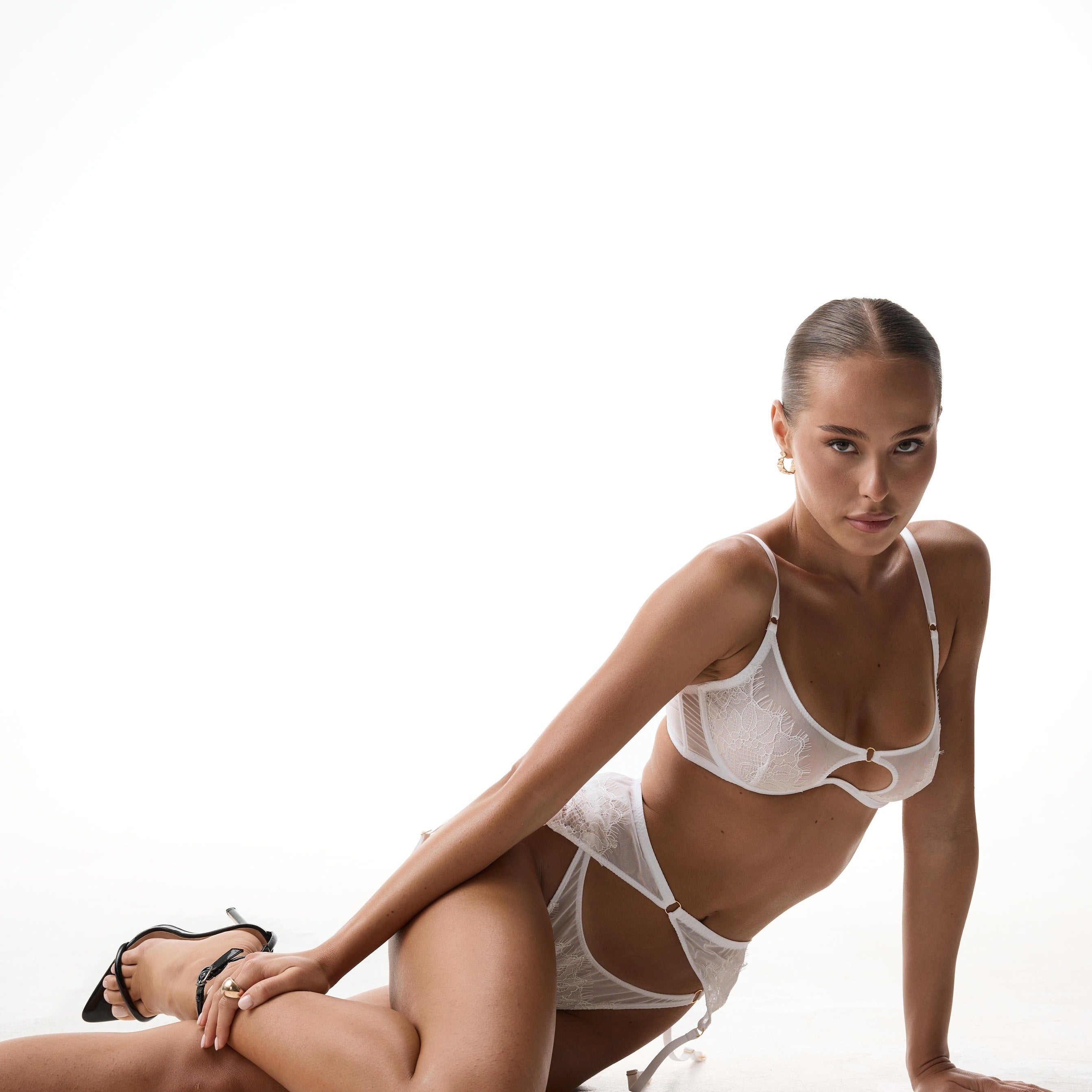
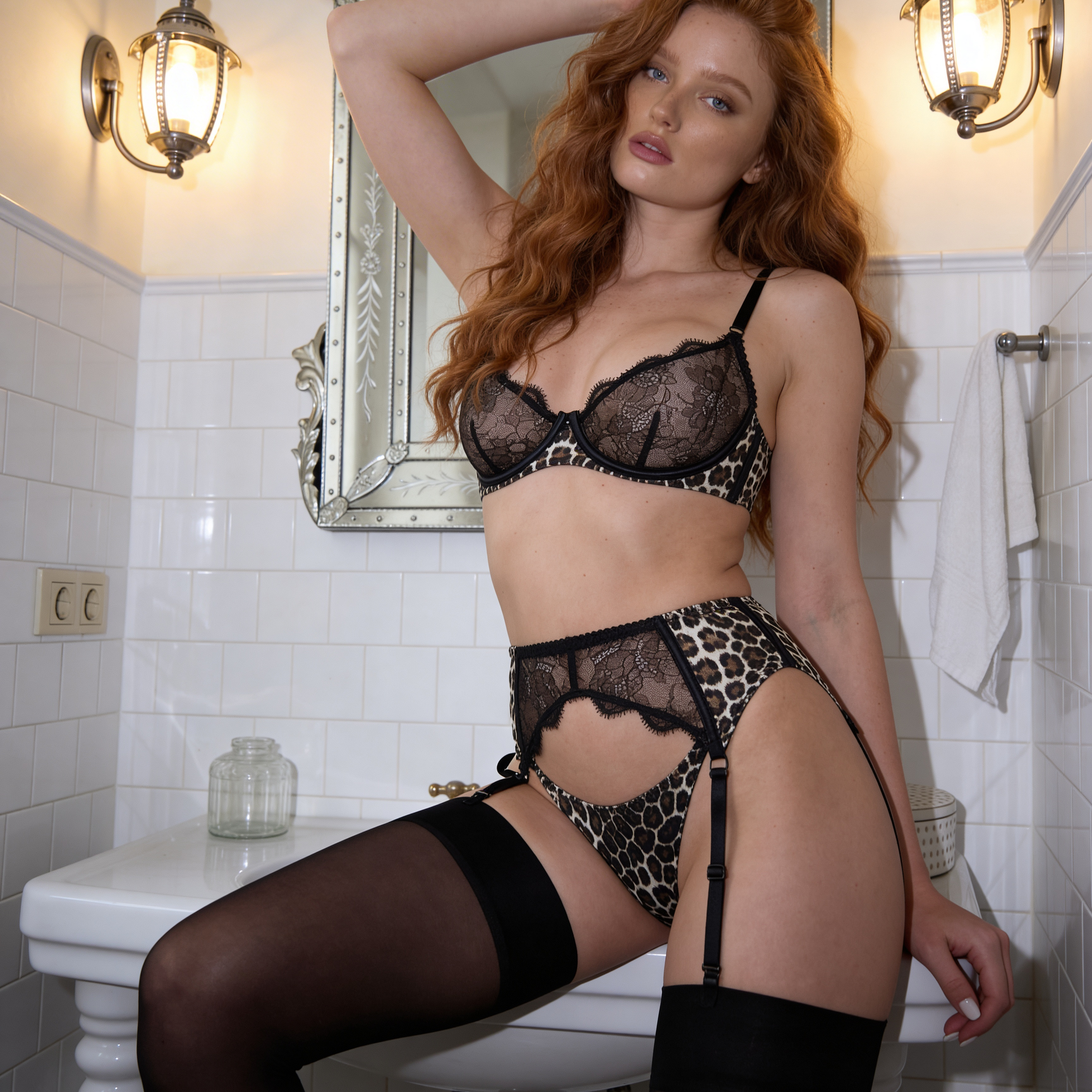
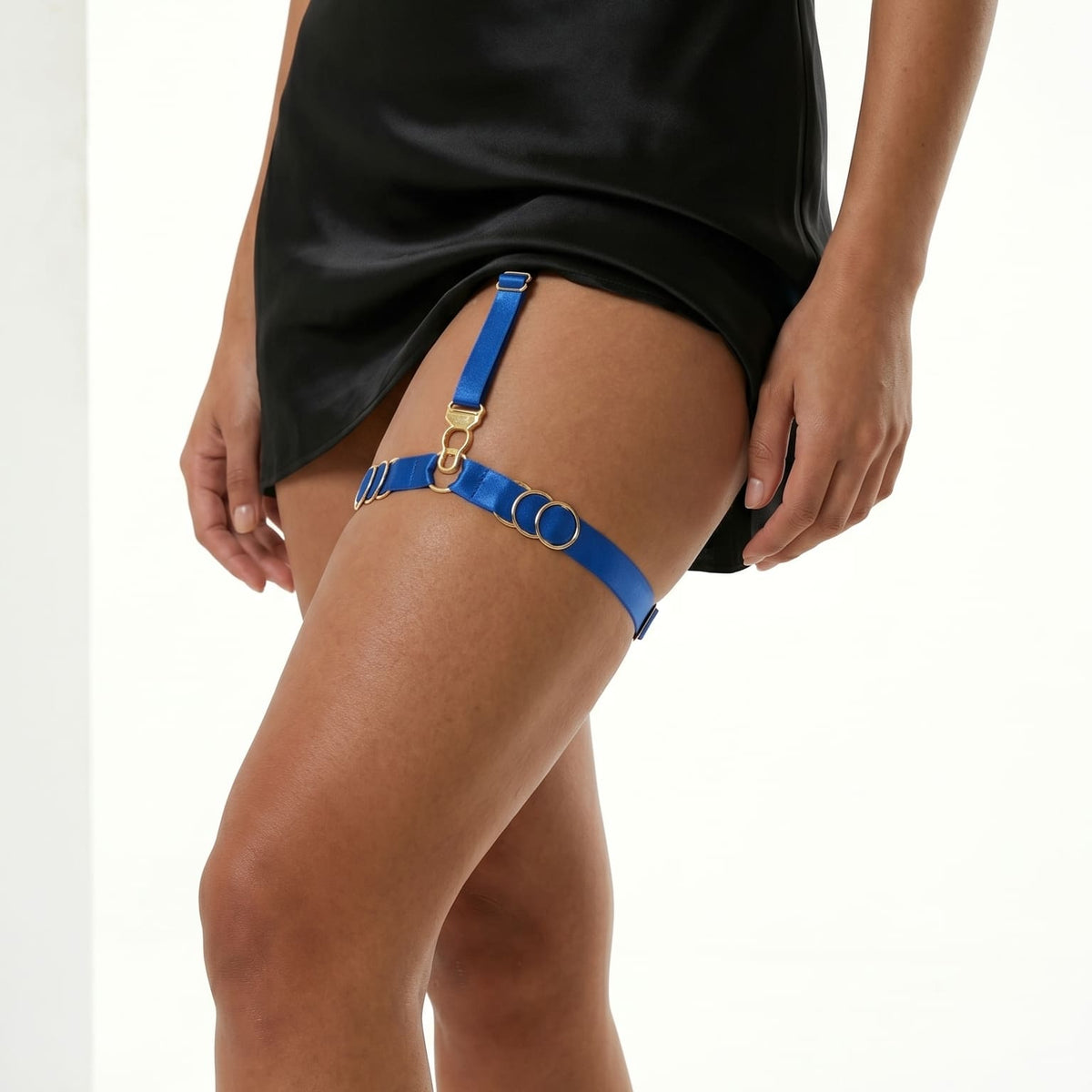
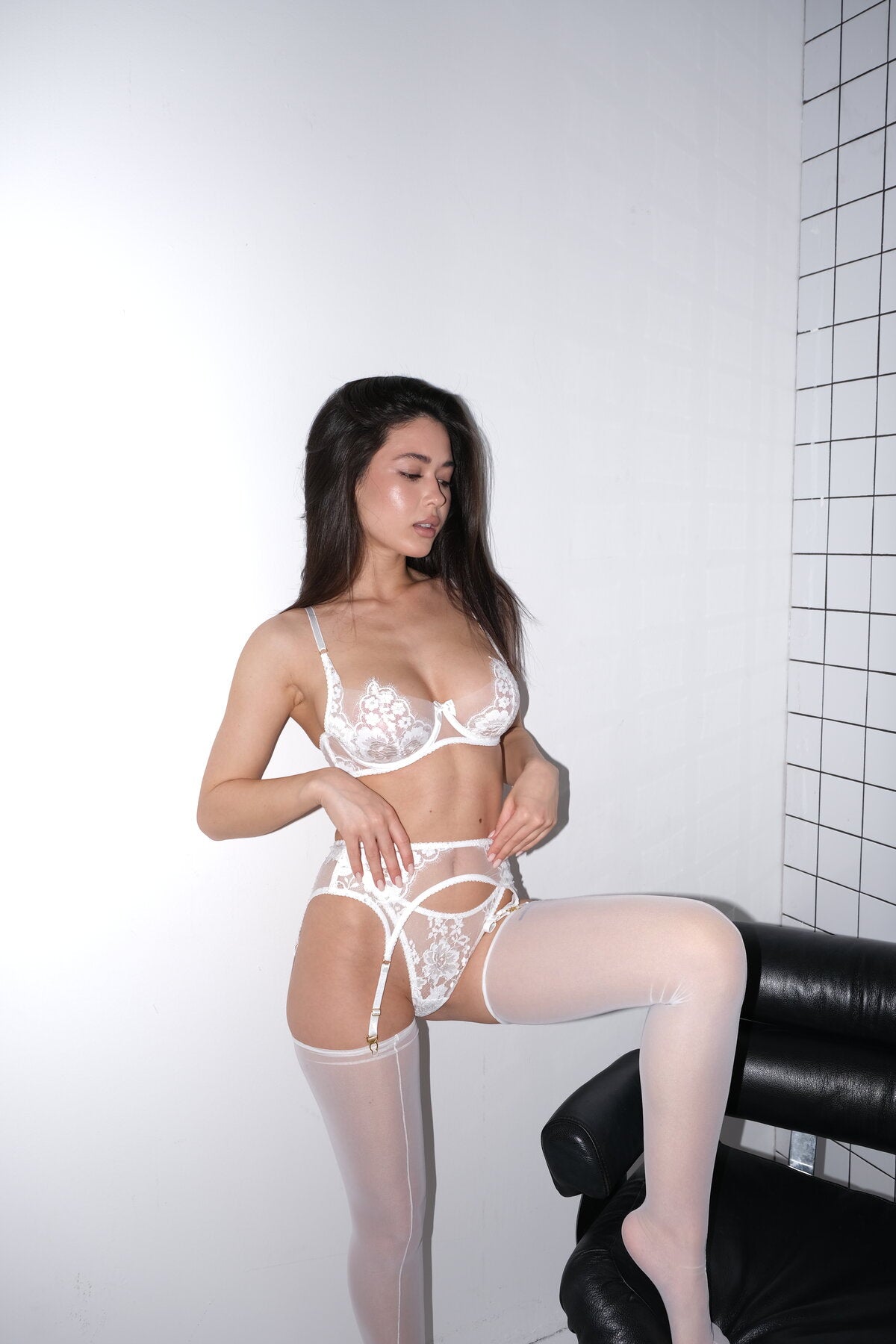
Once a dress removes the back entirely, there is no longer anything to conceal underneath it, and that changes what a waist piece is for. A garter belt worn with an open-back dress is not hidden support: it is visible through a side slit or under sheer fabric, which means the hardware and lace detail matter the way they would on outerwear, not underwear.

This is worth planning for rather than treating as an afterthought. A structural, architectural belt reads intentionally when it is visible; something meant to disappear under clothing usually does not hold up to being seen in the same way.
What to test before you wear it out
Try the full look, dress and undergarment together, in front of a mirror before the day of the event, not the morning of. Raise your arms overhead, sit down, and turn to check the sides. Any gap, slipping strap, or visible edge will show up in that five-minute check far more honestly than it will in a fitting room mirror where you are standing still.
If you are working with a made-to-order piece, note the dress's exact back opening, measured from the neckline down, and side to side at the widest point, when you place your order. Our fitting guide covers how to check whether a bra's band and straps are doing their job even before you add a backless dress into the equation.
Matching the bra type to the dress, not just the back
The shape of the front matters as much as the back once you are choosing what to wear underneath. A soft, unstructured style like a bralette pairs naturally with a low-back dress that also has a relaxed neckline, while a balconette or plunge shape works better under a fitted bodice, provided the strap configuration at the back has already been solved separately. Treat the front and back of the dress as two different fitting problems, not one, and choose each on its own terms.
A quick history: why this problem has a name
The low-back bra is not a recent workaround. A patent for a bra strap converter, filed in 1998 and issued in 1999, describes an elastic strap and hook system built to pull the shoulder straps together across the back so a wider range of necklines and back cuts could be worn without straps showing. US Patent 6,163,937 is one of several strap-converter and low-back-extender patents filed in the United States since the late 1990s, evidence that this has been a documented engineering problem for close to three decades, not just a last-minute styling fix.
Frequently asked questions
Can I wear a normal bra under a backless dress?
Only if the open section is narrow and high enough that a standard band would sit below it. For most true backless cuts, a standard band and straps will show or will not fit the gap at all.
Do adhesive bras work for a full bust?
They can lift and shape, but they are not built to fully support a fuller bust for hours at a time. If you need real structural support, a low-back or convertible bra, or a structured bodysuit, will hold better.
What if the dress opens all the way to the waist?
At that point, a bodysuit with an open back, or going without a structured bra using coverage-only options, is usually more reliable than trying to reroute a standard bra's straps.
Can I still wear a garter belt with a backless dress?
Yes, and it often becomes a visible detail rather than something hidden, especially with a side slit or sheer panel. Choose one with hardware and lace you would be comfortable having seen.
How far in advance should I test the fit?
At least a few days before the event, with the actual dress on, not just the undergarment alone. That gives you time to adjust or order a different style if something does not hold.
Written by Lioness Studio. We build every piece to order in Košice, Slovakia, which means we can also cut and stitch around genuinely unusual back openings and strap placements once you tell us what the dress requires. Browse the full bras, lingerie, and panties collections for more.