










Last updated: 1 August 2026
On 28 July, Burberry and the V&A announced a free display called The Burberry Trench: Crafting an Icon. It opens at V&A South Kensington on 21 September 2026 and runs until 3 January 2027, in the Prince Consort Gallery, a room the museum rarely opens and which once held fabrics from the textile collection in mahogany cabinets. The display marks 170 years since Thomas Burberry founded the house in 1856.
Most exhibitions built around a famous garment organise themselves around the people who wore it. This one is organised around how the thing is put together. There are three sections, and the middle one is called Craft.
What the museum decided was worth a vitrine
The opening section, Invention, covers Thomas Burberry's development of cotton gabardine in 1879 and how the fabric turned the coat into serious protective outerwear. The closing section, Creativity, gathers 19 runway looks from the past two and a half decades, including work by Daniel Lee and Christopher Bailey.
Between them sits Craft, which Burberry's release describes as unpicking the carefully crafted elements that make up the trench: the hand-finished collar, the House Check lining, the storm flap, the detachable throat latch. Every one of those is a pattern piece, a seam or a closure. They are the parts of a garment that normally stay invisible in a press image.

The collar is the part that takes a year
Burberry's own account of how its Heritage trench coats are made puts a number on this. The collar is the most intricate part of the coat's construction. It is made up of eight separate parts, and it takes up to 270 stitches to shape the curve that lets it sit correctly against the neck. A machinist can spend up to a year learning that one seam. The gabardine is woven at the company's mill in Keighley, and the Heritage coats have been cut in Castleford, Yorkshire for over 50 years, according to Burberry's published description of the garment.
Nobody shopping for a trench counts the eight parts. The number matters anyway, because it is the whole reason one coat hangs correctly on the shoulders and another does not. Every claim the coat makes about quality resolves, eventually, into that seam.
Details that began as instructions
The trench's most recognisable features started as functional requirements rather than decoration. The epaulettes originally displayed an officer's rank. The metal D-rings on the belt were there to attach equipment. The Check lining has been in the coats since the 1920s. All of it was solving a problem first, which is why it has survived a century of reinterpretation without looking like costume.
Carly Eck, Burberry's brand curator, says the display will show archive objects publicly for the first time, from early twentieth-century catalogues to a trench coat worn by Hardy Amies, the Savile Row couturier who dressed Queen Elizabeth II for half a century. A bespoke tailor's own ready-made coat is a reasonable test of construction. He would have known exactly what he was looking at.
Why we are paying attention to a coat
We do not make outerwear. We make lingerie to order, cut to one person's measurements, which means our work sits in the same place the V&A has chosen to point at: the parts of a garment nobody photographs.
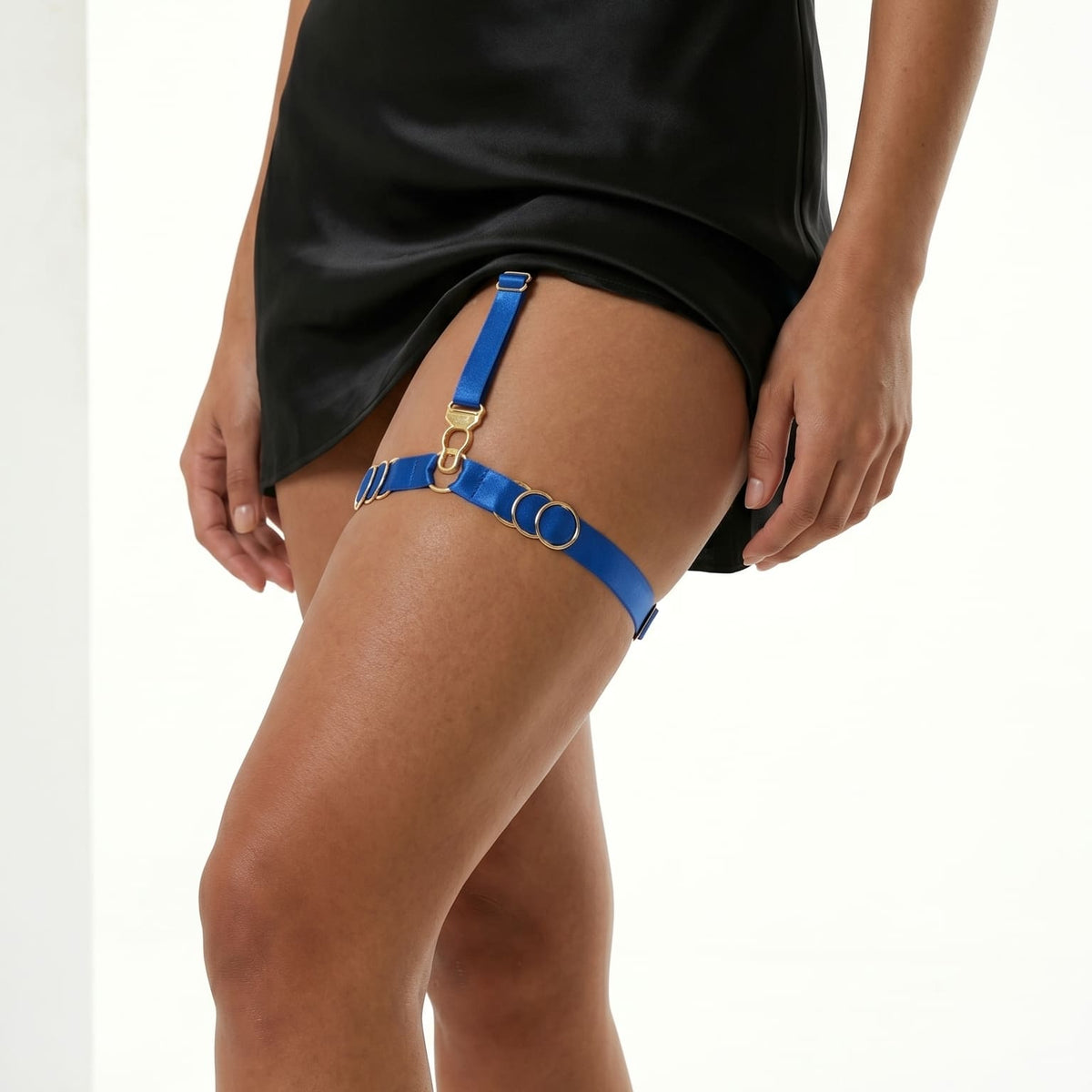
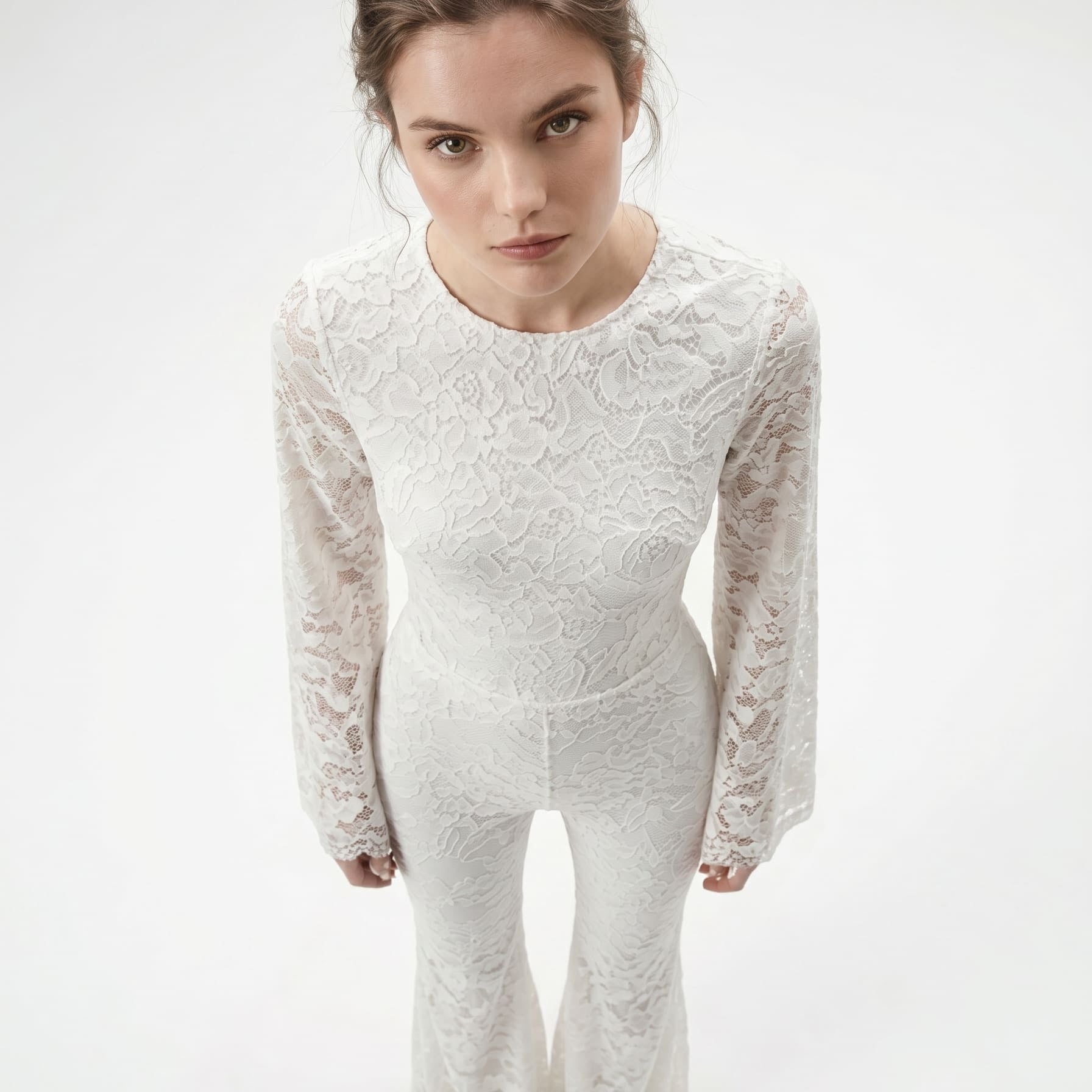
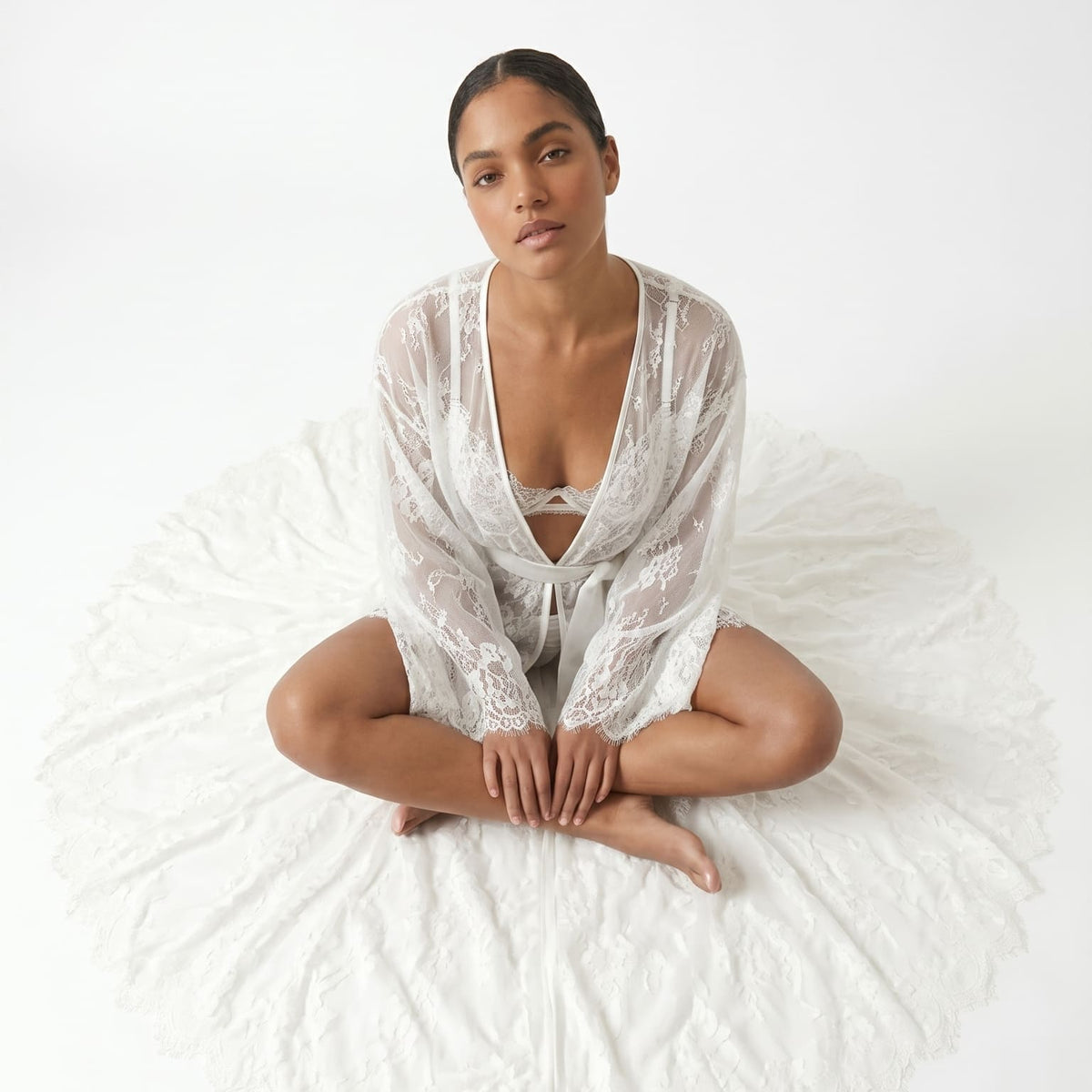
A bra is closer to a trench collar than it looks. The band carries almost all the load. The hardware has to hold tension without digging in. Strap geometry decides whether weight sits on the shoulder or slides off it. Our Simple Ring garters are built around gold-plated rings the way the trench belt is built around its D-rings, and the ring carries real load there too. The Quartet pieces are a four-strap arrangement where the angle each strap leaves the ring at determines whether the whole thing stays put. In the Black Swan and Sensual Edge pieces, the open-back and mesh panels are load-bearing, so where they sit gets decided on the pattern table before anyone looks at the effect.

The other thing worth noting from Burberry's account is aftercare. Its ReBurberry service covers cleaning, repairing and reproofing, on the assumption that a well-built coat is worth maintaining for decades. Made-to-order lingerie runs on the same assumption at a smaller scale. A piece cut for your body is worth washing carefully, because there is no identical replacement sitting on a shelf.
If you are in London this autumn
The display is free and open to all, 21 September 2026 to 3 January 2027 at V&A South Kensington. It runs ahead of the Burberry Gallery, a redesign of the museum's fashion galleries supported by the house, due to open in autumn 2028. Oriole Cullen, the V&A's senior curator of fashion and textiles, framed the display as a preview of that partnership.
For anyone who cares how clothes are actually built, a room of collars and cutting details is a better afternoon than most retrospectives.
Atelier Notes is where the Lioness team writes about the wider fashion and lingerie industry: runway moments, craftsmanship stories, and the ideas moving through fashion that connect back to how we build our own pieces. Separate voice from the Lioness Studio guides, same team behind it.