











Last updated: September 23, 2026
Most people searching for a wedding garter belt are looking for one of two different objects, and the difference only becomes obvious once you are standing in a fitting room holding both. One is a narrow decorative band that sits on the thigh and exists for a photograph and a tradition. The other is a functional waist piece with four or six straps that hold stockings up. This guide covers both, but it spends most of its time on the second one, because that is the piece that has to survive eight hours under a gown without announcing itself.
Key takeaways
- A wedding garter and a garter belt are different pieces: the first is worn on the thigh as a keepsake, the second sits at the waist and does actual work.
- Under a fitted gown, it is the strap hardware that shows, not the belt. Flat clips and a hip-level band solve most of the problem.
- Backless and low-back gowns are the easy case, because a garter belt sits well below the opening.
- Colour choice is about what happens underneath ivory fabric, not about matching your flowers.
- Made-to-order pieces have to be ordered before your final dress alteration, not after it.
Wedding garter or garter belt?
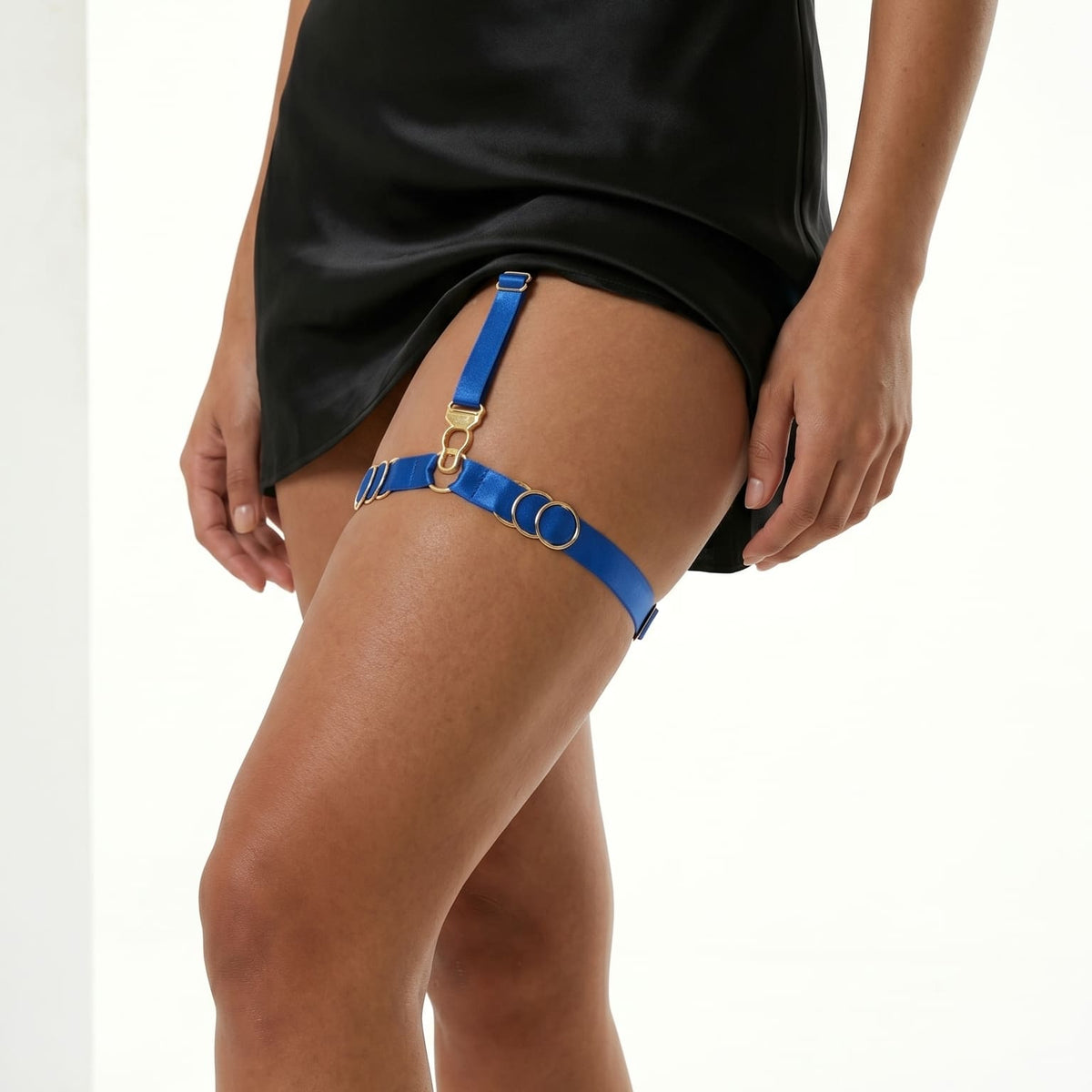
A wedding garter is a single elastic band worn on one thigh, usually lace, often with a ribbon detail. It holds nothing up. A garter belt is a structured band that sits at the waist or high hip with suspender straps running down to clip your stocking tops. If you want stockings to stay where you put them, you need the second one. If you want the tradition, you want the first, and you can wear both at once without any conflict.
This is worth clearing up early because it changes what you shop for. Plenty of brides order a decorative thigh garter, then discover on the morning that their stockings are sliding. Our leg garter styles and our waist-worn belts sit in separate collections for that reason.
The ritual side of it is quietly disappearing, which is worth knowing if you are deciding whether to buy one at all. The Knot's 2018 Real Weddings Study found that only 33% of couples included a garter toss at their reception, down from 42% in 2016. The garter itself has outlasted the ritual. Brides keep wearing one, they have simply stopped handing it to a room full of guests.

Do you actually need one under your dress?
You need a garter belt if you are wearing stockings and want them to stay up through dancing. You do not need one for any other reason, and nobody will know either way.
That sounds obvious, but a lot of bridal shopping runs on a vague sense of obligation rather than a decision. So ask the plain version: are you wearing stockings? If not, a garter belt is a styling choice, and a perfectly good one, but optional. If you are, and your gown is floor length and you will be moving in it for hours, the belt is doing real work.
There is a third case. Some brides want the piece for the photographs and for the evening, and are indifferent about the reception itself. That changes what to prioritise: comfort matters less, how it photographs matters more. Our bridal pieces are built with both uses in mind.
What actually shows through a fitted gown
The belt band almost never shows. What shows is hardware: the metal or plastic clip where the strap meets the stocking, and sometimes the strap adjuster sliding along your thigh.
Two things reduce it. Sit the band high, at the natural waist rather than the hip, so the straps run down a flatter plane and the clips land lower where the skirt has more room. And choose flat hardware over chunky hardware: a thin, low-profile clip disappears under crepe and mikado in a way a bulky one does not.
Fabric decides much of this before you do. Heavy satin, mikado, brocade and anything with a structured lining will hide almost any belt. Thin crepe, jersey and unlined silk will show everything, including the stocking top itself. If your gown falls into the second group, try the whole combination on at your final fitting rather than trusting it on the day. A fine flat lace band is safest under thin fabric, because it compresses rather than sitting proud of the skin.
Backless, low-back and open-side gowns
This is the easiest case, not the hardest, and brides are often surprised by that. A garter belt sits at the waist or hip, which is below where almost every backless gown stops. It solves your stocking problem without interacting with the opening at all.
The complication in a backless gown is never the garter belt. It is what to do about the bust, which is a separate problem with separate solutions, and we covered it properly in our guide to what to wear under a backless dress. If your gown is open to the waist or lower, check where the belt band sits against where the fabric begins. On a very low back you may want the band at the natural waist rather than dropped onto the hip, so there is no chance of it peeking.
Open-side and cut-out gowns are the genuinely difficult version, because the band runs horizontally right through the window. Either skip stockings, or choose a belt in a colour that reads as deliberate. Pieces like our Lea De Paris styles are designed to be seen, which turns concealment into a styling decision.

Choosing a colour
Under ivory or white fabric, a colour close to your own skin tone disappears better than white does. White under white creates a bright patch that catches light and reads clearly in photographs, particularly with flash.
This surprises people, so it is worth stating plainly: if your priority is invisibility, do not buy white. Buy the shade nearest your skin. If your gown is heavy enough that nothing will show regardless, then colour becomes a free choice and you can pick whatever you actually want to wear.
The something blue convention is the one place where a garter earns its keep as a detail rather than a garment. It is hidden, it is genuinely yours, and it does not require you to pin a blue object to an otherwise finished outfit. Our Sapphire line exists in that register, and a blue belt under an ivory gown is one of the few traditions that still has an obvious practical logic behind it.
Garter belt or hold-up stockings?
Hold-ups are simpler and have no hardware to show. A garter belt holds more reliably over a long day and puts less pressure on one band of the thigh.
Hold-ups rely on a silicone band gripping your skin. That grip weakens with heat, with moisture, and with any body lotion applied that morning, all three of which describe a wedding day fairly well. They are a good choice for a short ceremony and a reasonable one in cool weather. They are a risk for a long summer reception.
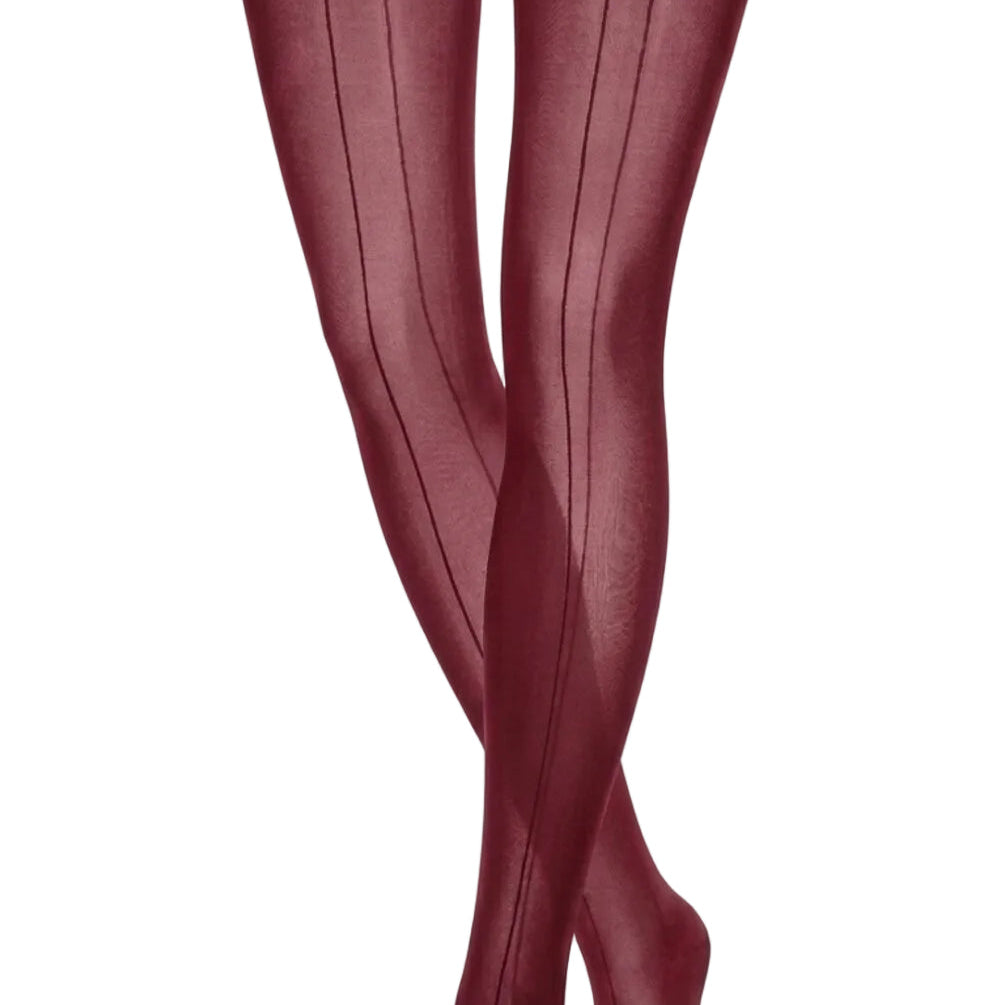
A garter belt transfers the work to your waist, where it belongs, which is why the design has survived for more than a century despite being more complicated. If you are undecided, the deciding factor is usually duration and temperature rather than preference. Our stocking styles work with either approach, and sets like Ariana and Amella include a structural belt built to match the rest of the set rather than bought separately and hoped for.
Getting the fit right, and ordering in time
Garter belts are sized at the waist, not the hip, and the single most common mistake is buying to a hip measurement and then wondering why the band rides up. Measure where you intend to wear it. If you plan to sit it lower, measure there instead and say so when you order.
A belt that rides up is usually too loose rather than too tight. A belt that digs in at the top edge is usually sitting on the wrong part of the torso rather than being the wrong size. Our full garter belt guide works through the fit troubleshooting in detail, so this section stays short.
On timing: order before your final dress alteration, not after. You want the belt in hand when the gown is being fitted, so the seamstress is working around the real silhouette rather than an imagined one. Because everything we make is cut to order, the production window is real and worth planning around. Our made-to-order timeline sets out the actual figures.

Wearing it after the wedding
A garter belt bought for a wedding has a longer life than almost anything else you wear that day, and that is a reasonable argument for spending a little more on it.
The dress is worn once. The belt, if it fits properly and is not covered in wedding-specific detailing, goes straight into normal rotation. So choose a piece you would buy anyway, in a colour and a lace you like, rather than something that only makes sense next to a veil.
If you are still assembling the rest of it, our bridal lingerie guide covers the full picture, and the wedding night piece is a separate decision worth making separately.
Frequently asked questions
Do I need a garter belt for my wedding dress?
Only if you are wearing stockings and want them to stay up. Without stockings it is a styling choice rather than a functional one, and plenty of brides skip it entirely.
What is the difference between a wedding garter and a garter belt?
A wedding garter is a single decorative band worn on the thigh, traditionally as a keepsake. A garter belt sits at the waist with straps that clip to stocking tops and actually holds them up. You can wear both together.
Will a garter belt show under a fitted wedding dress?
The band rarely shows. The clips can, particularly under thin crepe or unlined silk. Choose flat, low-profile hardware, sit the band at your natural waist, and test the full combination at your final fitting.
Which leg does the wedding garter go on?
There is no rule, and etiquette sources disagree. Most brides wear it on the right leg above the knee, but left is equally common and nothing depends on it.
How far in advance should I order bridal lingerie?
Before your final dress alteration, so the gown can be fitted over what you will actually be wearing. For made-to-order pieces, allow for the production window on top of shipping.
Written by Lioness Studio. We make bespoke lingerie to order, one piece at a time, cut to the measurements you send us. Everything we write here comes out of the fittings, the adjustments, and the questions our clients actually ask.