


Last updated: August 27, 2026
The San Francisco Museum of Modern Art has just confirmed its first fashion exhibition in forty years. Dior to McQueen: Fashioning Form opens April 2027 and puts 45 fashion designers, from Cristóbal Balenciaga to Iris van Herpen, in the same rooms as 15 sculptors, from Louise Bourgeois to Henry Moore. The premise, per curator Ann Marguerite Tartsinis, is that both groups have spent eight decades doing the same job: reshaping the human figure through material, construction, and abstraction. It's a serious, well-argued show. It also leaves out the one piece of engineering that made its own opening argument possible.
The pairing the show opens on
SFMOMA's opening gambit is Christian Dior's 1947 Bar suit, shown beside a 1947 Louise Bourgeois sculpture from her Personnages series. The museum's own description calls the Bar suit's waist "impossibly narrow" — an unadorned white jacket cinched to a wasp point, worn over an excessively full, pleated black skirt. Bourgeois' companion piece abstracts a human figure into a slender white form balanced on a narrow black base. Both, the curators argue, reimagine the body as something built rather than simply dressed.
That's a fair reading of the silhouette. It's a less complete reading of how the silhouette got there.
The part that doesn't hang on a mannequin as cleanly
Dior's New Look didn't produce that waist through cut alone. As the ASU FIDM Museum documents, the entire silhouette "relied on a rigid framework of strategically placed padding and boning, not to mention corsets and petticoats," and the skirt alone used up to fifteen yards of fabric. That's a structural undergarment doing the actual work of holding the shape, hidden under the fabric the exhibition photographs. A sculpture stands because of what's inside it. A Bar suit stood because of what was laced underneath it, and that part rarely makes it into the display case next to the jacket.

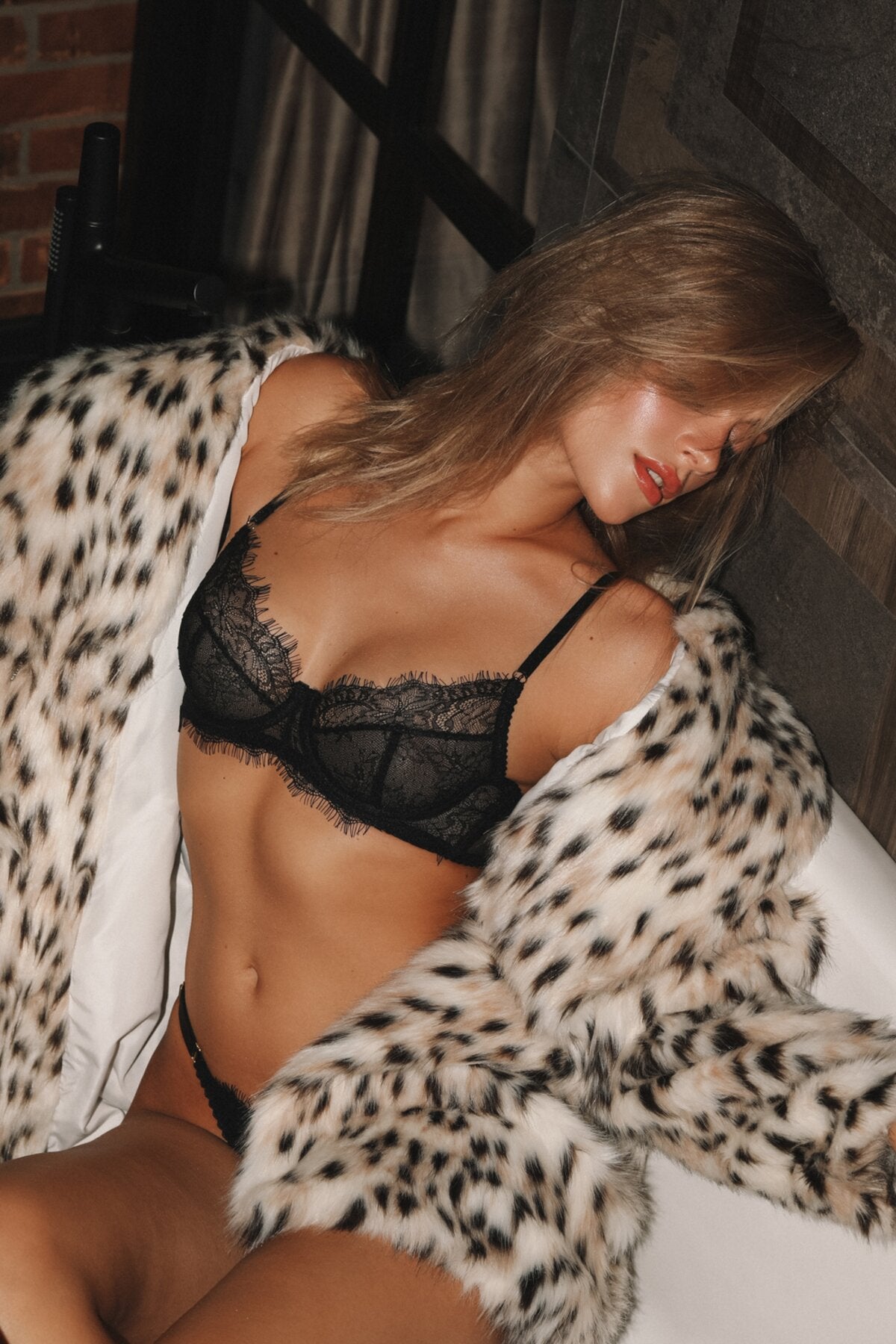
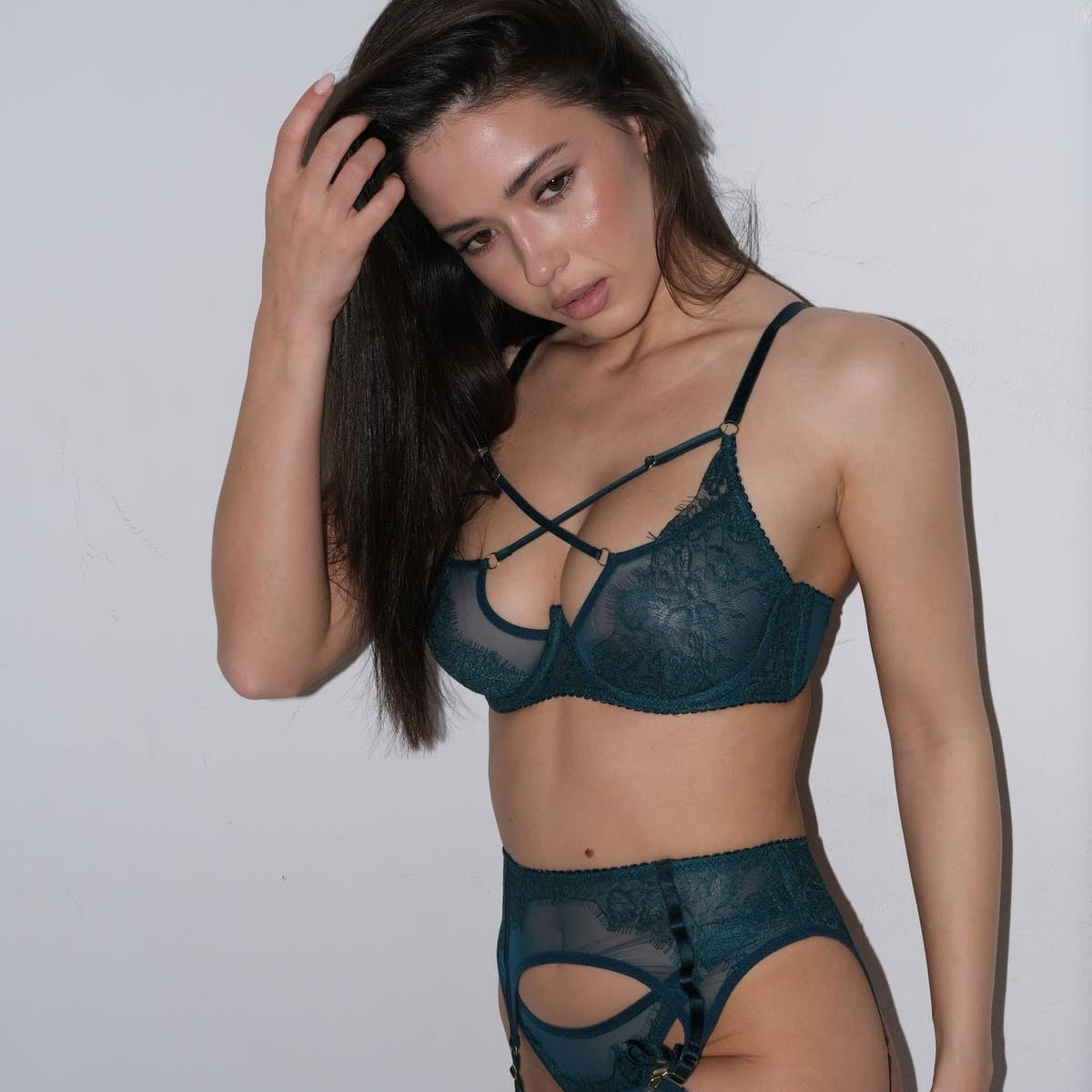
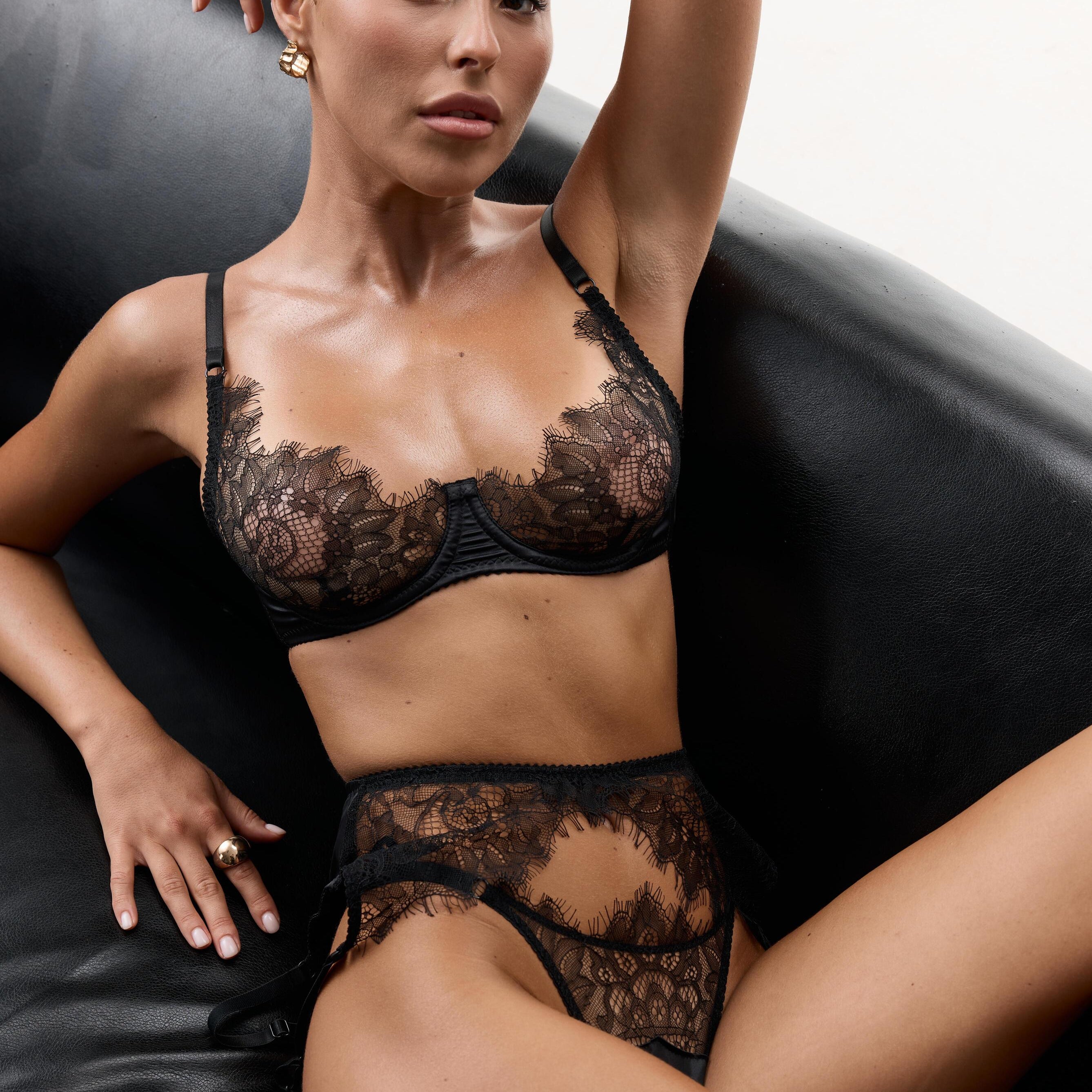
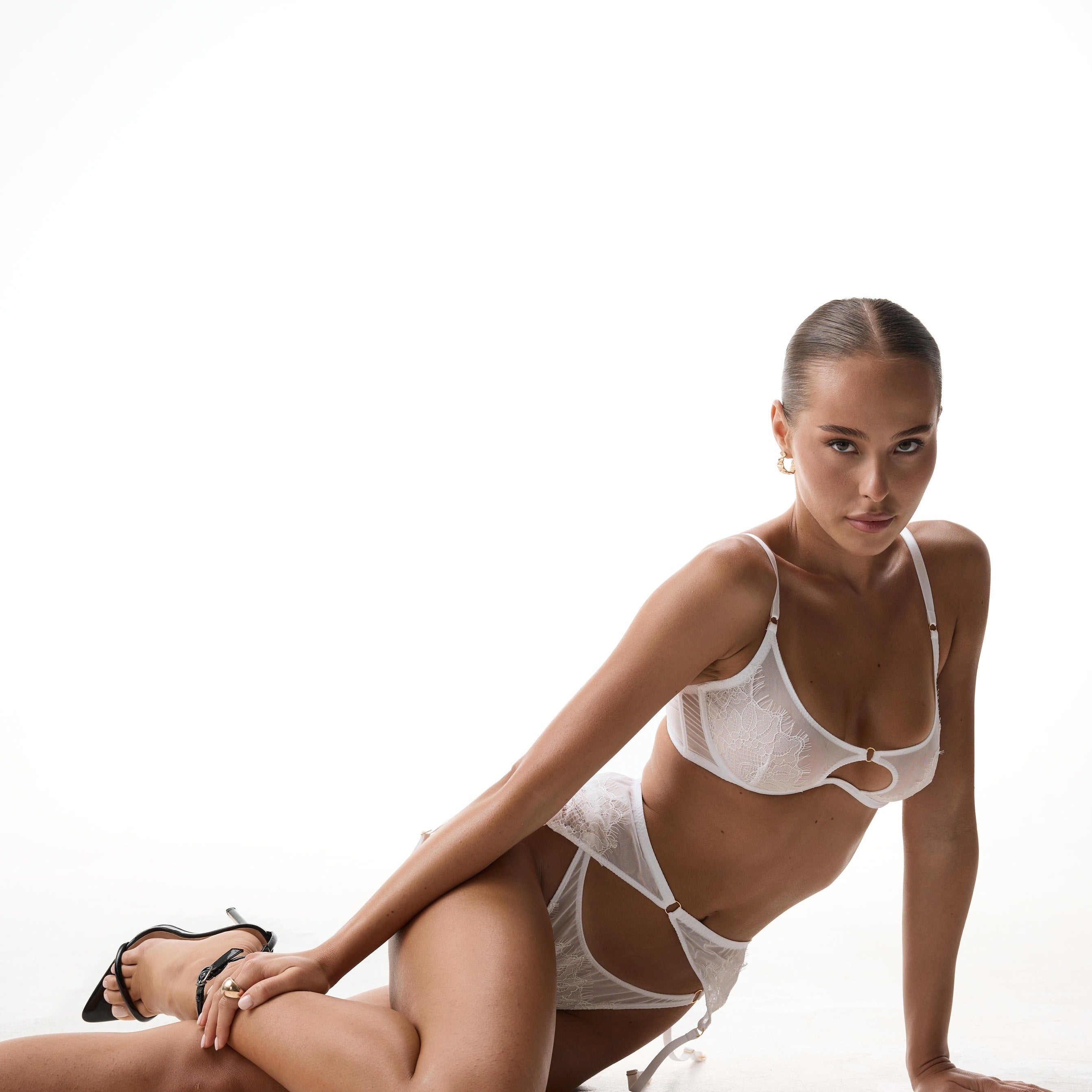
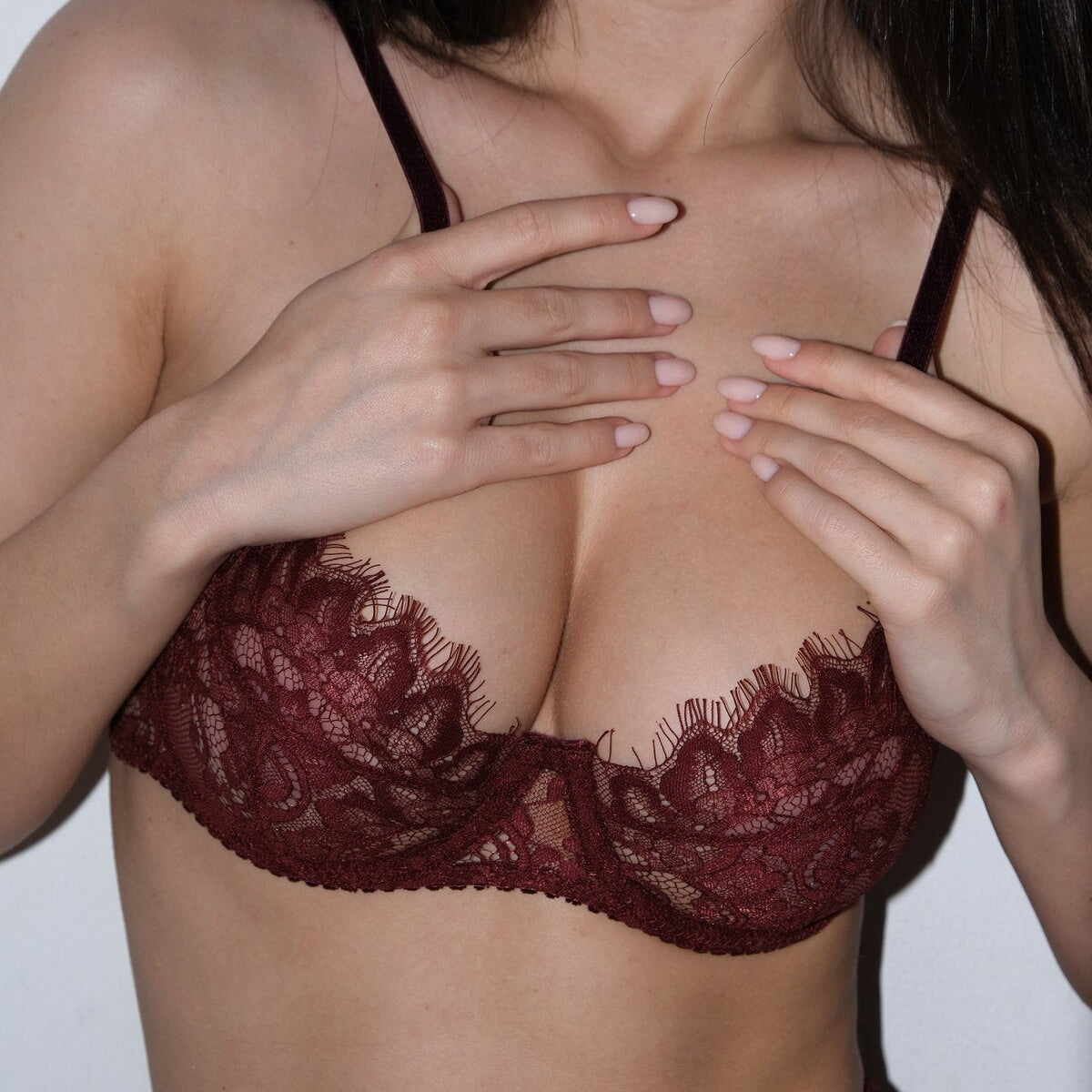
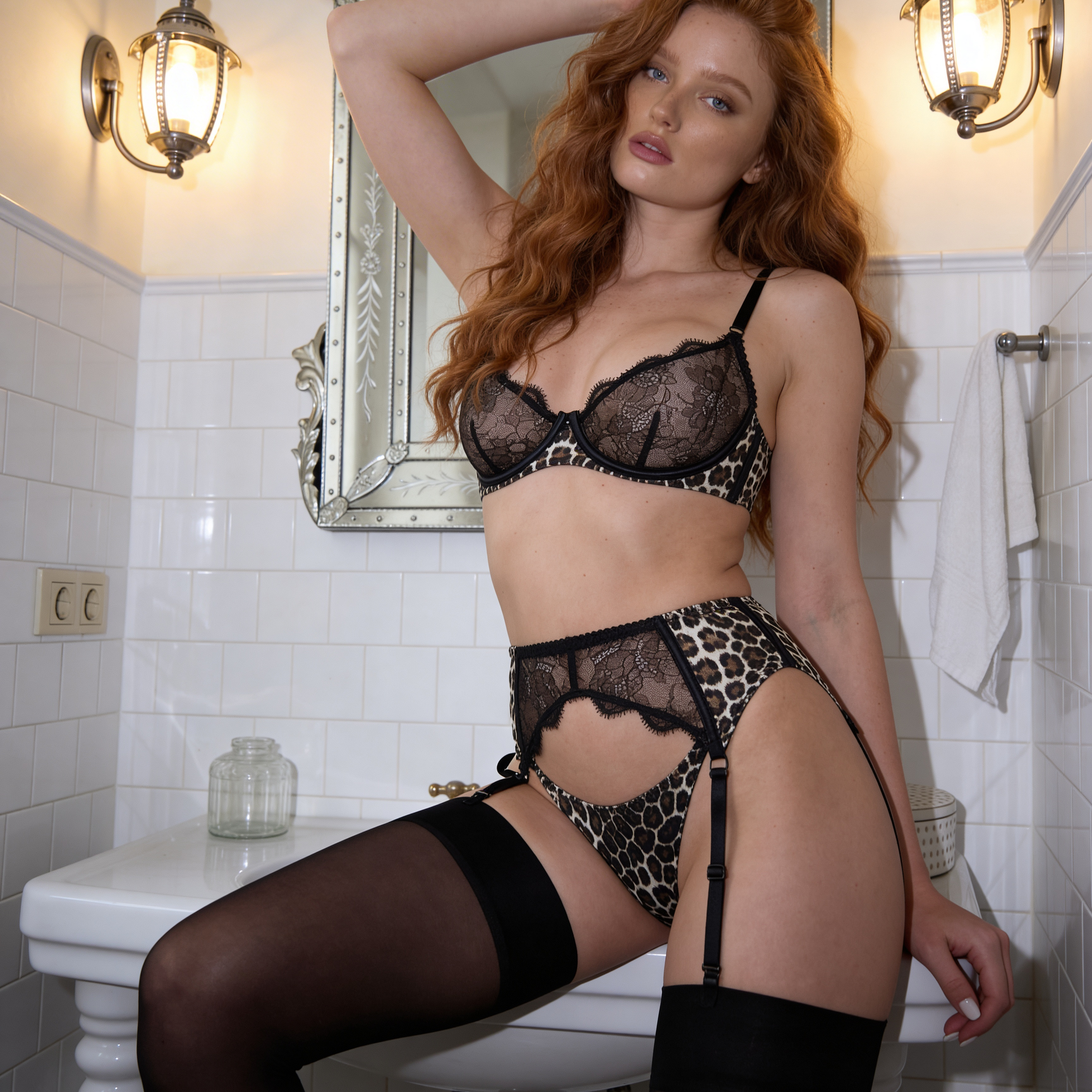
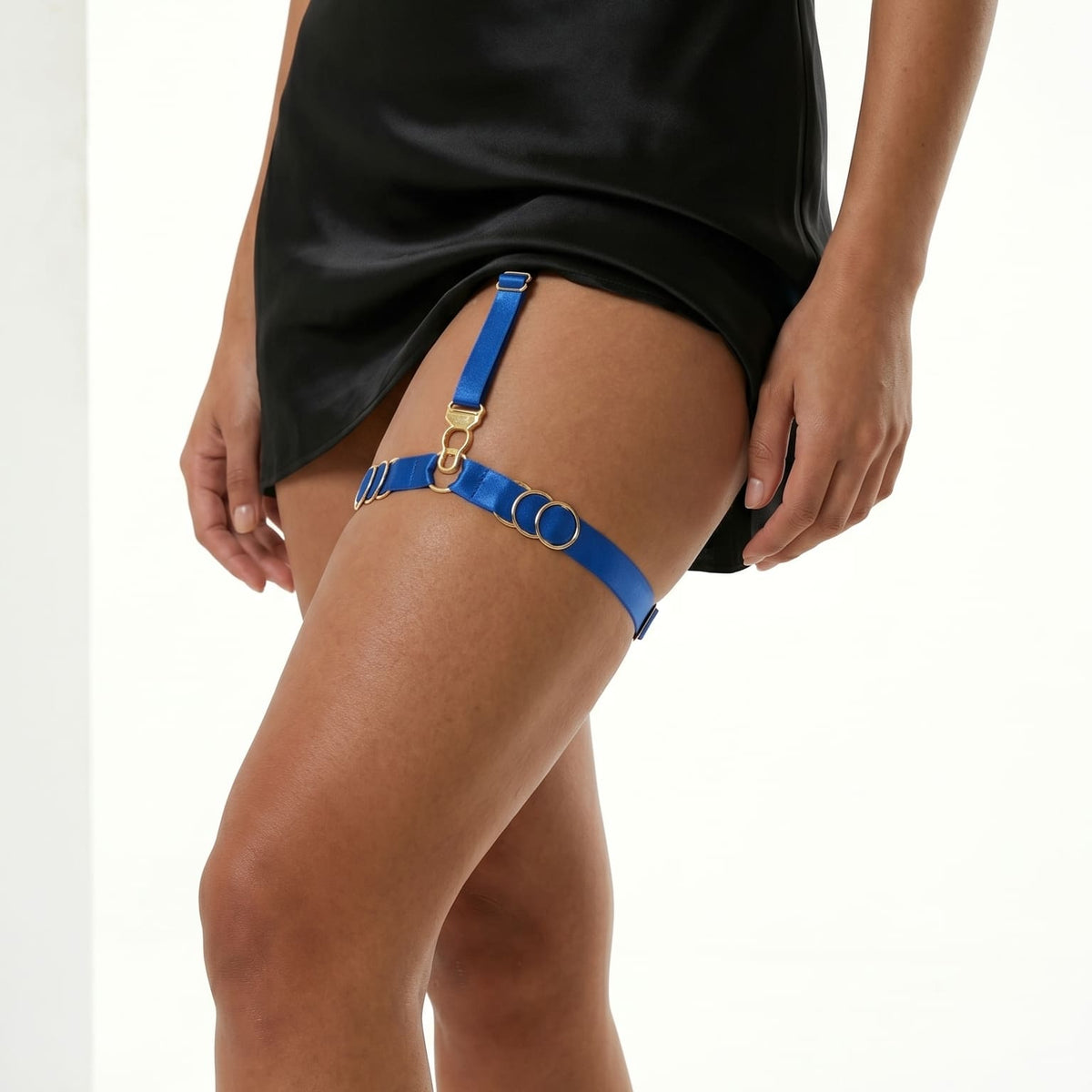
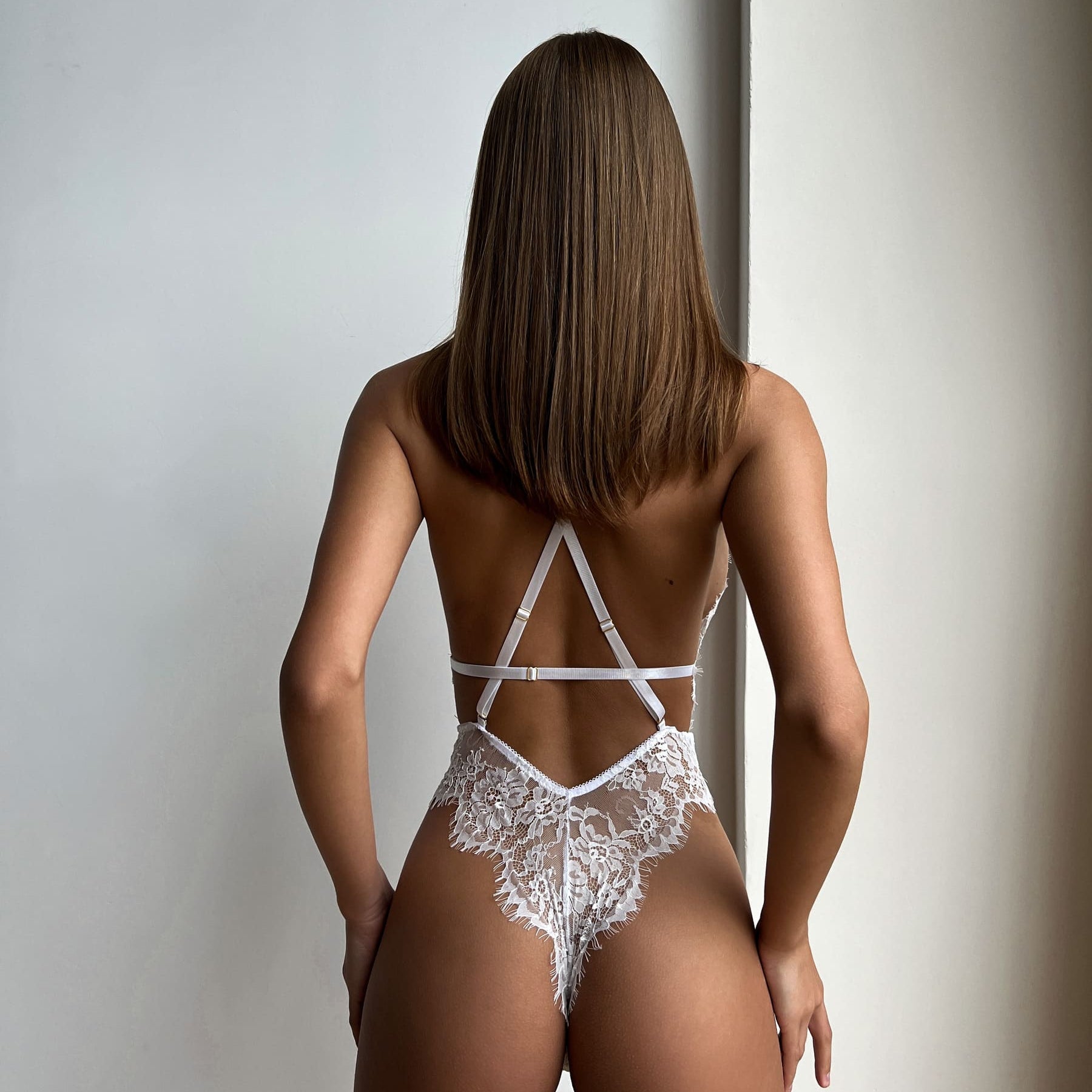
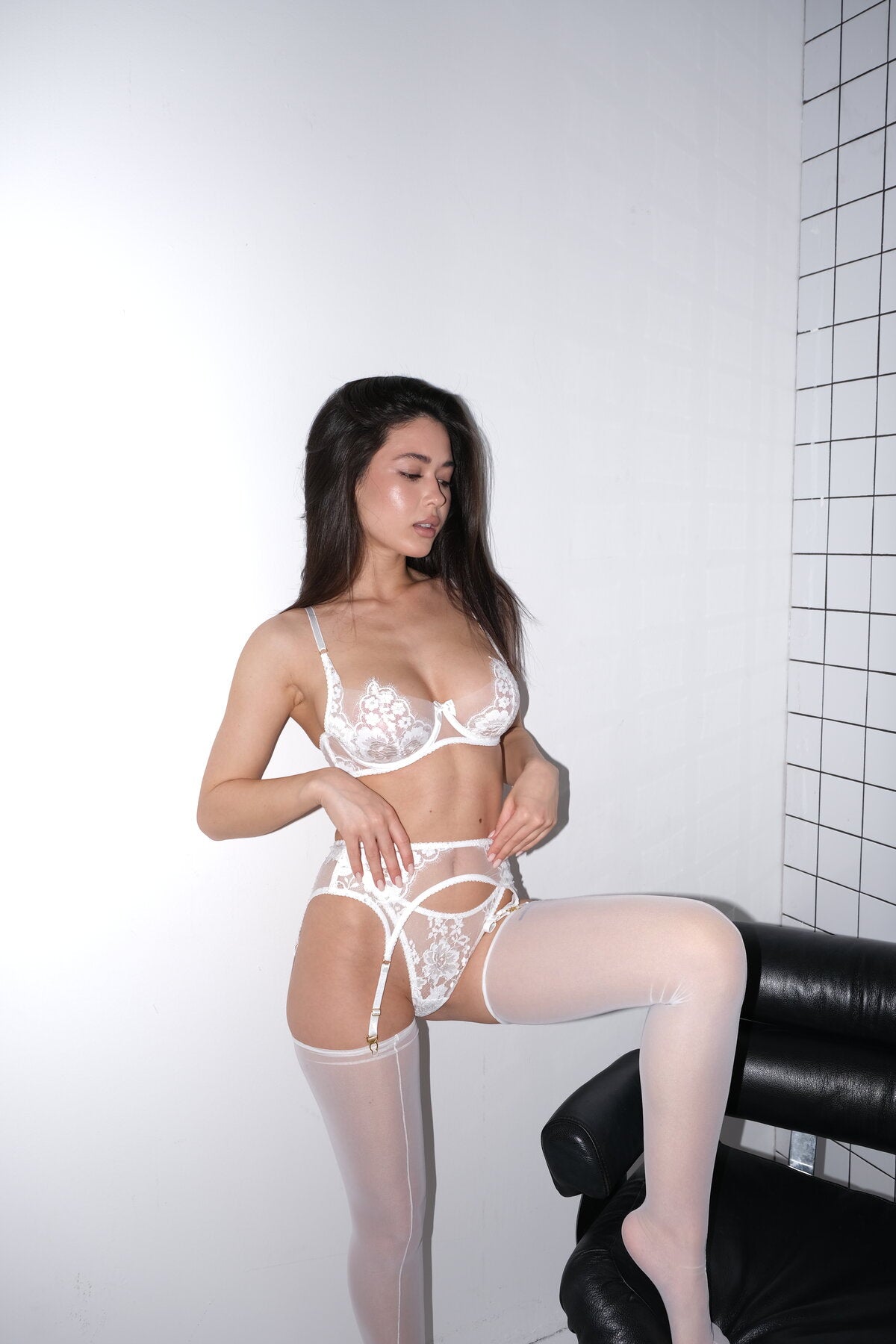
It's not a criticism of the exhibition's thesis, which holds up fine without this detail. It's just the part of the story that a made-to-order lingerie atelier notices automatically, because it's the same problem we solve on every piece we build: the visible line is downstream of a structural decision nobody sees. Our own Odri collection works from that same logic — an underwire and boned silhouette engineered first, styled second — and the Garters pieces exist for the same reason corsetry existed under Dior's skirt: to define a waistline the fabric alone can't hold on its own.
Where the rest of the checklist is headed
The show's later sections move past the New Look into territory that's less about hidden structure and more about visible construction as the point. John Chamberlain's crushed-steel sculpture Fenellosa's Column is paired with pleating and compression techniques from Madame Grès and Glenn Martens' recent Margiela Artisanal work. Daniel Roseberry's Schiaparelli sits alongside Alexander McQueen and Rei Kawakubo, three designers whose garments have spent the last few decades putting the engineering on the outside rather than hiding it. And Iris van Herpen's inclusion pulls the show into stretch materials and kinetic pieces that respond to movement — construction that isn't just structural but active.

That arc — structure hidden, then structure exposed, then structure made kinetic — happens to describe the last fifteen years of lingerie design too, ours included. A second-skin bodysuit built from stretch mesh is doing, at a much smaller scale, exactly what the museum is crediting van Herpen for: letting the construction move with the body instead of forcing the body into a fixed shape. The New Look solved the same problem with boning and eight decades less material science.
None of this needs SFMOMA's blessing to be true. But it's a useful thing to have a major museum say out loud: that a garment's structure is a legitimate subject in its own right, worth studying with the same seriousness as a sculpture. That's the same argument we're making with every piece we cut, and it's good to see a museum making it too.
Atelier Notes is where the Lioness team writes about the wider fashion and lingerie industry: runway moments, craftsmanship stories, and the ideas moving through fashion that connect back to how we build our own pieces. Separate voice from the Lioness Studio guides, same team behind it.