

Last updated: August 20, 2026
Every Emily set starts with a question our patternmaker asks before a single strap gets cut: does this line hold weight, or is it just there to look good? With Emily, we wanted the answer to be both. The vertical strap detailing that runs across the bust and wraps the hips isn't stitched on top of a finished piece as decoration. It's structural, first, and it's the same construction across the whole Emily collection.
Key takeaways:
- Emily's vertical straps are load-bearing lines, not surface decoration, so they have to line up correctly under real tension.
- The floral lace sits underneath sheer mesh rather than on top of it, so the strap geometry reads clearly instead of getting lost in the fabric.
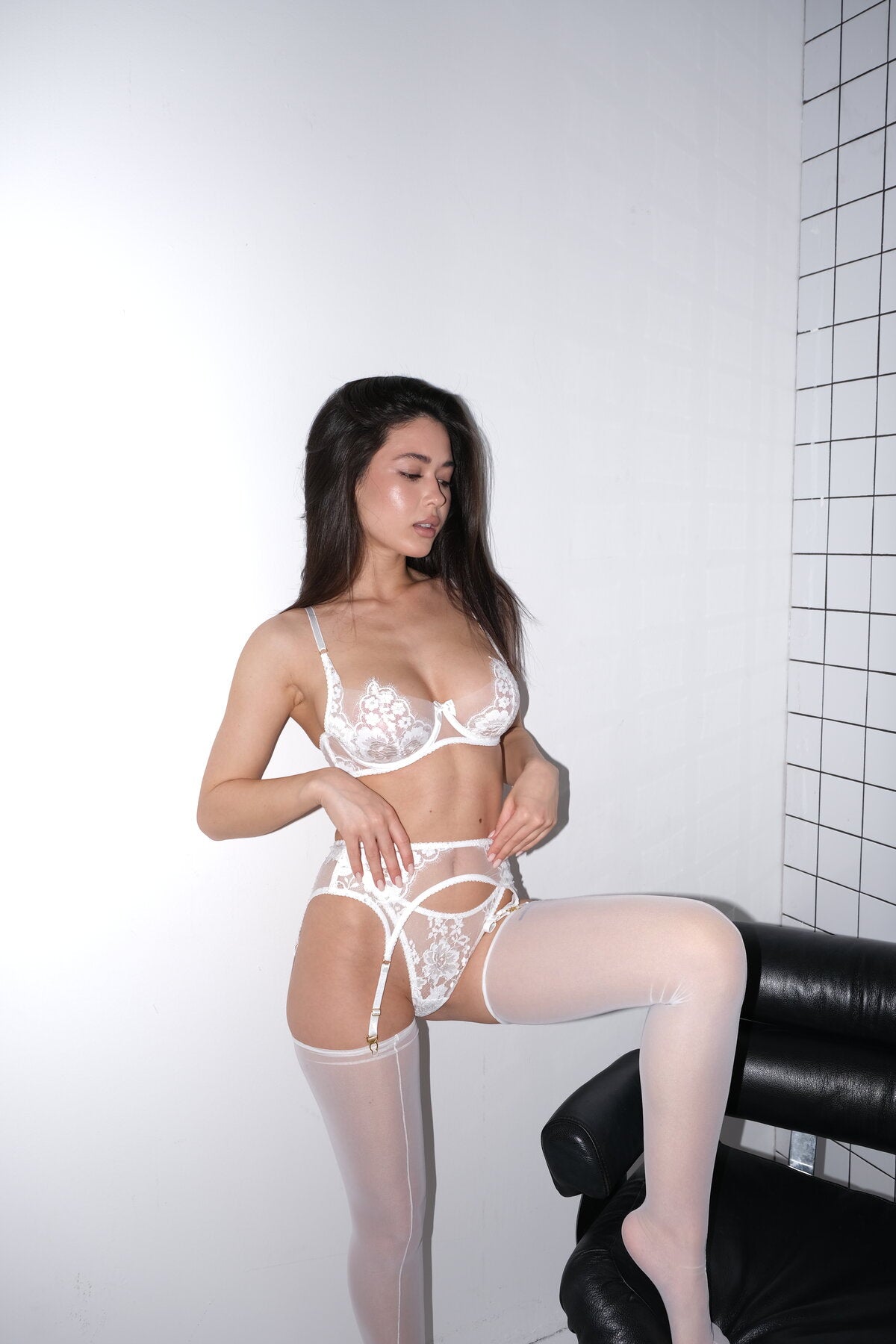
- Black and White share the same construction but are styled for different moments, including White's fit for bridal styling.
Why the straps aren't just decoration

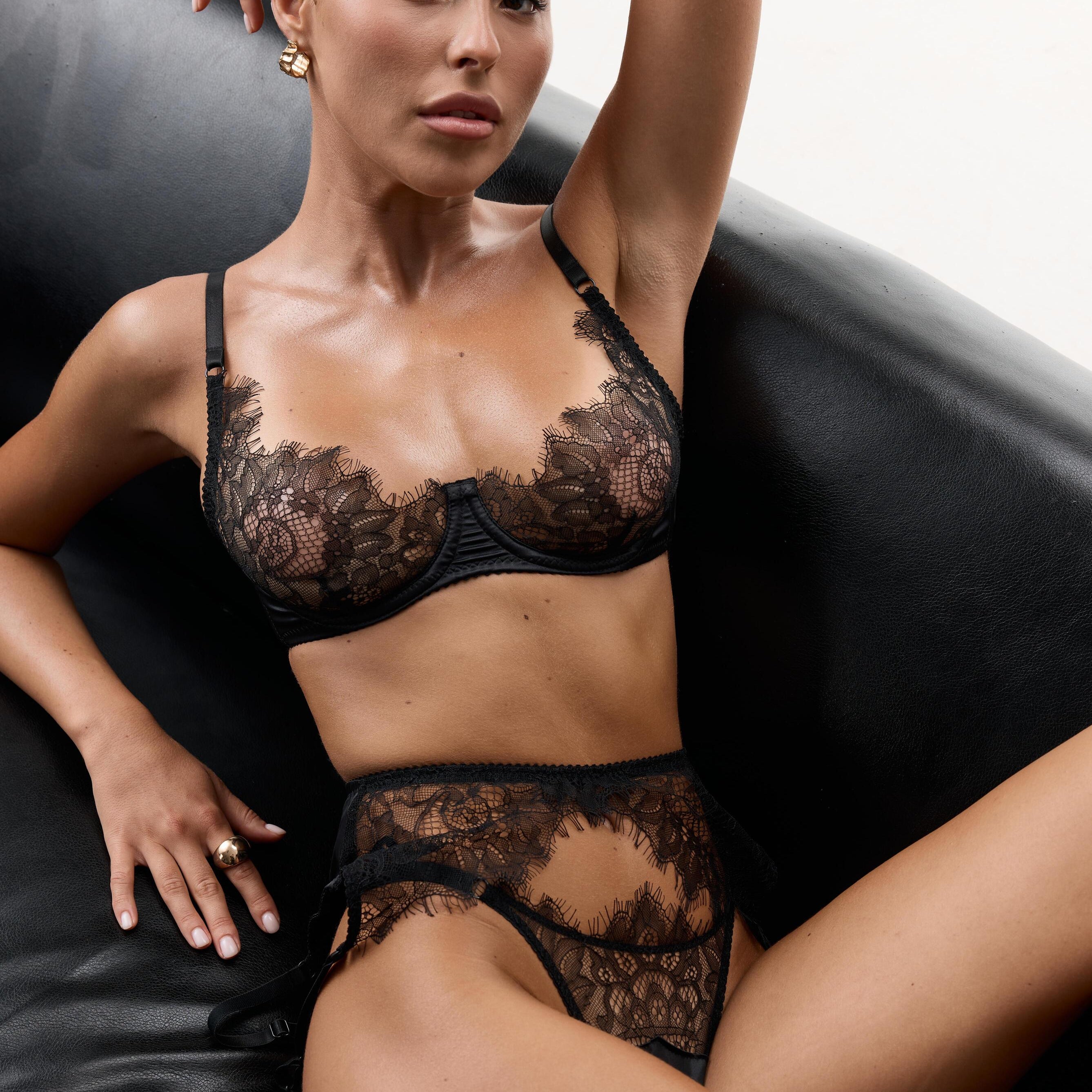
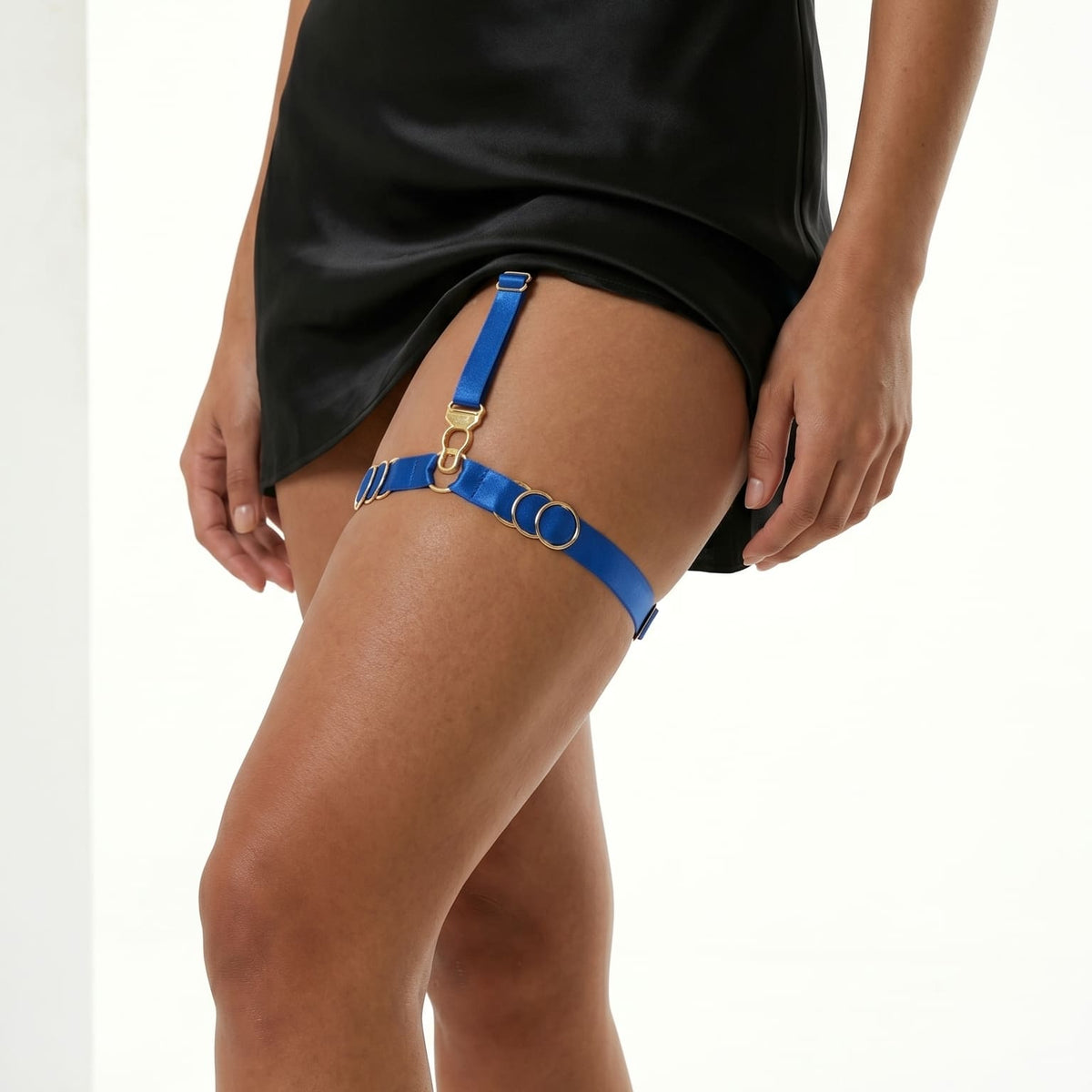
Cut a strap at the wrong angle and it either digs in or goes slack the first time someone sits down. That's the problem on the Emily Black belt: the straps cross at a center point and fan out to each garter clip, and every crossing point has to hold its shape under motion, not just on a hanger. We tested the clip placement three times before the pull felt even from every angle.
The look this produces, straps crossing over sheer mesh in a repeating geometric pattern, isn't an idea we invented. Cage-style lingerie construction borrows from harness architecture, and the crossing straps read close to structural ribs, the kind you'd point to in a piece of Gothic ironwork before you'd point to it in a lingerie drawer. Harness silhouettes like this one trace back to functional webbing outside fashion, long before designers pulled the construction onto runways and into everyday collections. One write-up on cage bras puts the appeal plainly: it's in the geometric web of straps and bands, not any single piece of fabric. Harness lingerie's own history follows the same line, moving from military and utility gear onto the runway.
The lace hides behind the mesh

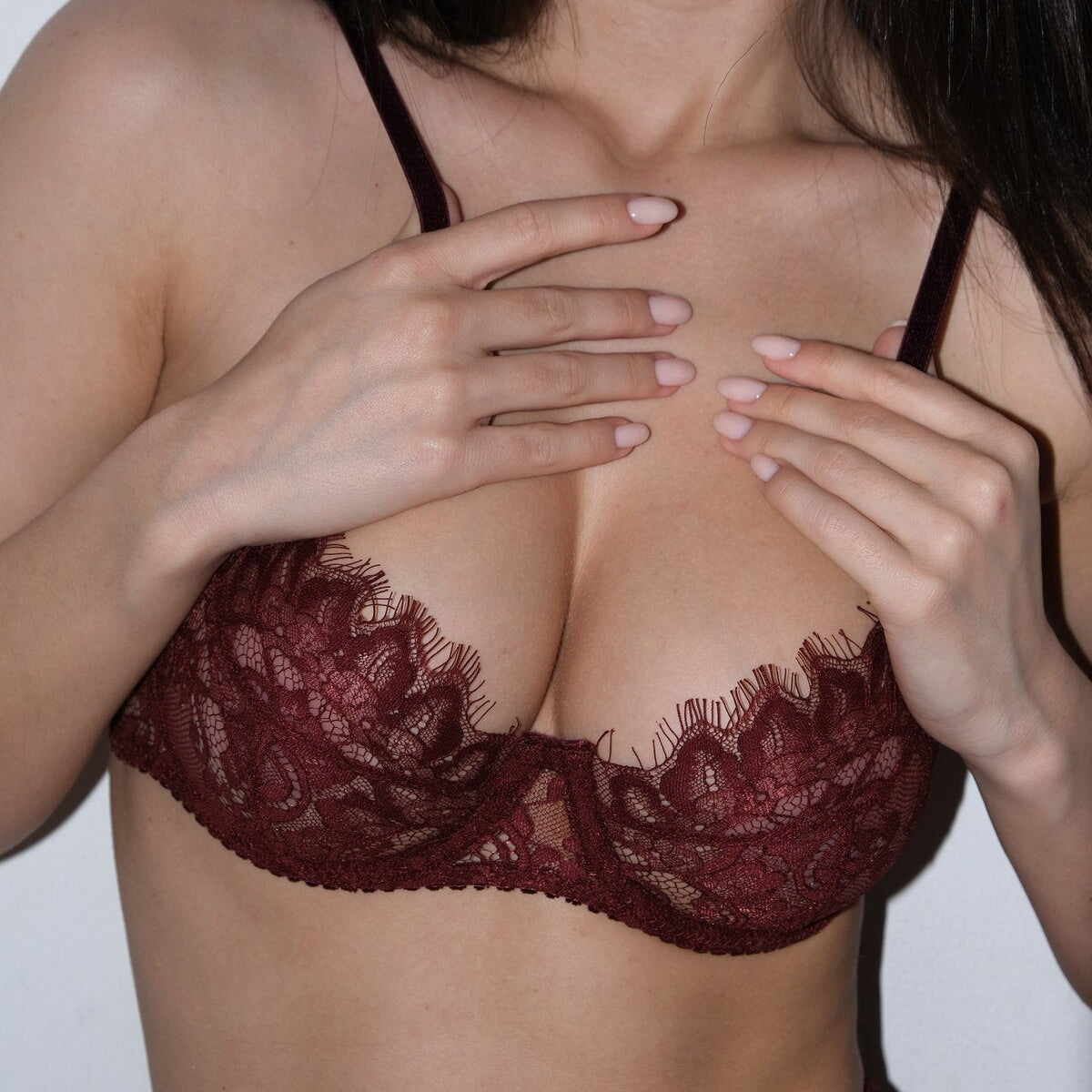
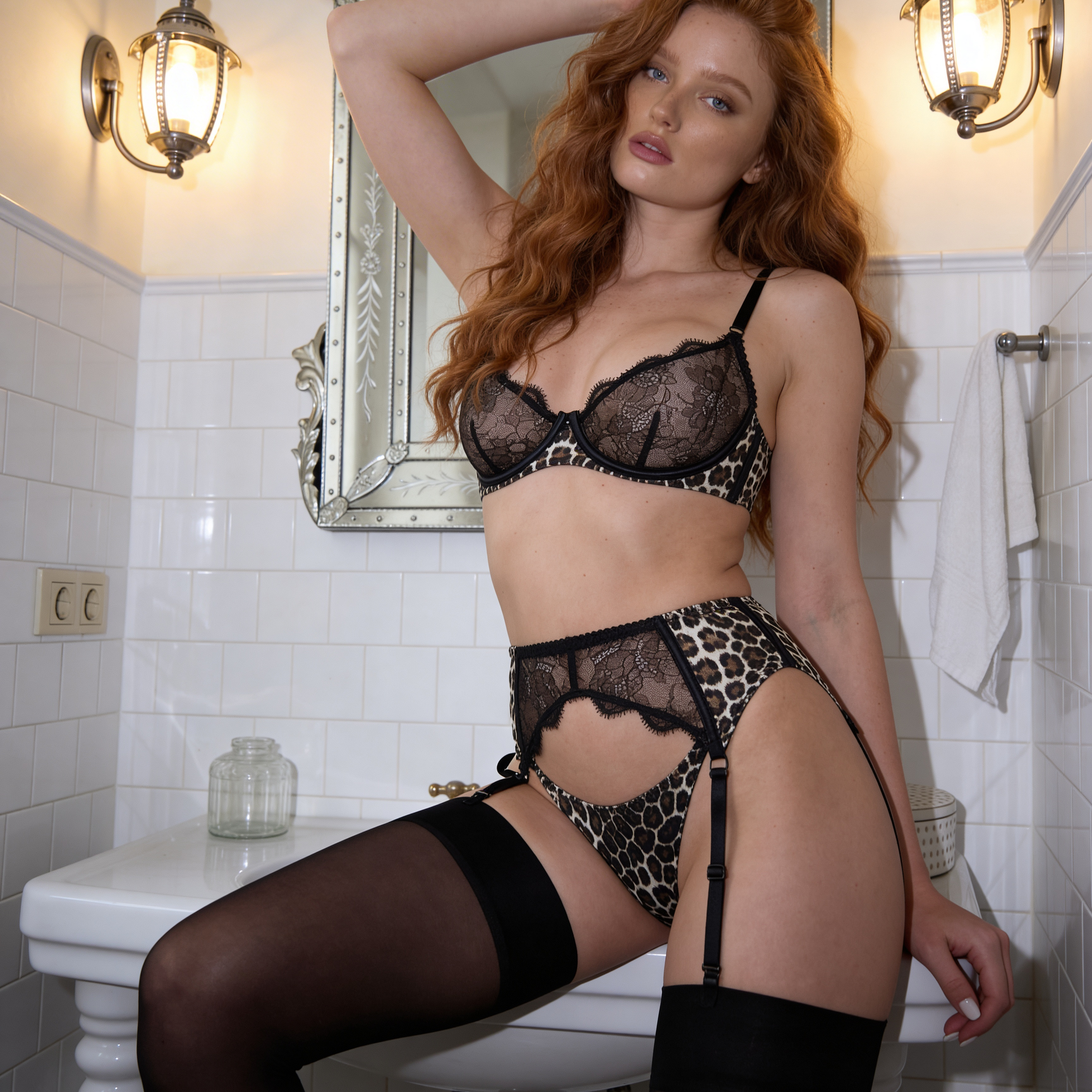
Strip away the straps and there's a second decision underneath: on the Emily Black bra, the floral lace sits behind a layer of sheer mesh rather than on top of it. Most lace pieces put the pattern front and center, right on the surface. We flipped that on purpose, because the strap geometry is the focal point here, and lace laid directly on top of it would compete rather than support. The mesh softens the floral motif into something closer to a shadow than a print, so your eye follows the lines first and finds the flowers second.
It also means the mesh is doing real work, not just filling space between straps. It's the same sheer weight across the bra cups, the belt panel, and the matching panties, so nothing on the set reads as an afterthought piece that was matched in afterward.
White finds a second life at weddings

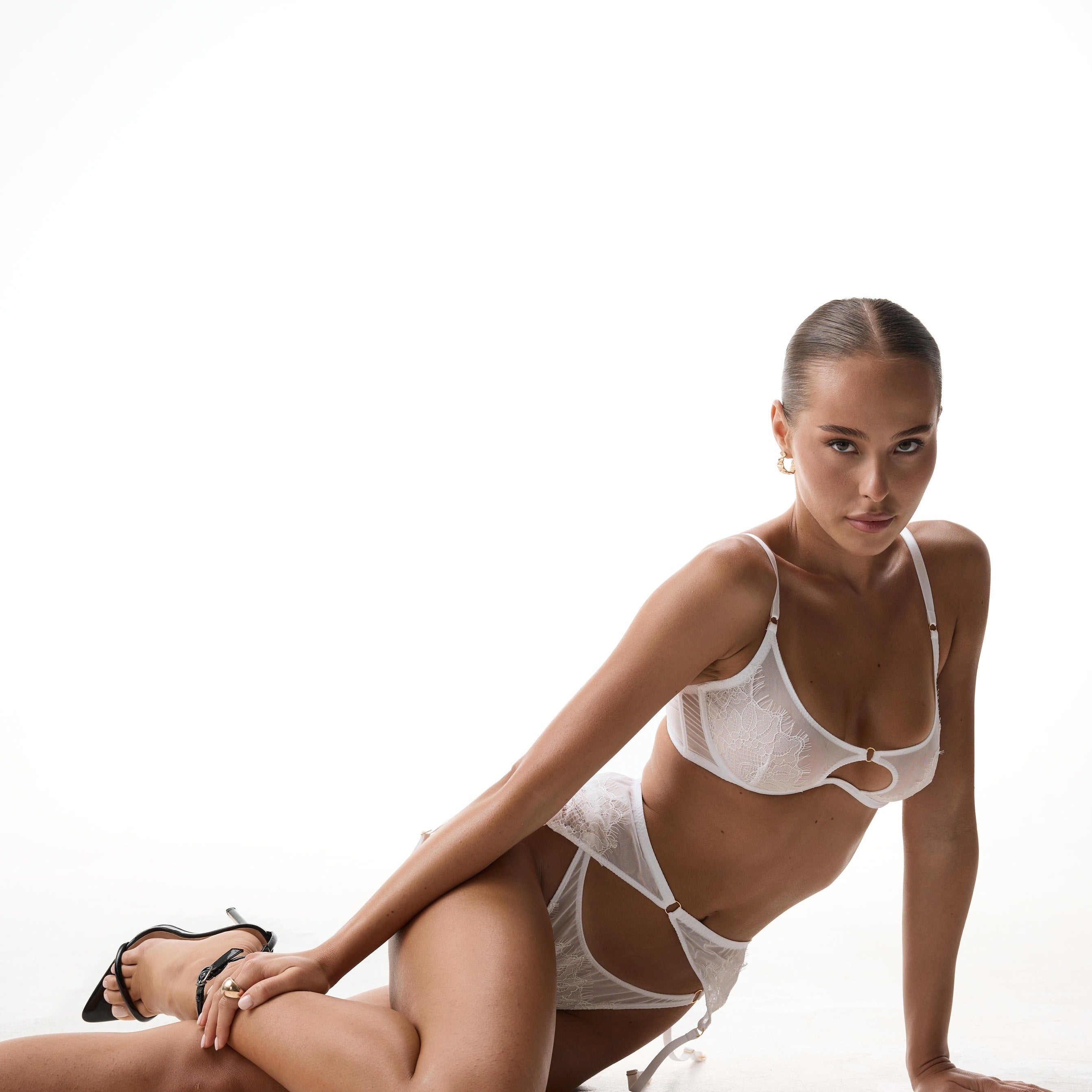
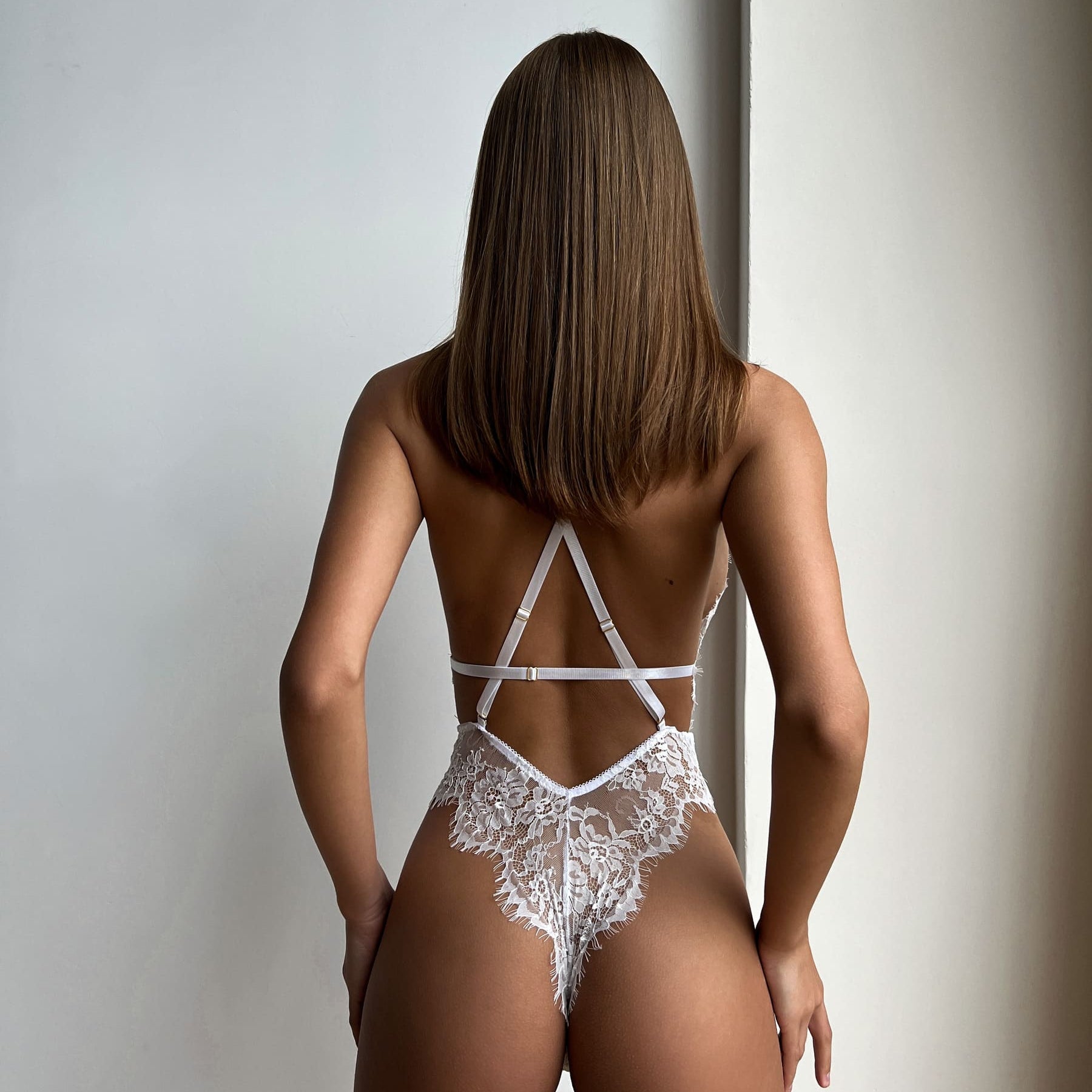
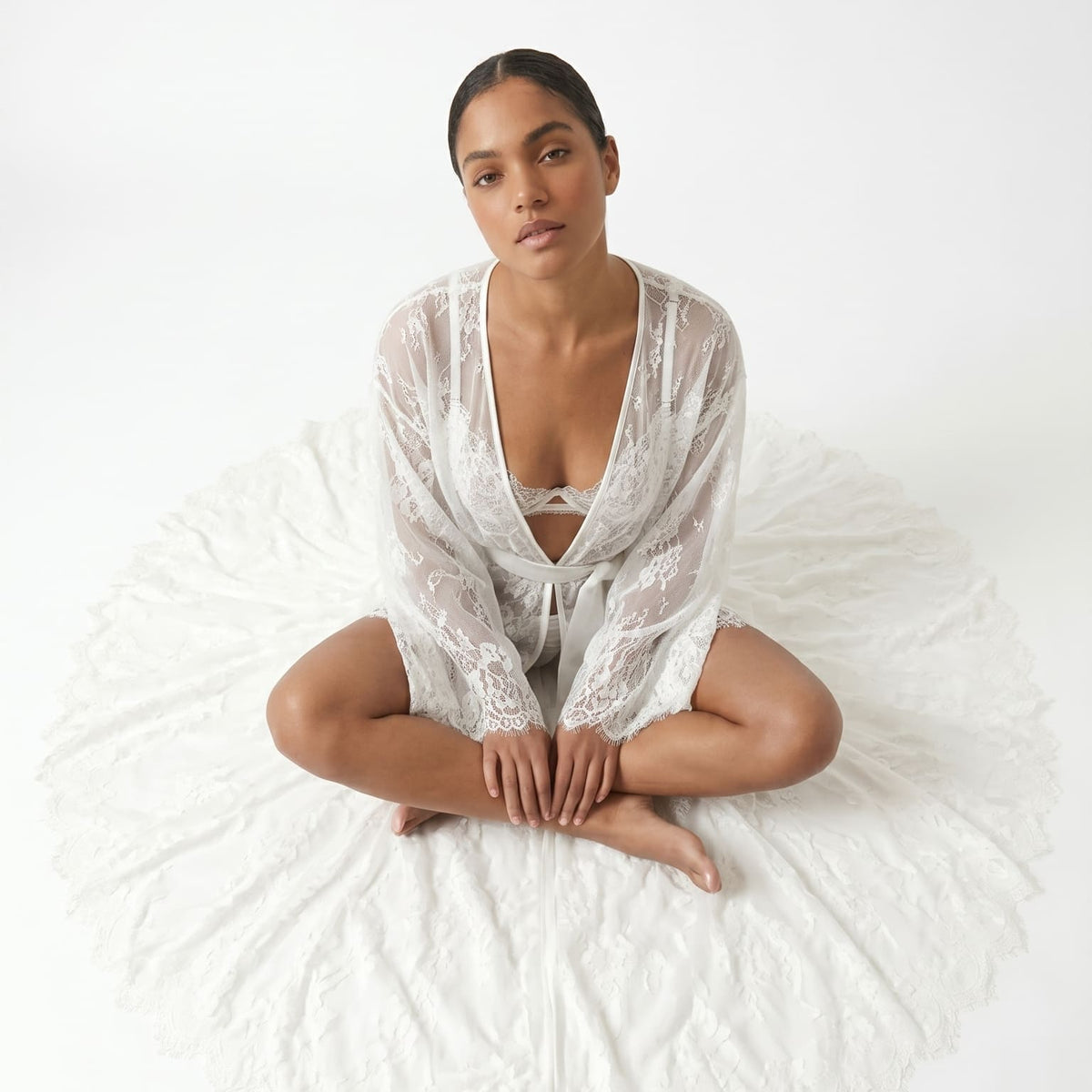
Same pattern pieces, same strap geometry, same hardware, and the two colorways still read as two different sets entirely. Black pulls the construction forward: against dark mesh, every crossing strap and every clip reads sharp and deliberate, closer to armor than lace. The Emily White set softens the same lines. The straps are still there and still doing the same job, but against pale mesh and ivory floral lace the whole set feels quieter, which is why we'd point a bride building a going-away look toward White rather than Black, alongside pieces from our Bridal Lingerie collection. White did the same job for us in Jasmine.
We didn't design two different pieces and give them the same name. We built one construction and let two colors decide what it says.
Emily is part of Lioness Studio's ongoing look at how a piece gets made, not just how it photographs.